What are the things to keep in mind when growing flowers? Remember these care essentials
Growing flowers is a hobby. Just like keeping pets, people who grow flowers treat them like their own children, caring for them meticulously, watering them when they are thirsty, fertilizing them when they are hungry, and pruning and trimming them at irregular intervals. It is hard to tell whether it is people who adorn the flowers or the flowers that adorn the people. Many people seem to care for their flowers carefully, but are their methods really correct?
Soil:
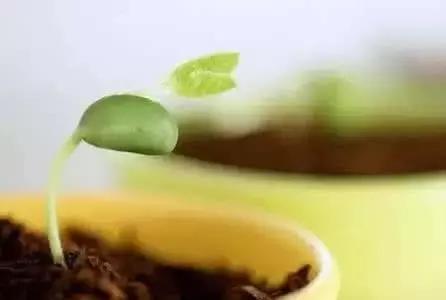
Soil is the most fundamental thing for growing flowers well. Most flowers and plants prefer acidic or slightly acidic soil rich in organic matter. The simplest approach is to buy ready-made nutrient soil, but you can also mix your own soil.
Watering:
Watering is a very important part of growing flowers. You need to grasp the principle of "do not water if not dry, and water thoroughly when you do."
Tap water cannot be used directly to water flowers. The best water for watering flowers is natural precipitation; rainwater, snow water and river water are the first choice for watering flowers, followed by purified water. Tap water contains chlorine, so it should be left to stand for half a day before use.
Do not fix the watering time and watering amount for a long period. Do not water continuously within a short time, and do not give half-measure watering.
Fertilizing:
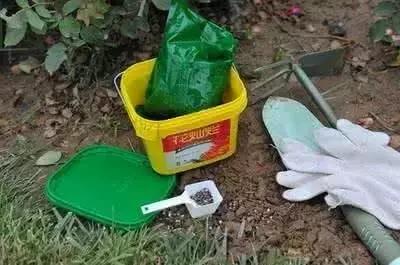
Organic fertilizer: Organic fertilizer includes animal-based organic fertilizers, such as human excrement and urine, poultry manure, hoof and horn, bone meal, fish meal, barnyard manure, feathers, etc.; and plant-based organic fertilizers, such as soybean cake, sesame oil residue, Chinese medicine residue, leaves and weeds, green manure, rice bran, etc. These are all natural fertilizers, containing large amounts of nitrogen, phosphorus and potassium and a small amount of trace elements.
Inorganic fertilizer: Inorganic fertilizer is a chemical synthetic product, including nitrogen fertilizers: ammonium sulfate, ammonium nitrate, urea, ammonium chloride, etc.; phosphorus fertilizers: superphosphate, phosphate rock powder, etc.; potassium fertilizers: potassium sulfate, potassium chloride, etc.; and also compound fertilizers, potassium dihydrogen phosphate and other high-efficiency fertilizers.
Organic fertilizer and inorganic fertilizer each have their advantages and disadvantages in use. We should make the most of their strengths and avoid their weaknesses, use them alternately, reasonably grasp the required amounts of nitrogen, phosphorus and potassium at different growth stages of the flowers, and coordinate them with each other so that the flowers receive reasonable and appropriate nutrients.
Light:
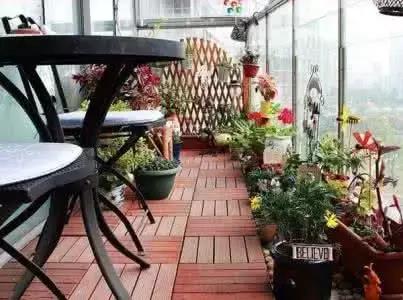
For general potted flowers, during the flowering period, in order to prolong the flowering time, strong light can be appropriately reduced, such as for Chinese rose, chrysanthemum, etc. But some flowers can only bloom well under strong light, such as water lily, purslane, etc. There are also some flowers that do not like strong light in summer, yet cannot bloom in winter without light, such as geranium, wax begonia, hydrangea, fuchsia, etc.
Overall, you need to know whether the flowers you grow prefer shade or light, and then place them according to the light conditions in your home. However, one thing to note is that shade-tolerant flowers also need to be placed in a bright place to get some sun after a period of time. Long-term shading is not good!
Mosquitoes and insects:
The reason many mosquitoes and insects appear is that some flowers need high humidity for growth and development. Therefore, you must ensure that there is no water accumulation in the flowerpot, and you can choose to spray water on the leaves more often.
In fact, you will encounter many things in the process of growing flowers. What is mentioned above are the most basic flower-growing techniques. If you want to learn more flower-growing techniques, you can follow more professionals.