Techniques for transplanting osmanthus Precautions for transplanting osmanthus
Osmanthus is a highly ornamental flower variety that has always received widespread attention. So what are the precautions for transplanting osmanthus? I believe everyone wants to know the answer to this question too. So next, let us take a look at what the precautions for transplanting osmanthus are. Through learning about osmanthus knowledge, we can better apply it to daily life. So next, let us take a look at what the related techniques and precautions for transplanting osmanthus are.
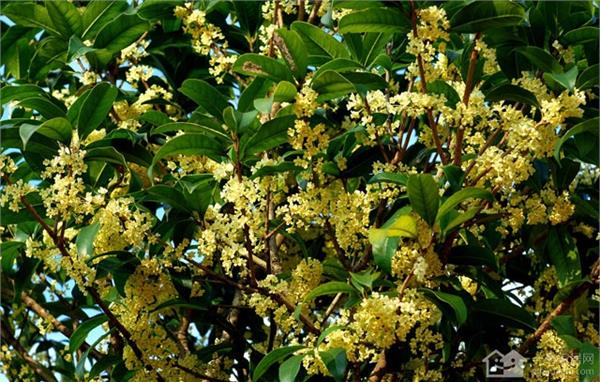
Planting and later management
Before planting, backfill the pre-dug tree pit with 10 to 15 cm of the original soil brought back with the transported osmanthus tree. Because osmanthus trees are not tolerant of waterlogging, the planting depth of osmanthus should be 10 to 15 cm higher than the original ground level. First lower the osmanthus tree and place it according to its original growth orientation, then place one plastic pipe at each of the four corners of the tree pit. After the tree pit is filled with soil, this increases the air permeability of the roots. Then, while removing the template in order, backfill soil to 1/3 of the height of the root ball, and fill original soil tightly around the root ball, filling one layer and firming one layer to prevent the root ball from breaking. After the tree pit is completely filled and firmed, build a watering berm, add support, and water thoroughly for the first time.
Transplanting time for osmanthus
The transplanting time for osmanthus is very critical. According to the growth habits of osmanthus trees, the best season for transplanting osmanthus seedlings (trees) is generally spring and autumn; from an economic perspective, the best time to transplant osmanthus seedlings (trees) is after mid-September in autumn, because autumn and winter are not the traditional seasons for cultivating trees. The osmanthus seedling market is not as active as in spring. Many nursery growers' osmanthus seedlings do not grow as vigorously as in spring, and because it is the end of the year, prices generally come down. Buying osmanthus seedlings for planting at this time allows you to enjoy many price discounts.
Therefore, the transplanting time for osmanthus can be arranged according to the owner's own ideas and needs. Generally speaking, it is best to choose spring and autumn to transplant osmanthus trees. If you want to reduce costs and catch the spring shoots, you can choose to plant in autumn and winter.
Shaping and pruning
1. Shaping and pruning. Pruning osmanthus is an important measure for cultivating single-trunk osmanthus. Timely and reasonable pruning can improve ventilation and light penetration, strengthen photosynthesis, and reduce pests and diseases, thereby making osmanthus grow faster, with a straighter trunk and more beautiful tree shape.
2. Bud removal. When osmanthus sprouts, buds can also sprout on the main trunk and at the base. The useless buds on the lower part of the main trunk should be removed in time so that water and nutrients are concentrated, promoting the development of upper branches and forming an ideal tree shape.
3. Branch thinning. To cultivate single-trunk osmanthus, from the seedling stage onward you must consciously cultivate a straight main trunk and maintain a certain clear trunk height, cutting off useless branches. Generally, after the osmanthus is mature, the clear trunk height is about 1.5 m.
4. Heading back. Cut off the excessively vigorous top branches so that the height of the osmanthus is maintained at about 3.5 m, with a crown width of 2.5 to 3 m. When transplanting osmanthus, in order to maintain a complete tree shape, heavy pruning is not advisable. It is only necessary to cut off dead branches and diseased and pest-damaged branches, thin out overlapping branches, crossing branches, and weak slender branches, and control excessively vigorous branches.
5. Transplanting seedlings. Before transplanting, the transplanting site must be deeply plowed and finely harrowed, requiring "three plowings and three harrowings." This increases the air permeability and water retention capacity of the soil, is conducive to the activity of aerobic bacteria, promotes the decomposition of organic fertilizer, and at the same time creates a good growth environment for the root system.
If you want to learn more related information, you can continue to follow No. 1 Home Network.