How to care for a potted night-blooming jasmine? Master these 7 cultivation methods
The optimal growth temperature is 18--30°C; below 5°C or above 35°C growth slows, and the reproductive growth period is 5--18°C. In winter it must be placed indoors. Let's learn some related information about growing orchids below!
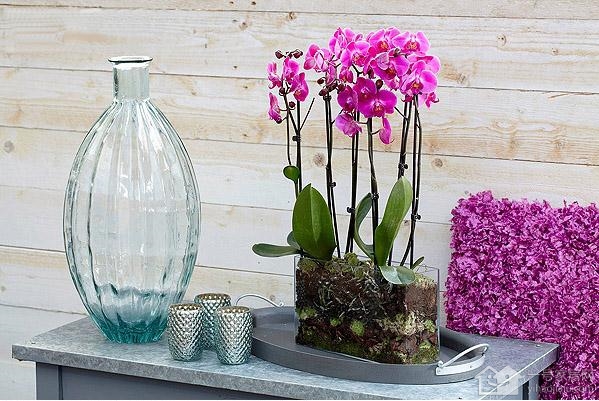
Humidity for growing orchids
Orchids grow well when the relative air humidity is 60--70%; too dry or too wet easily triggers orchid diseases. Therefore, outdoor cultivation should create a gradual humidity microclimate suitable for orchid growth, and indoors install a sprayer and a hygrometer.
Light for growing orchids
Orchids prefer shade and fear direct sun. Before 7 o'clock in summer, orchid leaves may be exposed to direct sunlight; after 7 o'clock, use a 50%--90% shade net to block the sunlight. Around Qingming, orchids can be given more sun to promote root growth and more leaf buds. After Bailu, when the weather turns cooler and most new plants have grown, they can also be given more sunlight to promote plump flower buds, allowing the orchid plant to store more nutrients for the next year's growth.
Soil selection for growing orchids
The soil for orchids should be mainly humus, primarily using leaf mold or mountain forest humus soil. In the south, use the humus soil from the place of origin, commonly known as orchid mud; you can also use leaf mold, vermiculite, perlite, etc., to artificially mix a loose, airy, water-permeable growing medium. Generally, mix 8 parts leaf mold and 2 parts river sand into a growing medium, or mix 7 parts leaf mold, 2 parts perlite and 1 part river sand into a growing medium, or mix 6 parts leaf mold (peat soil), 3 parts compost soil and 1 part river sand into a growing medium. All the growing media prepared above are slightly acidic.
Potting method for growing orchids
The environment for cultivating orchids should be well ventilated, humid and pollution-free. The orchid pot should be a tall pot, thick at the top and narrow at the bottom, with multiple drainage holes, or with drainage holes in the pot wall. The orchid pot itself should also have ornamental value.
Since orchids grow slowly, they can be repotted once every 1-2 years after the flowers fade. When potting, first place about 3 cm of tile pieces, cinders, etc. at the bottom of the pot to aid drainage. Then, add a layer of growing medium, place the orchid seedling in the center of the pot, straighten the roots and let them spread naturally. When the soil is filled to half, gently lift the orchid seedling while shaking the pot so that the soil and roots are tightly combined. When the soil is filled to 2-3 cm from the pot rim, gently press it firm with your hand. After planting, water thoroughly and place in a cool place. Spray water once each morning and afternoon, and after about 7-10 days move it to a mottled shady place for care.
Watering orchids
Orchids like rain but fear waterlogging, and like moisture but fear wetness. In June-July, when the orchid leaf buds extend to about 1.5 cm, apply 1-2 times of thin, fully decomposed liquid fertilizer (chemical fertilizer should not be used). In August-September, apply 1-2 more times of decomposed thin liquid fertilizer. For solid-color orchids, apply 1-2 times of wood ash extract, and the effect is very good. Fertilizing in the evening is best, then water once with clear water the next morning.
Fertilizer for growing orchids
Orchids like a light diet, so fertilize sparingly rather than heavily. Like other plants, nitrogen promotes lush stem and leaf growth. Phosphorus promotes well-developed orchid roots, promotes robust development of reproductive organs, and spreads the stems and leaves. Magnesium, sulfur, iron and other trace elements can make the leaves green and the flowers strong.
During the vigorous growth period of orchids, fertilize more; during the dormant period or weak growth period, do not fertilize. Excessive fertilizing will burn the roots and leaves, causing irreparable loss.
Precautions for growing orchids
1. Do not use too large a pot - planting a small plant in a large pot uses more growing medium, easily leading to poor ventilation, and watering is also harder to control. If too much water is absorbed, the growing medium does not dry easily, and bacteria invade and cause root rot.
2. Plant orchids shallowly - do not plant orchid plants too deep, otherwise long-term moisture will cause rot. When planting, fill the growing medium around the roots, and the base or pseudobulbs must be exposed.
3. Spread out the roots - when planting orchids, the roots should be evenly spread out and not pressed together, so that each root can contact the growing medium and ventilation is also better.
4. Do not water for several days - newly planted orchids may have injured roots; after the wounds are coated with fungicide, do not water for 3-5 days, so the fungicide can take effect and new buds and new roots can also be promoted.
5. Avoid strong light - newly planted orchids must avoid direct strong light to prevent dehydration, and should be placed in a warm and shaded place. Spraying can be used to increase air humidity until the orchids return to normal growth.
If you want to learn more related information, you can continue to follow No.1 Home Network.