How to grow Aglaia odorata? Master these three cultivation tips
Aglaia odorata is a highly ornamental flower variety that has long attracted widespread attention. So what are the cultivation methods for Aglaia odorata? I believe everyone is eager to know the answer to this question. So next, let us take a look at what cultivation methods exist for Aglaia odorata. Through learning about Aglaia odorata knowledge, we can better apply it to daily life. So next, let us take a look at how to grow Aglaia odorata.
Cultivation methods for Aglaia odorata
Maintain good performance of the potting soil
Aglaia odorata has a very developed root system, with many fine fibrous roots. Therefore, the soil for Aglaia odorata must contain abundant nutrients, and the old soil needs to be replaced promptly, removing excess rotted roots. Repotting is needed at least once every two years; for particularly vigorous plants, repot once a year.
Add an appropriate amount of plant ash and an appropriate amount of base fertilizer to the new soil, so that the potting soil both retains fertilizer and does not become waterlogged, being both breathable and nutrient-rich.
Water correctly and fertilize frequently
In spring, when Aglaia odorata begins to sprout, pay attention to watering; you can appropriately control water, which is the most critical part of "controlling branches to promote flowering." If watering is not well controlled when Aglaia odorata sprouts, it easily causes excessive growth of branches and leaves. The best method is to water again when the tender tips slightly shrivel and droop. During other growth periods, keep the potting soil in a slightly dry state and appropriately control nutrients. Promote the growth of branches and leaves.
Apply organic fertilizer 1~2 times a week, and when the flower buds have already opened, apply additional phosphorus fertilizer. After flowering, according to the size of the plant shape, water once with organic fertilizer to replenish the consumed nutrients and lay a good foundation for the next flowering. However, when fertilizing, water should also be appropriately controlled, with the limit being that the tender tips do not shrivel.
Light must be sufficient
Aglaia odorata likes light. An overly shady environment will cause excessive growth of branches and leaves, fewer flowers, or even no fragrance, so Aglaia odorata must receive sufficient light. In an environment with sufficient light, the photosynthesis of the leaves is strong, the branches produced are short and sturdy, and the leaves are small and thick, green and glossy, promoting continuous differentiation of flower buds.
Pinch back and thin out branches in time
Aglaia odorata has strong sprouting ability, with many tiller buds and adventitious buds. To ensure normal flowering, it is necessary to promptly cut off branches on the inner stems whose branches and leaves are too dense, weak in growth, or too long, so as to reduce nutrient consumption. When a branch grows to 15~20 leaves, it should be pinched back, which can promote more lateral branches. Timely pruning can also control the length of each branch, not only controlling the plant shape to be perfect, but also ensuring that each flowering is neat and beautiful.
Three key tips for growing Aglaia odorata
1. Fertilization tips: Generally, fertilizer should be applied once a month, mainly organic fertilizer and high-efficiency phosphorus-potassium fertilizer, and it is important not to apply too much nitrogen fertilizer. Each time, for each pot, apply 25~30 grams of fermented, fully decomposed and deodorized peanut cake fertilizer, rapeseed cake fertilizer or tea seed cake fertilizer, and 15~20 grams of monopotassium phosphate or high-efficiency biological phosphorus-potassium fertilizer, mixed with 2~3 kilograms of clear water or fermented, fully decomposed and deodorized human and livestock manure water, then pour it on.
2. Watering tips: Throughout the year, keep the potting soil in a moist state. Do not let it become dry and crack, but do not let it remain overly wet for a long time either, otherwise it will cause root suffocation, root rot and yellow leaves. Generally, in summer and autumn, water once a day with clear water, and in winter and spring, water once every 2~3 days with clear water, with the amount such that the water can quickly penetrate into the potting soil and not accumulate on top. At the same time, frequently spray clear water on the branches and leaves, especially during periods of high temperature in summer and drought in winter. Evenly spray all branches and leaves until water droplets begin to drip down, so as to keep the branches and leaves moist.
3. Spraying tips: Potted Aglaia odorata is quite seriously harmed by pests and diseases such as powdery mildew, leaf spot, anthracnose, red spider mites, scale insects, aphids and rust mites, causing branches and leaves to turn yellow and die. Every 15~20 days, spray the leaves once with a clarified liquid made by soaking a mixture of dry, pure plant ash and superphosphate at 25~30 times dilution, or a 0.1% clarified lime water, etc., for pollution-free control, to protect branches and leaves and prevent various pests and diseases. Care of overwintering Aglaia odorata: Aglaia odorata is a flower that people love, but it is heat-tolerant by nature and afraid of cold.
Introduction to Aglaia odorata
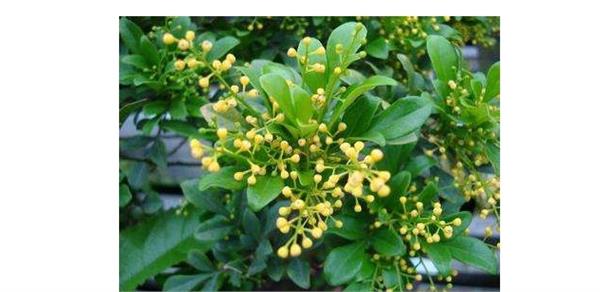
Aglaia odorata is also known as shulan, four-season Aglaia odorata, and broken-grain Aglaia odorata; it belongs to the Meliaceae family, genus Aglaia. It is an evergreen shrub or small tree; the top of the branchlets is often covered with stellate rusty small scales; the pinnately compound leaves are alternate, 5-12 cm long, with 3-7 leaflets, the common leaf axis has narrow wings, the leaflets have short stalks, obovate to oblong, 2-7 cm long, 1-3 cm wide, with an obtuse apex and a wedge-shaped base, hairless on both sides; the panicle is axillary, 5-10 cm long, slightly loose. The flowers are orange-yellow, extremely fragrant, about 2 mm in diameter. The pedicel of the bisexual flower is slightly short and thick, the calyx is 5-lobed, and the petals are 5, oblong; the berry is nearly spherical, 10-12 mm long, and the flowering period is between summer and autumn.
If you want to learn more related information, you can continue to follow No.1 Home Network.