What are the growth habits and flower language of tulips?
The beauty of tulips is something only those who truly understand them can feel intensely. Their colors are all intense and vivid: red, bright red like blood, passionate emotion; yellow, lively and gorgeous, youthful vitality; white, pure and elegant, noble and crisp. With such striking contrasts, one cannot help but wonder what the flower language of tulips of different colors actually is, and what the growth habits of tulips are.
Introduction to tulips
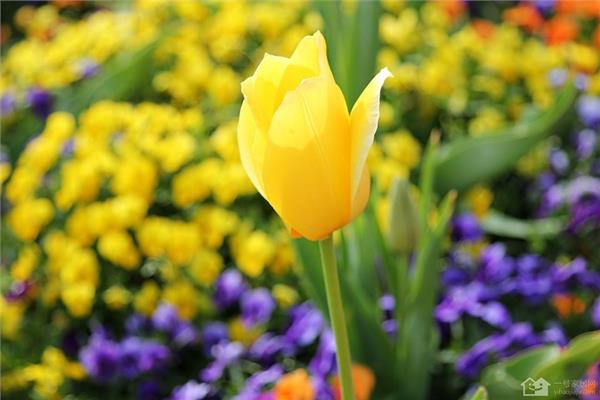
The tulip is the national flower of the Netherlands. It blooms in May every year, and when it blooms its fragrance spreads everywhere, attracting the gaze of many people. The tulip flower is 5 to 7 cm long, making it one of the larger flowers. According to current statistics, there are about 8,000 varieties of tulips, of which more than 50 are the most common. Among tulips, the most popular with people are still the red, yellow and purple ones!
Tulip habits
The climate tulips adapt to is roughly wet and cold winters and dry, hot summers. Tulips generally go dormant in summer and take root in autumn and winter, which is different from many plants. The temperature tulips like best is about 15 to 20°C; within this range, tulips can take root and sprout well. Tulips are not resistant to high temperatures; at about 28°C, it is enough to kill tulips. Their cold resistance is very strong, and even snowy weather will not kill tulips!
The legend of the tulip
Legend has it that in Europe there was a beautiful maiden who was loved at the same time by three handsome knights. One gave her a crown, one gave her a sword, and another gave her gold. The maiden did not know how to choose, so she asked the flower goddess for help. The flower goddess turned her into a tulip: the crown became the flower bud, the sword became the leaves, and the gold became the bulb. In this way she accepted the love of all three knights at once, and the tulip also became the embodiment of love.
Tulip flower language
Each kind of tulip has a different flower language. Yellow tulips represent elegance, wealth and friendship; red tulips represent joy and passion, and a declaration of love; purple tulips represent nobility and endless love; black tulips represent mystery and nobility; plateau tulips represent pride, standing tall and creation; bicolor tulips represent a happy reunion; wild tulips represent chastity; pink tulips represent a beauty, cherishing and happiness; wild tulips represent deep and lingering affection!
Whenever we want to give someone a beautiful bunch of tulips, do not choose the wrong color! Red tulips are suitable for a confession, representing I love you; purple tulips can be used at a wedding, representing faithful love; yellow tulips represent hopeless love, a love with no hope. If you still want to give flowers when breaking up, then white tulips are the best; what they mean is broken-heartedness and lost love. Black tulips are the most special of all; they represent the great knightly spirit!
The beauty of tulips is known to all. No matter who it is, anyone who has seen tulips will probably feel a fondness for them without meaning to! The above is a summary of what the tulip flower language is. Whether it is the flower language or the habits of tulips, for those of you who love tulips, they are probably all very interesting to read.