What Is Black Prince? A Step-by-Step Guide to Growing Black Prince
Black Prince is highly ornamental and very eye-catching thanks to its neat, perfect rosette leaf disc and its distinctive leaf colour. Black Prince is easy to cultivate and propagate, making it an excellent choice for a home potted plant. Let's take a look at what you need to know about Black Prince.
I. Introduction to Black Prince
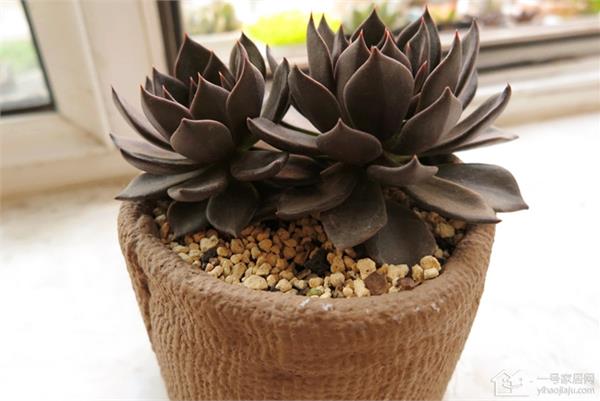
Black Prince is a perennial succulent herbaceous plant in the Crassulaceae family, genus Echeveria. It is a cultivated variety. Its rosette growth habit is the same as that of ordinary Echeveria. The plant has a short-stemmed stalk, and its fleshy leaves are arranged in a standard rosette. The leaves are spoon-shaped and slightly thick. When growing vigorously, a single plant can have more than 100 leaves, and the plant can reach more than 20 cm across. The leaf tips have a small point, and the leaves are blackish-purple; when light is insufficient, the leaves near the growing point turn dark green.
II. Morphological Characteristics of Black Prince
Black Prince is a cultivated variety. The plant has a short-stemmed stalk, and its fleshy leaves are arranged in a standard rosette. When growing vigorously, its leaf disc can reach 20 cm in diameter. The leaves are spoon-shaped and slightly thick, with a small point at the tip, and the leaf colour is blackish-purple. Black Prince produces a cyme, with small red or purplish-red flowers. Its rosette growth habit is the same as that of ordinary Echeveria. The spoon-shaped leaves are relatively thick. When growing vigorously, a single plant can have more than 100 leaves, and the plant can reach more than 20 cm across. The leaves are blackish-purple; when light is insufficient, the leaves near the growing point turn dark green. Black Prince blooms in summer and autumn.
III. Ecological Habits of Black Prince
Black Prince is robust by nature. Although it has a brief dormant period in summer, it is not difficult to get it through the summer as long as you provide a little shade, good ventilation and reduced watering. Early spring and autumn are its vigorous growth periods, when a liquid fertiliser can be applied. The potting soil should not be overly dry, otherwise the old leaves will wither. Ordinary garden soil can be used for planting. For propagation, you can cut off the top to encourage offset buds, or propagate by leaf cuttings; the success rate is much higher than that of ordinary Echeveria. Both Aeonium 'Zwartkop' and Black Prince are cultivated varieties, and their habits are basically similar: both prefer a warm, dry environment with plenty of sunlight, are drought-tolerant, not cold-tolerant, and slightly tolerant of semi-shade.
In summer, when temperatures are high, the plant has a brief dormant period, during which growth slows or stops completely. At this time it can be placed in a well-ventilated spot for care, avoiding prolonged rain, with a little shading, reduced watering and no fertiliser. Spring, autumn and early summer are the plant's main growth periods, when it should be given plenty of sunlight. Although it can also grow in semi-shade, the area near the growing point will turn dark green, and the blackish-purple colour of the leaves elsewhere will also fade to light brown, affecting its ornamental value. In addition, excessive nitrogen fertiliser in the soil, causing overly vigorous growth, can also cause this phenomenon.
Therefore, keeping the potting soil slightly on the dry side and letting the plant grow a little more slowly actually gives better results. In winter, if the minimum temperature does not drop below 10°C, you can water normally so the plant continues to grow, but there is no need to fertilise; if you cannot maintain such a high temperature, reduce watering to let the plant go dormant, and it can also tolerate low temperatures of 3-5°C. Repot once every 1-2 years. The potting soil should be fertile and have good drainage. A common mix is 2 parts coarse sand or vermiculite, 1 part leaf mould and 1 part garden soil, mixed evenly; if conditions allow, adding an appropriate amount of plant ash or bone meal as a base fertiliser gives even better results.
Relatively speaking, Black Prince grows more vigorously, so its care can be a little more relaxed. For Aeonium 'Zwartkop', pay attention to controlling watering during its summer dormant period to avoid root rot caused by overly wet soil. In winter, because there is less light, the leaves will turn green, especially the newly grown leaves, which is even more obvious; there is no need to worry about it, as once spring arrives, the leaves will gradually turn blackish-purple again as light increases.
IV. Cultivation Techniques for Black Prince
In summer, when temperatures are high, Black Prince has a brief dormant period, during which growth slows or stops completely. At this time it can be placed in a well-ventilated spot for care, avoiding prolonged rain, with a little shading, reduced watering and no fertiliser. Spring, autumn and early summer are the plant's main growth periods, when it should be given plenty of sunlight. Although it can also grow in semi-shade, the area near the growing point will turn dark green, and the blackish-purple colour of the leaves elsewhere will also fade to light brown, affecting its ornamental value. In addition, excessive nitrogen fertiliser in the soil, causing overly vigorous growth, can also cause this phenomenon.
Therefore, keeping the potting soil slightly on the dry side and letting the plant grow a little more slowly actually gives better results. In winter, if the minimum temperature does not drop below 10°C, you can water normally so the plant continues to grow, but there is no need to fertilise; if you cannot maintain such a high temperature, reduce watering to let the plant go dormant, and it can also tolerate low temperatures of 3-5°C. Repot once every 1-2 years. The potting soil should be fertile and have good drainage. A common mix is 2 parts coarse sand or vermiculite, 1 part leaf mould and 1 part garden soil, mixed evenly; if conditions allow, adding an appropriate amount of plant ash or bone meal as a base fertiliser gives even better results. Relatively speaking, Black Prince grows more vigorously, so its care can be a little more relaxed.
V. Uses and Functions of Black Prince
1. Ornamental value
Black Prince's neat, perfect rosette leaf disc and distinctive leaf colour make it highly ornamental and very eye-catching. Black Prince resembles a black lotus, giving a sense of nobility, and its flowers are brightly coloured; it is a succulent with both attractive flowers and foliage. With its unique form and beautiful leaf colour, it is very suitable for home cultivation and display.
2. Potted plant use
Black Prince is easy to cultivate and propagate, making it an excellent choice for a home potted plant.
The above is what you need to know about Black Prince. I hope it helps you.