How to Grow Pothos: Problems to Watch Out for When Growing Pothos
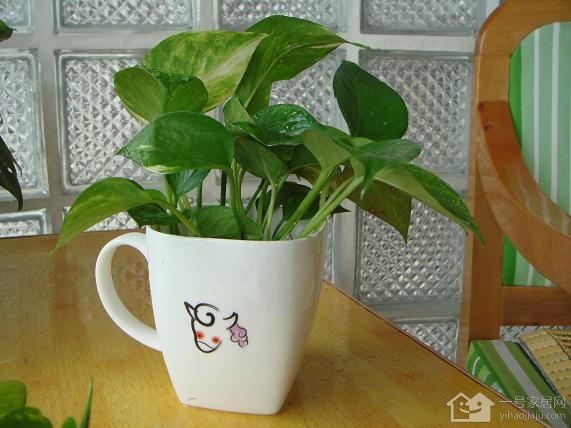
The lovely appearance of pothos. Pothos, also known as golden pothos, devil's ivy, and golden vine, is an evergreen perennial herbaceous plant in the Araceae family, genus Epipremnum. Its stems and vines are thick and strong, capable of reaching several meters in length, with aerial roots at the nodes. Pothos is not demanding about its growing environment and is quite easy to keep alive, so how exactly should you grow pothos? Let's take a look below at the growing methods and points to note for pothos.
I. Introduction to Pothos
It has a lovely appearance. Pothos, also known as golden pothos, devil's ivy, and golden vine, is an evergreen perennial herbaceous plant in the Araceae family, genus Epipremnum. Its stems and vines are thick and strong, capable of reaching several meters in length, with aerial roots at the nodes. The young leaves are ovate-heart-shaped; newly propagated seedlings have smaller and paler leaves, and as the plant ages, the mature leaves become long ovate, about 15 cm long and about 10 cm wide. The deep green leaf surface is flecked with irregular yellow-white spots or streaks. Due to differences in fertilizer and water conditions, leaf size varies. Pothos has luxuriant branches and leaves, good shade tolerance, and stays evergreen and glossy all year round. In winter, when outdoor plants wither and fade, indoor pothos remains lush and green, making it an excellent indoor foliage plant. Because pothos vines grow quickly, people often grow it as a column-trained vine, that is, erecting a support pole in the center of the pot, wrapping some palm fiber around the pole, with the pole 10 cm to 12 cm in diameter, then planting 3 to 4 seedlings in the pot and letting their stems and vines climb around the pole. Some also plant pothos in flower pots and place them on flower stands, letting the vines hang down like a green curtain, which has a distinctive charm.
II. Growing Methods and Points to Note for Pothos
1. For growing pothos indoors at home, choose loose, well-drained soil for potting, and pothos does well in slightly acidic soil.
2. Temperature: The suitable temperature for growing pothos is 20 to 30 degrees, and it should not go below 15 degrees at the lowest; around 10 degrees it will freeze to death. Of course, most homes have growing temperature conditions suitable for pothos, but in winter you need to pay attention to keeping it warm. When the climate is too cold, you can keep pothos warm by reducing how often you open windows.
3. Light: Because pothos originally grows in dark primeval forests and prefers shade, its light requirements are not high. Therefore, when growing pothos, you usually only need to place it indoors where it can see sunlight. You can also take it into the sun at noon for a short while so it can carry out photosynthesis better, then bring it back indoors. Although pothos is very shade-tolerant, it should not be kept in a dark place for too long; at least about every half a month it should be exposed to strong light.
4. Water: When growing pothos, do not water too much; at most, just spray water at its roots. As long as the soil is kept moist, that is enough. If water accumulates, it will breed mosquitoes and insects, seriously affecting the growth and ornamental effect of pothos. In summer, you can water appropriately more; the principle is to keep the potting soil moist but not waterlogged. In winter, watering should be restrained, once every two or three days is enough. When indoor heating is on, you can water appropriately more; when the indoor temperature is too low, be careful to reduce watering. When you cannot water, you can spray water on the leaves to cool it down.
5. Fertilizer: For fertilizing pothos, ordinary inorganic fertilizers are difficult for it to absorb, so you need to use special fertilizers, such as Beida Flower Guardian and Japan's Hana Ichiban. Because pothos grows more slowly in winter, fertilizer should be reduced, while during the growing season fertilizer can be appropriately increased. When fertilizing, mainly use sprayed liquid fertilizer.
The difference between the growing methods for pothos and those for other plants is that because it has aerial roots at the stem nodes, it is very easy to keep alive, and it is generally propagated by cuttings. In particular, 15°C to 25°C is the stage when it grows fastest. The growing methods and points to note for pothos summarized here are all very practical. Keeping some pothos at home adds beauty and purifies the air, so isn't that killing two birds with one stone?
From the introduction above, everyone should understand the growing methods and points to note for pothos, right? Such an easy plant to grow, if you like pothos, what are you waiting for? Get started and grow it. If you want to learn more about flowers, please stay tuned for related content.