A Detailed Introduction to Chrysothemis and Its Cultivation Techniques
Chrysothemis has a long flowering period, blooming in spring, summer and autumn, and is suitable for indoor pot cultivation in temperate zones; in tropical regions it can be used to plant flowerbeds, flower borders and courtyards. Now let us take a look at what we know about Chrysothemis.
I. Introduction to Chrysothemis
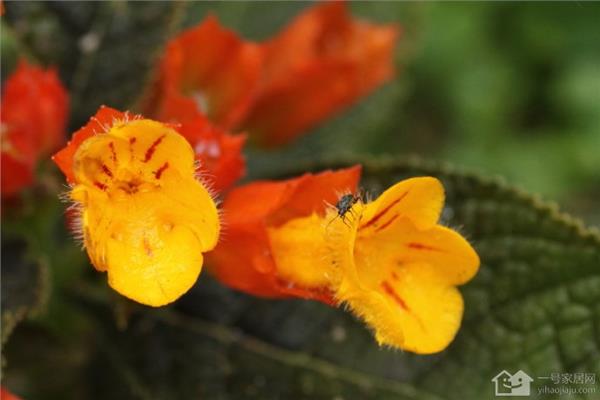
Chrysothemis Chrysothemis is a perennial bulbous plant of the Gesneriaceae family, with a plant height of 15-25 cm and orange-yellow flowers; it is an excellent ornamental with both attractive flowers and foliage. Chrysothemis originates from the tropical regions of the Americas. It prefers a warm, humid and semi-shaded environment and dislikes direct strong light. Chrysothemis is not delicate, has strong vitality and a long flowering period; in tropical regions it can be used to plant flowerbeds, flower borders and courtyards. In temperate regions it is mostly grown in pots for ornament. Chrysothemis prefers a warm, humid and semi-shaded environment and dislikes direct strong light; it is not delicate, has strong vitality and a long flowering period; in tropical regions it can be used to plant flowerbeds, flower borders and courtyards. In temperate regions it is mostly grown in pots for ornament. It originates from the tropical regions of the Americas.
Chrysothemis
II. Ecological Habits of Chrysothemis
It is a perennial bulbous flower that prefers a hot and humid environment, likes high temperature and humidity, favors semi-shade, and dislikes direct strong light. The optimum growing temperature is 25-28°C during the day and 15-18°C at night. It requires fertile, loose soil with good drainage. Chrysothemis prefers a warm, humid and semi-shaded environment, has a relatively wide temperature tolerance, and can grow normally within 18-40°C. However, it is not cold-tolerant, and the room temperature must not be lower than 15°C. It requires loose, fertile soil with good drainage. When grown in a greenhouse, it needs about 50% shading in spring, summer and autumn, and no shading in winter. At home it can be placed in a bright spot near a front window; it likes relatively strong scattered light but dislikes strong direct sunlight.
III. Cultivation Techniques for Chrysothemis
For potting soil for Chrysothemis, you can use peat soil or leaf mold plus 1/4 river sand or perlite and a small amount of farmyard manure, with a pH of 6 to 6.5, and plant it in a round pot 10 cm to 15 cm in diameter. This plant has a relatively wide temperature tolerance and can grow normally within 18-40°C, so the range in which it can be cultivated is also relatively wide, but it is not cold-tolerant; you must ensure the room temperature is not lower than 15°C, otherwise the plant will go dormant, the leaves will turn yellow and fall off, and growth will stop. It dislikes rapid temperature changes. Throughout the growing season, the potting soil should be kept moist but not waterlogged, otherwise the roots will rot; after rain, prevent water from accumulating in the pot. Never let it dry out; water whenever the surface soil in the pot dries to about 1 cm, and water thoroughly each time. Because the leaf surface is hairy, do not splash water on the leaves when watering, otherwise it will cause the leaves to rot. It begins to go dormant in late autumn and early winter, so water less.
During the vigorous growth seasons of spring, summer and autumn, apply 20% cake fertilizer water once every 2 to 3 weeks; from bud formation to flowering, apply 1% potassium dihydrogen phosphate once a week. Fertilization should be stopped in winter. Keep air humidity at 70%-90% and provide 50%-80% shading; too strong light will scorch the leaf surface, while too weak light will make the plant grow leggy and affect flowering. A warm and humid environment is very important for the growth of Chrysothemis; Chrysothemis grows vigorously and blooms continuously at temperatures of 15°C to 35°C. Chrysothemis is a perennial evergreen herbaceous flower of the Gesneriaceae family, native to the tropical regions of the Americas. The stem is upright, and mature plants develop underground tubers; the stems and leaves are succulent, and potted plants are 35 cm tall; the leaves are relatively large, 15 cm long, opposite, densely covered with coarse bristles, much wrinkled, and glossy red-green. The inflorescence is axillary, the flowers are relatively small and golden yellow, with red stripes or spots inside; the fiery red clustered calyces grow on the inflorescence. The golden-yellow flowers and fiery red calyces form a sharp contrast and look very beautiful.
In the same genus there is also Chrysothemis with large leaves. The potting soil is prepared from peat, leaf mold plus one quarter river sand or perlite and farmyard manure, with a pH of 6 to 6.5, and it is planted in a round pot 10 cm to 15 cm in diameter. It prefers a semi-shaded environment; when grown in a greenhouse, it needs about 50% shading in spring and summer, and full light in winter; the optimum growing temperature is 20°C to 30°C, and the overwintering temperature is 13°C to 16°C. In the vigorous growth season it likes sufficient water; keep the potting soil moist regularly, and water whenever the surface soil in the pot dries to about 1 cm, watering thoroughly each time. The potting soil must have good water permeability and must not become waterlogged, otherwise the roots will rot; after rain, prevent water from accumulating in the pot. Because the leaf surface is hairy, do not splash water on the leaves when watering, otherwise it will cause the leaves to rot. It begins to go dormant in late autumn and early winter, so water less. During vigorous growth, potted plants should be given 20% cake fertilizer water once every 2 to 3 weeks, and from bud formation to flowering, 1% potassium dihydrogen phosphate once a week.
The above is what we know about Chrysothemis; I hope it can help you.