What Is Dracaena? Key Points for Growing Dracaena Explained
Dracaena can be used as a large indoor potted plant for decoration, and it can add beauty to villas or large apartments. However, it is fairly large, so if your home is not very big, it is better not to grow it, as it takes up quite a bit of space. As you can see, it is an evergreen plant, with leaves spreading out from the top of the stem, very attractive. Dracaena has a faint fragrance, and its flowers are white.
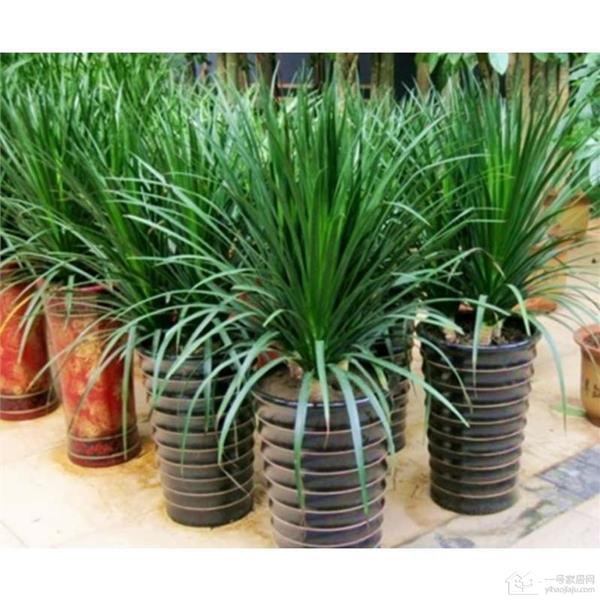
I. Introduction to Dracaena
Dracaena, also known by the aliases horse-mule sugarcane tree, narrow-leaf dracaena, and long-flowered dracaena, and bu cai tree; its Latin name is Dracaena angustifolia. Its plant form is extremely handsome, and its leaves are colorful, bright and beautiful. In some varieties the leaves are densely covered with yellow spots, affectionately called "star-point wood" by people; in some varieties the leaves have yellow longitudinal stripes and can secrete a faint fragrance, so people call it fragrant dracaena; in some varieties the leaves are inlaid with white, milky white, and cream-yellow stripes, so people also call it tricolor dracaena. The stem of Dracaena can secrete bright red resin, which is "dragon's blood," and from this the good name Dracaena comes.
Dracaena likes high temperatures and humidity, and likes light; with sufficient light, its leaves are brightly colored. It is not cold-tolerant. In winter the temperature should be about 15C, and the minimum temperature is 5-10C. If the temperature is too low, because the root system absorbs insufficient water, yellow-brown patches will appear at the leaf tips and leaf margins. It likes loose, well-drained soil rich in humus.
It can be propagated by sowing or cuttings. Sowing is used for hybrid breeding. Horticultural varieties of Dracaena are usually not propagated by sowing; plants propagated by sowing have traits similar to wild species or with different variations, losing the fine characteristics of horticultural varieties. Propagation by cuttings is the main method of maintaining the quality of horticultural varieties. The cuttings can use perennial stems or tender branches. Insert the cuttings into a cutting bed with coarse sand or vermiculite as the medium. The suitable temperature for the cutting bed is 21-24C. Leafy shoot tips and tender branches root quickly, about 2-4 weeks; stems root more slowly, and sometimes it takes 2-3 months to grow new buds and roots. After rooting, move them into pots.
II. How to Grow Dracaena
1. Soil: Dracaena has strong adaptability and is not strict about soil, but it grows best in loose, fertile, well-drained, slightly acidic soil. You can use loam with high humus content from under pine and cypress forests mixed with river sand for cultivation, or mix leaf mold and river sand for cultivation. During the cultivation of Dracaena, ferrous sulfate needs to be applied about once a month, which can ensure the soil pH is suitable, slightly acidic, and suitable for its normal growth.
2. Fertilizer and water management: Dracaena likes loose, fertile, well-aerated substrate, and soilless cultivation methods can be used for cultivation and management. The substrate can be a thorough mix of vermiculite, perlite, and peat soil. This kind of substrate has good permeability, is clean, and is sterile and odorless. When Dracaena is cultivated in this substrate in high-grade containers, it can go several years without repotting or changing the soil, and the plant's root system is well developed and grows robustly. For fertilizer and water management in soilless cultivation, the main thing is to apply nutrient solution as a top dressing. If the number of plants grown is small, you do not need to specially prepare nutrient solution.
3. Temperature and light: Dracaena likes warm, humid, and sunny environments, and it can also tolerate shade. However, if it is kept indoors and placed in too shady an environment for a long time, the leaves will also fade. So it is best to put the flowerpot on a southeast-facing windowsill so that it can fully receive sunlight. If Dracaena is grown on a balcony, when the summer sunlight is too strong, move the flowerpot indoors, especially at noon, and provide appropriate shading. Generally, a light level of 40-50% is enough, so as to avoid the blazing sun burning the leaves. Dracaena likes warmth and is not tolerant of cold.
4. Propagation: For home propagation of Dracaena, cuttings are generally used, combined with pruning. This can be done from April to August each year, and indoors it can be done all year round, but the temperature needs to be kept between 20-30°C to favor the growth of new roots. For the stump type, it is best to break it off by hand, remove 1/2-2/3 of the lower leaves, insert it directly into clean river sand, water thoroughly, and temporarily avoid strong light; for the whole-plant type, after shortening and cutting, the leaves should also be removed first, then it should be inserted into clean river sand and watered thoroughly. Afterward, the air humidity should be kept at about 70%, and in one month it will grow new roots and become a new plant.
Finally, the above is the relevant knowledge on how to grow Dracaena introduced for everyone. I hope it can give you some reference.