What Does It Mean When a Sago Palm Blooms? A Detailed Analysis of Blooming Conditions
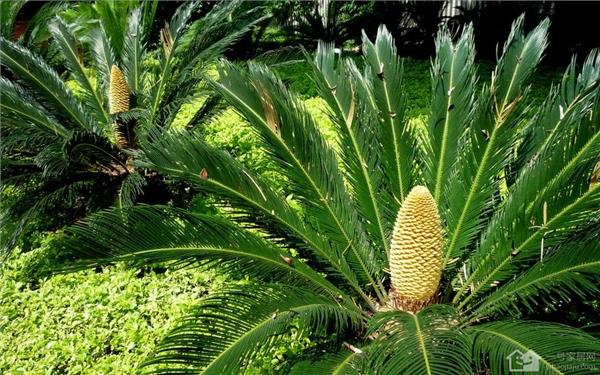
Many of you have probably never seen a sago palm bloom. The sago palms around us basically never bloom, so what is going on when a sago palm does bloom? Sago palm blooming is extremely rare. So today we are going to enjoy some pictures of blooming sago palms, and also look at what a sago palm blooming signifies.
I. Getting to Know the Sago Palm
Sago palm (Cycas revoluta) - the sago palm can grow up to 8 m tall, equivalent to more than 2 storeys. When potted, its root system is not so developed, reaching at most 2-3 m in height. The sago palm has a thick, cylindrical stem. Its surface is covered with tightly packed, dark brown, shriveled leaf bases and leaf scars. On old plants of many years, small stems often sprout from adventitious buds on the trunk, called suckers. The fibrous root system is fleshy. The sago palm does bloom, generally in July and August. It is dioecious; the male flowers are yellow and the inflorescence is cone-shaped. Its female inflorescence is flat and spherical, like a palm shape. After blooming it can produce ovoid, slightly flattened, vermilion, glossy seeds.
II. Growing Environment
The sago palm likes sunlight and grows best in a warm, humid environment with fresh, clear air. It is not tolerant of severe cold, so it mainly grows in areas north of the Yangtze River basin. For potted sago palms in the north, strong winds and blazing sun should be avoided in spring and autumn. During the intense heat of summer, avoid waterlogging in the soil. Alkaline soil easily turns the leaves yellow, while acidic soil suits it best. It is strongly tolerant of fertilizer; poor, barren soil is not good for growth and it will not produce new shoots. The sago palm is very long-lived but grows very slowly, increasing by at most 2 cm per year.
III. What a Sago Palm Blooming Signifies
Sago palm blooming is extremely rare and follows no regular pattern. Hence the saying: "A thousand-year sago palm has bloomed, a ten-thousand-year fruit tree is about to sprout." For this reason, a blooming sago palm symbolizes good fortune, wealth and happiness. With its unique posture and vigorous, upward-thrusting character, it brings people a beautiful hope full of vitality and positive striving. It foretells a life full of goodness, great wealth and high status.
IV. Key Points for Sago Palm Care
A famous medium-to-large evergreen foliage plant, grown in pots or large wooden tubs. Potting soil must be well drained; apply liquid fertilizer once every 2-3 weeks during the growing season; keep the potting soil moist at all times, but avoid waterlogging. It is strongly drought tolerant; going without water for many days will not have a big effect. It likes full sunlight; move it outdoors into the sun in spring, summer and autumn. During the period when new leaves emerge, it must be grown in the sun, otherwise the leaves become thin and elongated and the plant's shape deteriorates. It is dioecious, and after blooming it can set seed through hand pollination. It likes warmth, and the wintering temperature should be above 5°C.
V. Sago Palm Blooming Conditions
Light: likes strong light, not tolerant of shade (sufficient light).
Water: grows in moist soil.
Temperature: slightly cold tolerant, able to withstand low temperatures of -5-0°C.
Humidity: moderate relative humidity, 50%-60%.
The above is an introduction to the relevant knowledge about sago palm blooming. I hope it can be of help to everyone!