Introduction to the Cowslip Primrose and an Analysis of Its Floral Language Meaning
Spring arrives right on time - has the window of your young heart opened? In the early spring when all things revive, we hold a vibrant heart to embrace new breaths and new challenges. This is the mission of youth, and this is the meaning the cowslip primrose gives us. Therefore, those born under its blessing make people feel a surge of youthful vitality. So, let us take a look at the floral language of the cowslip primrose.
I. About the Cowslip Primrose
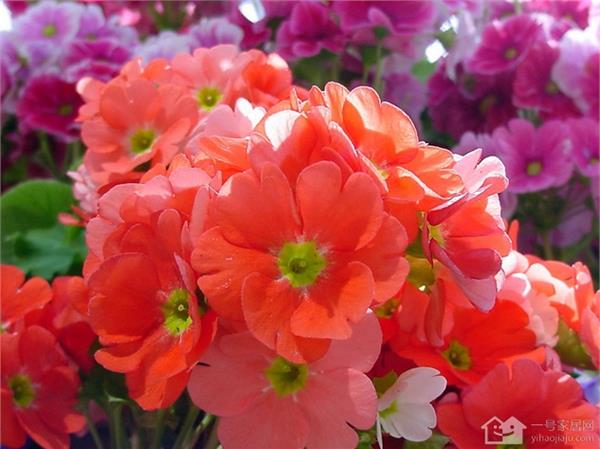
The cowslip primrose, also known as the European primrose, is a clump-forming plant about 20 cm tall. Its leaves are basal, 10-15 cm long, oblong, with deeply sunken veins. The leaves are green. The umbel inflorescence has rich, vivid colors, including bright red, pink, purple, blue, yellow, orange, white and so on, and the center of the flower is generally yellow. It is a perennial herb, often grown as an annual or biennial. The European primrose is a clump-forming plant, 20 cm tall. Its leaves are basal, oblong, up to 15 cm long, with deeply sunken veins. The umbel inflorescence has single and double flower forms, with vivid colors including bright red, pink, purple, blue, yellow, orange, white and so on, and the throat is mostly yellow.
Since ancient times, Christianity has had the custom of linking saints with specific flowers, which stems from the church's practice of decorating altars with blooming flowers when commemorating saints. In the medieval Catholic monasteries, various flowers were even grown almost like in a gardening center. Over time, the church associated the saints of the 366 days with different flowers, forming the so-called flower calendar.
At that time, most monasteries were located in Southern Europe, and Southern Europe has a Mediterranean climate, which is extremely suitable for planting flowers and plants. The cowslip primrose, also called primrose, was chosen to be dedicated to Saint Fructus, who began spreading the gospel in Spain and France in the 4th century AD.
II. What Is the Floral Language of the Cowslip Primrose
1. Cowslip primrose floral language: youth
Floral language interpretation: From March to April, under the cool climate of the United Kingdom, the cowslip primrose blooms with lovely pale yellow flowers. Because it blooms at the same time as the budding spring, its floral language is "youth." Those born under the blessing of this flower make people feel a surge of youthful vitality. However, adolescence is also the period with the most worries. Overcoming worries, living as yourself, and embracing life with passion - this is youth!
2. Cowslip primrose floral language: loneliness
In winter, when the ground is covered with white snow, the primrose forms small red fruits, and red dots float amid the expanse of white, extremely beautiful. In Japanese aesthetics, this is regarded as a profound scene close to loneliness. Therefore, its floral language is "loneliness." Those born under the blessing of this flower possess a classical temperament and are good at creating a quiet atmosphere, but inwardly they hide a passionate heart; once they fall in love, they will surely remain loyal to the end. However, this kind of inner-outer incongruity in personality is charming to the opposite sex.
3. Cowslip primrose floral language: maturity
The cowslip primrose is a perennial herb widely growing on the European continent. Its bell-shaped yellow flowers are very fragrant. In the English countryside, some people pick them and, after they mature, brew them into mellow wine. Therefore, its floral language is "maturity." Those born under the blessing of this flower are tireless and very eager to learn. Taking tomorrow's achievements as the goal of today's struggle for survival, it is believed that through continuous effort, the fruit of success will surely be borne in the near future!
Finally, after reading the above content, you probably know the floral language of the cowslip primrose now! The cowslip primrose is truly beautiful, and it is also called the European primrose. So flower lovers who want to grow it should get going.