What are the cultivation methods and precautions for maidenhair fern
What are the cultivation methods for maidenhair fern, and how do you grow maidenhair fern? I believe many friends are not very familiar with maidenhair fern, so today I will introduce maidenhair fern and its cultivation methods. Now let's take a look at what the cultivation methods for maidenhair fern are.
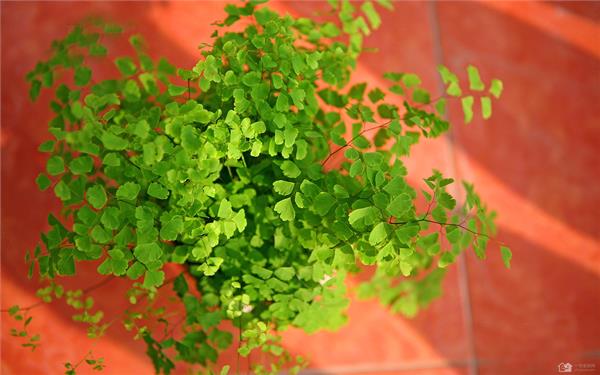
I. Morphological characteristics
Maidenhair fern is a perennial herb, with a plant height of 15-40 cm. Its rhizome is slender and creeping horizontally, densely covered with brown lanceolate scales.
Its fronds are distant or close together; the stipe is usually 5-20 cm long, about 1 mm thick, relatively slender, chestnut-black in color, glossy on the surface, and its base is covered with the same scales as those on the rhizome. The blade is ovate-triangular, 10-25 cm long and 8-16 cm wide, with a pointed tip and a base similar to wedge-shaped; the part below the middle is mostly bipinnate, while the part above the middle is mostly once odd-pinnate;
The number of pinnae is between 3-5 pairs, basically all alternate, slanting upward, and stalked (up to 1.5 cm long). The basal pair of pinnae is larger, 4.5-9 cm long and 2.5-4 cm wide, oblong-ovate, with a rounded obtuse tip, once (rarely twice) odd-pinnate, with 2-4 pairs of lateral ultimate pinnules, alternate, slanting upward, 6-15 mm apart, almost equal in size or only the basal pair slightly larger, symmetrically or asymmetrically obliquely fan-shaped or nearly obliquely square, 1.2-2 cm long and 1-1.5 cm wide, with a rounded upper margin, having 2-4 shallowly lobed or deeply divided linear lobes; the apex of the sterile lobes is obtusely rounded, with broad triangular small serrations or erose small teeth; the apex of the fertile lobes is truncate, straight or slightly sunken, entire or with erose small teeth on both sides, while the two sides are entire, the base gradually narrowing into an oblique broad wedge shape, with a slender chestnut-black short stalk (1-2 mm long), bearing at the top a fan-shaped pinnule with a narrow wedge-shaped base, often larger than the lateral pinnules below it, with a stalk up to 1 cm long; the second pair of pinnae is 2.5-5 cm away from the basal pair, and each pair upward is the same shape as the basal pair of pinnae but gradually smaller.
Its veins are dichotomously forked many times, reaching directly to the margin. After drying, the fronds are thinly herbaceous, grass-green or brownish-green in color, hairless on both sides; the rachis, the various orders of pinna rachis, and the pinnule stalks are the same color as the stipe, but often slightly zigzag to the left and right. The sori number 3-10 per pinna, borne transversely on the upper margin of the fertile ultimate pinnules; the indusium is linear, long reniform to round-reniform, with a straight upper margin, pale yellow-green, brown when old, membranous, entire, persistent. The spore perispore has coarse granular ornamentation, often retained after treatment.
II. Cultivation methods for maidenhair fern
1. Soil: Maidenhair fern prefers loose, well-drained, fertile calcareous sandy loam soil. For pot cultivation, the growing medium can be made by mixing loam, leaf mold, and river sand in equal parts.
2. Watering: Maidenhair fern prefers a humid environment. During the peak growing season, it should be watered thoroughly. In addition to keeping the potting soil moist, attention should also be paid to maintaining relatively high air humidity; when the air is dry, sprinkle water around the plant. Especially in summer, water 1-2 times a day; if water is lacking, the fronds will shrivel. Avoid alternating dry and wet potting soil when watering, as this easily causes the fronds to turn yellow.
3. Sunlight: It prefers bright indirect light and is afraid of direct sun exposure. If the light is too strong, the fronds will wither and yellow or even die. In summer, appropriate shading can be provided; prolonged direct strong light will cause most of the fronds to wither and yellow. Indoors, it should be placed in a shaded spot; even if placed there for 1 year, it can still grow normally.
4. Temperature: It prefers warmth and is also cold-tolerant. The suitable growing temperature is 21-25°C during the day and 12-15°C at night. In winter, it should be moved into a greenhouse; the fronds can still remain fresh green when the temperature is above 5°C, but when it is below 5°C, the fronds will suffer cold damage.
5. Fertilizing: Apply dilute liquid fertilizer 2-3 times a month. When fertilizing, do not splash it on the frond surface to avoid causing leaf rot. Because maidenhair fern likes calcium, an appropriate amount of lime and crushed eggshells should be added to the potting soil; regularly applying calcium fertilizer will give better results. In winter, reduce watering and stop fertilizing.
6. Pests and diseases: Potted maidenhair fern often suffers from leaf blight. In the early stage, Bordeaux mixture can be used for control; in severe cases, a 1000-1500 times dilution of 70% thiophanate-methyl can be used for control. If scale insects harm the plant, a 1000 times dilution of 40% omethoate can be used for control.
7. Pruning: After early autumn, as the temperature drops, maidenhair fern enters a stage of slow growth, and the old fronds gradually turn yellow. At this time, they should be cut off.
III. Precautions for growing maidenhair fern
1. Knowing the cultivation methods for maidenhair fern, and knowing that maidenhair fern is naturally fond of warm, humid, and semi-shaded cool environments and strongly dislikes direct sunlight, it is therefore best to place the plant indoors in a place beyond the reach of sunlight, since excessive and overly strong light easily causes the frond margins to scorch.
2. Ferns all grow in moist environments, and maidenhair fern is naturally no exception. When cultivating it, in addition to keeping the soil moist, it is also necessary to frequently spray water mist on the frond surface to increase air humidity. When the plant shows yellowing, it is often caused by insufficient humidity. Of course, this may also be caused by cold damage.
3. The cultivation methods and precautions for maidenhair fern require repotting once every spring, and at the same time removing dried fronds and old roots. The potting soil should also be replaced with fresh, fertile, and loose leaf mold, and it is best to add a small amount of brick crumbs to it.
The above are the methods introduced for how to grow maidenhair fern. I hope these introductions can help everyone. Friends who are interested may wish to refer to the maidenhair fern cultivation methods introduced above and grow a healthy maidenhair fern themselves.