How to Grow Freesia? Detailed Guide to Cultivation Methods and Tips
Every plant has its own corresponding cultivation method, or a unique meaning it represents. The same is true of freesia. A plant's appearance and some of its related characteristics are important features that distinguish it from other plants, and its cultivation methods are different too. So, how do you grow freesia? Let us find out together below.
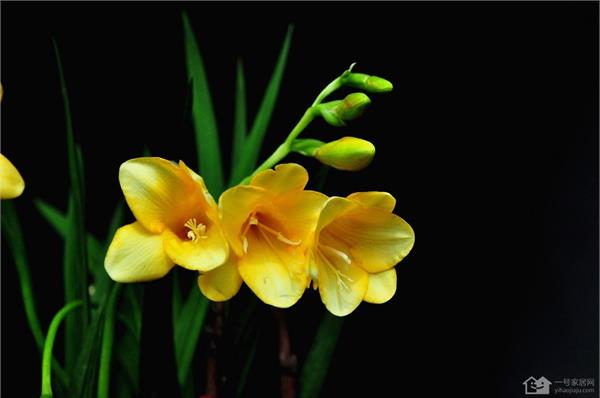
I. Introduction to Freesia
Freesia, also known as small freesia, small iris, and foreign tuberose, is a perennial bulbous herbaceous flower of the genus Freesia in the iris family. The freesia plant has a delicate, elegant form, with leaves like orchids and flowers like lilies. It is richly fragrant, with brilliant flower colors and a long flowering period. It is an ideal potted flower for accenting indoor spaces such as living rooms, studies, and meeting rooms, and it is also a good cut flower and vase material for indoor use in winter. In addition, the freesia's flowering period coincides with New Year's Day and the Spring Festival, adding to the festive atmosphere, and it is deeply welcomed and loved by people.
II. How to Grow Freesia
Freesia is propagated by dividing the corms. In a freesia plant grown in the current year, several daughter corms form around the mother corm. After the flowers fade, the freesia leaves gradually dry up. When it enters dormancy at the end of May, the corms must be dug out and placed indoors in a shaded, dry place. By early August, the daughter corms can be planted separately in another pot. The potting soil can be made with 3 parts rotted manure, then the growing medium is put into the pot, and the daughter corms are planted in the pot. Covering the daughter corms with 1-1.5 cm of soil is enough. After planting, water thoroughly, and they will sprout and grow after 10 days.
Freesia likes ample sunlight and relatively low temperatures. At a temperature or room temperature of 15C, the plant can grow normally and robustly, while when the temperature or room temperature exceeds 20C, the plant is prone to lodging from leggy growth, or tends not to flower. When the outdoor temperature is below 15 degrees, it should immediately be moved indoors, and throughout the winter it should be placed in a room at 15-18C.
III. Cultivation Techniques for Freesia
1. Corm Division Planting
Corm division planting is the main method of growing freesia. After the plant dies back and goes dormant, dig out the underground corms. At this time the mother corm has already died, and 1 new corm and several daughter corms have formed on it. Generally, the new corms are all more than 1 cm in diameter and can flower after planting. Daughter corms with a diameter greater than 1 cm can also serve as flowering mother corms, with fairly good results, while those smaller than 1 cm need 1-2 years of planting before they can serve as flowering mother corms. The daughter corms also have the habit of going dormant at high temperatures, and after being dug out they should be stored in a ventilated, dry place.
2. Seed Planting
Cut-flower varieties can be grown from seed. Collect the seeds promptly after they mature in May-June, otherwise the capsules split open and the seeds are lost. The seeds have no dormancy habit and can be sown immediately after collection. The optimum temperature for seed germination is 15-20°C, and under dark conditions germination is uniform, taking about 21d. When the seedlings have 5-7 leaves, the aboveground part turns yellow and withered, and the underground corms enter a high-temperature dormancy period. After dormancy, they are planted again and cultivated for 1 year to produce daughter corms, after which they can serve as flowering mother corms.
3. Tissue Culture Planting
At present, tissue culture propagation of freesia has been applied in production. For example, some developed countries have already mass-produced virus-free freesia plantlets. The explants used are young flower buds, and the culture conditions are: temperature 20-25°C, light intensity 1500Lux, pH 5.8.
Finally, that is all for the related information about freesia. We hope this article is helpful to everyone.