What are the morphological characteristics and effects of Lysimachia christinae?
Lysimachia christinae is a very lovely foliage plant, with kidney-shaped to round leaves, green foliage, and small yellow flowers. It is very cute and is believed to have a good effect when used to decorate and accent the home. Below, let's talk about what effects Lysimachia christinae has.
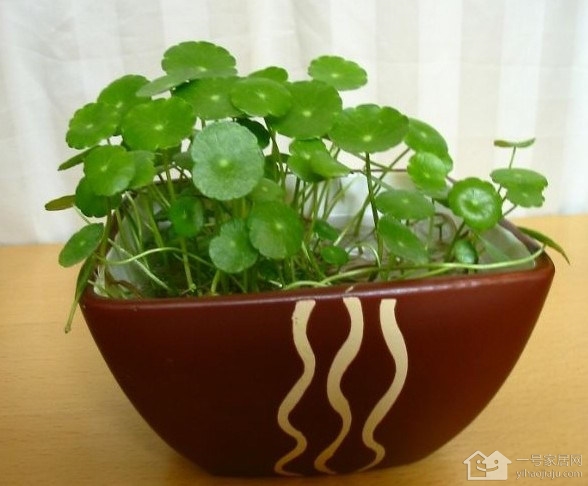
I. About Lysimachia christinae
The original name of Lysimachia christinae is Dichondra repens, with aliases: Glechoma hederacea, Pilea peperomioides, Saxifraga stolonifera, water clover, meat wonton grass, golden key, lianqiancao, etc. Latin name: DichondrarepensForst. A perennial creeping small herb of the order Tubiflorae, family Convolvulaceae. Leaves kidney-shaped to round, 4-25 mm in diameter; flowers solitary in leaf axils, pedicels shorter than petioles, thread-like; green leaves, small yellow flowers. It is mainly distributed in tropical and subtropical regions of both hemispheres. The whole plant is used medicinally, with the effects of clearing heat and promoting diuresis, dispelling wind and relieving pain, stopping bleeding and promoting tissue regeneration, reducing inflammation and detoxifying, and killing insects. It can treat acute and chronic hepatitis, icteric hepatitis, cholecystitis, nephritis, urinary tract infection, tonsillitis, stomatitis, and carbuncles, furuncles, toxic swellings, venomous snake bites, breast abscess, dysentery, malaria, pulmonary hemorrhage, etc.
II. Morphological characteristics of Lysimachia christinae
Perennial creeping small herb, stems slender, covered with gray short soft hairs, rooting at nodes. Leaves kidney-shaped to round, 4-25 mm in diameter, apex broadly rounded or slightly notched, base broadly cordate, leaf surface slightly hairy, abaxial surface covered with appressed short soft hairs, margin entire; with long petioles, petioles (1.5) 3-6 (6) cm long. Flowers solitary in leaf axils, pedicels shorter than petioles, thread-like; sepals obovate-oblong to spatulate, obtuse, 2-3 mm long, hairy on the back and margins; corolla campanulate, shorter than to slightly longer than the calyx, yellow, deeply 5-lobed, lobes oblong-lanceolate, glabrous; stamens 5, inserted at the sinuses between the 2 corolla lobes, filaments short, equal in length; ovary sparsely pubescent, 2-locular, with 4 ovules, styles 2, stigmas capitate. Capsule nearly spherical, small, shorter than the calyx, about 1.5 mm in diameter, membranous. Seeds 1-2, yellow to brown, glabrous.
III. Effects of Lysimachia christinae
Clears heat and removes dampness, promotes urination, and reduces swelling. Used for heat strangury, sand strangury, painful difficult urination, jaundice with dark urine, carbuncle swellings and furuncles, venomous snake bites; hepatobiliary stones and urinary tract stones. For heat strangury, it is especially good at treating stone strangury; it can be decocted alone in a strong decoction and taken as tea, or used together with Lygodium japonicum and Gallus gallus domesticus inner lining. For damp-heat jaundice, it can be used together with Artemisia capillaris and Gardenia jasminoides. In modern treatment of cholelithiasis, it is used in combination with Artemisia capillaris, Scutellaria baicalensis, Aucklandia lappa, etc. For furuncles, toxic swellings, snake and insect bites, and scalds, fresh Lysimachia christinae can be pounded into juice and taken orally, with the residue applied topically to the affected area.
IV. Actions of Lysimachia christinae
Used for hepatobiliary stones and urinary tract stones, heat strangury, and jaundice. Lysimachia christinae has good effects in removing dampness and reducing jaundice and in expelling stones and promoting urination. To treat hepatobiliary stones and jaundice, this product can be decocted alone and taken as tea, or combined with Artemisia capillaris, Curcuma aromatica, Rheum officinale, etc. to enhance the effects of clearing and disinhibiting the liver and gallbladder and expelling stones. To treat stone strangury and heat strangury, it can also be used alone for effect or with Lygodium japonicum, Gallus gallus domesticus inner lining, Pyrrosia lingua, etc. to enhance the effects of clearing damp-heat from the lower jiao and promoting urination and expelling stones; for stone strangury accompanied by symptoms of kidney deficiency, it can be combined with kidney-tonifying herbs such as Taxillus chinensis and Juglans regia kernel. Used for sore toxins, carbuncle swellings, breast abscess, erysipelas, venomous snake bites, and traumatic injuries. Lysimachia christinae has the effects of detoxifying and dissipating blood stasis, reducing swelling and relieving pain. Fresh material is often used orally or topically; fresh herb can be pounded into juice and taken, or pounded and applied to the affected area, and it can also be used together with Chrysanthemum indicum, Taraxacum mongolicum, Rohdea japonica, etc. to strengthen the effects of clearing heat and detoxifying. In addition, Lysimachia christinae is used for edema and abdominal distension; both oral administration and topical application have diuretic and swelling-reducing effects. For lung-heat cough and high fever in children, its heat-clearing and detoxifying effects are used.
V. Usage of Lysimachia christinae
Lysimachia christinae can be decocted into soup and taken directly, three times a day. Lysimachia christinae can also be applied externally: first take an appropriate amount of Lysimachia christinae, then place it in a container and pound it into juice for external application. Lysimachia christinae can also be decocted together with chrysanthemum, Taraxacum mongolicum, and Rohdea japonica and taken. Pound Lysimachia christinae into juice, then warm an appropriate amount of yellow wine and take the pounded Lysimachia christinae juice mixed with the wine. Lysimachia christinae can also be sun-dried, ground into powder, and then steamed and cooked together with pork liver and taken.
VI. Side effects of Lysimachia christinae
Every medicine has some toxicity. Although Lysimachia christinae has very good medicinal effects, excessive use of Lysimachia christinae can cause skin inflammation, skin allergies, damage to vital qi, etc.
The above is an introduction to the effects of Lysimachia christinae. I hope it can be helpful to everyone.