Spiraea Propagation Methods and Related Knowledge Explained
Spiraea, also called mahuangshao, is a typical bisexual flower, with white as the main flower color, and a relatively long flowering period, so it is often used for garden landscape cultivation and planting. Now let's take a look at the knowledge about Spiraea.
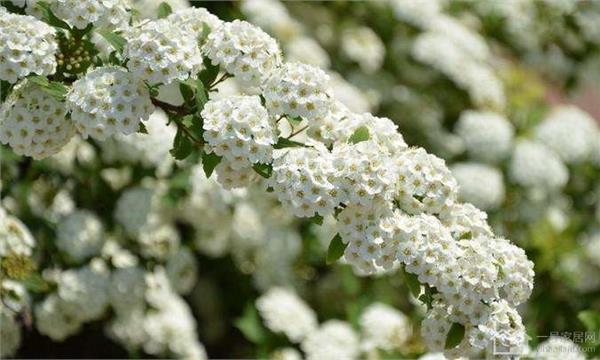
I. Introduction to Spiraea
Spiraea is a plant variety under the genus Spiraea in the Rosaceae family. In summer it blooms with bright pink flowers, is cultivated for ornamental use, and is also a nectar source plant.
Spiraea
II. Morphological Characteristics of Spiraea
Erect shrub, 1-2 m tall; branches dense, branchlets slightly angular, yellow-brown, young branches with short pubescence, shedding when old; winter buds ovate or oblong-ovate, apex acute, with several brown exposed scales, sparsely covered with fine short pubescence. Leaf blades oblong-lanceolate to lanceolate, 4-8 cm long, 1-2.5 cm wide, apex acute or acuminate, base cuneate, margin densely sharply serrate, sometimes doubly serrate, glabrous on both sides; petiole 1-4 mm long, glabrous.
Inflorescence an oblong or pyramidal panicle, 6-13 cm long, 3-5 cm in diameter, covered with fine short pubescence, flowers dense; pedicels 4-7 mm long; bracts lanceolate to linear-lanceolate, entire or with a few serrations, slightly covered with fine short pubescence; flowers 5-7 mm in diameter; hypanthium campanulate; sepals triangular, inner surface slightly covered with short hairs; petals ovate, apex usually rounded-obtuse, 2-3 mm long, 2-2.5 mm wide, pink; stamens 50, about 2 times longer than the petals; disk annular, lobes finely crenate; ovary sparsely short-pubescent, style shorter than stamens. Follicles erect, glabrous or with short pubescence along the ventral suture, style terminal, spreading obliquely, often with reflexed sepals. Flowering period June-August, fruiting period August-September. Plant height 30-50 cm, plant form full and nearly semicircular, clumping.
Leaves long-ovate or obovate, alternate. New leaves golden yellow, old leaves turning yellow-green, glossy. A deciduous erect shrub, up to 2 m tall, branches dense, branchlets angular and short-haired, leaves simple and alternate, blades oblong-lanceolate, margin finely and densely sharply serrate, glabrous on both sides, petiole short, glabrous, oblong panicles born at the top of current-year leafy long branches, up to 6-13 cm long, pubescent, flowers dense, bisexual, umbel terminal, flowers pink, flowers short-stalked, petals pink, 50 stamens extending beyond the petals, flowers have a disk, bracts, calyx and sepals, all pubescent, follicles erect, about 5 mm tall, hairy along the ventral suture and with reflexed sepals, flowering period June-September, fruit ripening August-October.
II. Spiraea Propagation Methods
1. Sowing, division, and cuttings are all possible.
Spiraea can be propagated by seed or by cuttings. After the seeds mature, they can be collected and sown immediately, with a relatively high germination rate, and under normal circumstances seedlings can be formed in the second year. If a large number of seedlings is needed, cutting propagation is best. Spiraea chinensis, like other plants in the Asteraceae family, has a relatively high cutting survival rate and can be propagated except in winter, but cuttings with 2 leaves taken from May to September have the best effect. For the cutting substrate, perlite, vermiculite, or river sand with good water retention can be selected. Choose robust, well-developed current-year branches as cuttings, soak them in ABT rooting powder at 50 ppm, water thoroughly after insertion, and carry out regular foliar spraying. Cuttings taken from May to September generally root in about 15 days, with a survival rate above 80%.
2. Growing Season Management
Spiraea is fertilized twice a year, once with winter fertilizer, applying organic fertilizer in winter or early spring; the other time after the flowers fall, with additional fertilizer. Generally, for Spiraea tree fertilization, the hole application method can be used, that is, at the edge of the tree canopy's direct projection line, dig a ring-shaped trench about 10 cm deep and apply the fertilizer into it. This method is both simple and conducive to root absorption, and as the tree grows later, the diameter and depth of the fertilizing ring trench also increase accordingly. Good drainage and aeration are required, with timely intertillage. Water reasonably according to the tree's needs, and spray New High Lipid Film to retain fertilizer and preserve soil moisture.
3. Pruning and Maintenance
Pruning mainly involves cutting off withered branches, water sprouts, overlapping branches, and diseased and pest-infested branches. Spiraea is very resistant to cold and drought. If you prune the branches and leaves, then Spiraea will also work very hard to grow new branches and leaves. After pruning, the branches should promptly be treated with wound healing and anti-corrosion film so that the wounds heal quickly and prevent pathogens from invading after rain, which could lead to rot. During the flower bud differentiation stage, spray Flower Promoting King No. 3, which can convert the plant's vegetative growth into reproductive nutrition, inhibit the excessive growth of the main shoot, promote flower bud differentiation, and produce more flowers. For Spiraea to overwinter safely, it must be sprayed with Tree Protection General to protect the tree body from freezing, drive away overwintering viruses and pests that land on the tree body to reproduce, urge the fruit tree to enter dormancy early, and restore its vitality.
The above is the knowledge about Spiraea. I hope it can help you.