You can grow lipstick plants at home, so you never have to buy lipstick again
The lipstick plant is an excellent trailing plant of recent years, and both its flowers and leaves have high ornamental value. As a small indoor foliage and flowering plant, the lipstick plant has a graceful form, lush stems and leaves, and brilliantly colored flowers. It can be placed on a table or desk, or hung up for viewing, making it a fashionable choice for home flower growing. Now let us take a look at what there is to know about the lipstick plant.
I. Introduction to the lipstick plant
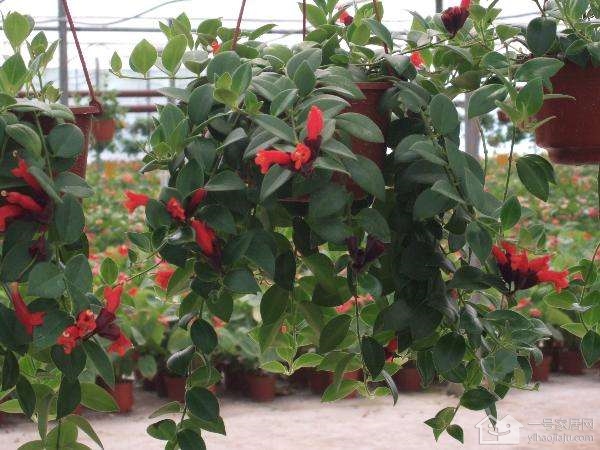
The stems of the lipstick plant hang down to about 1 m long. The lipstick plant's deep green leaves, paired with its bright red and unusual corolla, make it much loved by people. The lipstick plant mainly blooms in summer. The lipstick plant is an epiphytic evergreen climbing vine. It is epiphytic in nature and is often grown in hanging baskets. Its stems hang down to about 1 m long. The flowers are borne in pairs at the tips of the branches, with short pedicels, and the corolla is tubular and bright red. The lipstick plant has opposite leaves; the blades are ovate, elliptic, or obovate, leathery and slightly fleshy, 4.5 cm long and 3 cm wide, with entire margins, a conspicuous midrib, and hidden, inconspicuous lateral veins; the leaf surface is deep green and the underside is light green. The flowers are axillary or clustered at the tips. The flowers are borne in pairs at the tips of the branches, with short pedicels, and the corolla is red to red-orange, about 6.5 cm long. The calyx is tubular, dark purple and covered with fine hairs; only when it grows to about 2 cm does the corolla emerge from the mouth of the calyx, tubular and bright red, just like lipstick, hence the name. The stems of the lipstick plant hang down to about 1 m long. The lipstick plant's deep green leaves, paired with its bright red and unusual corolla, make it much loved by people. The lipstick plant mainly blooms in summer.
II. Cultivation techniques for the lipstick plant
1. Cultivation management
The lipstick plant likes a warm, semi-shady environment with bright light. Insufficient light easily causes the branches to grow leggy and makes it hard for the plant to bloom; too much light turns the leaves reddish brown. For a lipstick plant kept at home, the most suitable spot is hanging about 1 m from a south-facing window. For potting soil, slightly acidic soil is best; you can use a potting mix made from peat soil, sand, and vermiculite, with an appropriate amount of superphosphate added. You can also use 8 parts leaf mold mixed with 2 parts coarse sand; or you can grow it in well-rotted cow dung and horse dung mixed with 30% coarse coal furnace ash. In the heat of summer, it can be placed outdoors under a shade shed or in a ventilated spot under tree shade, with about 50% shading; for those living in apartment buildings, the pot can be hung under the frame of a balcony, with bamboo blinds above for shade, or hung on the inner side of a south-facing door or window where there is ample scattered light.
The lipstick plant usually needs only a small amount of fertilizer; apply some well-rotted liquid fertilizer once every two weeks, and it is better to keep it dilute rather than concentrated. When potting, an appropriate amount of livestock hoof and horn pieces and crushed bone pieces can be added as a base fertilizer, which can help it grow well. A 0.1% solution of potassium dihydrogen phosphate, or a 20-fold solution of well-rotted fish innards water or bone water, can all be used to promote the opening of autumn flowers. After potting, keep the potting soil moist, but not overly wet; especially when the pot has poor aeration, the roots easily rot or leaf drop may be caused. Frequently spray a water mist on the leaves to keep the air humidity at about 80%. Avoid wind blowing on the branches and vines, so that the hanging stems are not worn through by the rim of the flowerpot. In autumn, as the weather gradually turns cool and cold, gradually reduce the amount of watering and fertilizing. In winter, the potting soil should be slightly dry. Apart from appropriately applying some fertilizer solution containing a little more phosphorus before budding and blooming, in general you should fertilize little or not at all.
2. Temperature management
The growing temperature for the lipstick plant is 18-30°C, with the optimum temperature at about 25°C. It is rather poor in cold tolerance, and the overwintering temperature should generally be above 12°C; in winter it needs to be brought indoors to overwinter. If you find the lipstick plant's leaves turning red, it is mainly caused by too low a room temperature or too strong light, and at this time the room temperature should be raised promptly. If the room temperature is too low, it can also cause leaf drop and drying of the branches. The lipstick plant is not cold-tolerant, and in winter it needs to be brought indoors to overwinter. The lipstick plant is not strict about air humidity and can adapt as long as the indoor air is not too dry. Its optimum growing temperature should be about 25°C, and the overwintering temperature should be above 12°C.
If you find the lipstick plant's leaves turning red, then either the light is too strong or the room temperature is too low; at this time the room temperature should be raised promptly. If the room temperature is too low, it will cause leaf drop and drying of the branches. If the room temperature is suitable, the lipstick plant's flowering period will be concentrated from December to February of the following year; at this time you should apply less nitrogen fertilizer, increase the intensity of indoor light, and keep the room temperature relatively low, which helps promote the lipstick plant's blooming. After the winter flowering period ends, promptly cut off the spent stems that have already flowered, which can save the plant's own consumption of nutrients and encourage new branches, so that it buds and blooms more.
3. Growing medium
For the potting medium, loose, fertile, slightly acidic humus soil is better. You can use a potting mix made from peat soil, sand, and vermiculite, with an appropriate amount of superphosphate added as a base fertilizer. You can also use 8 parts leaf mold mixed with 2 parts coarse sand as the medium; or you can grow it in well-rotted cow dung and horse dung mixed with 30% coarse coal furnace ash. The lipstick plant needs only a small amount of fertilizer during growth. When potting, an appropriate amount of livestock hoof and horn pieces and crushed bone pieces can be added as a base fertilizer, which can help it grow well.
Lipstick plant
4. Watering and fertilizing
When cultivating the lipstick plant, the potting soil should often be kept moist, but standing water in the pot must be avoided, especially when the pot has poor aeration, so as to avoid causing root rot. In winter, the potting soil should be slightly dry. In summer, frequently spray mist on the leaf surface to increase the humidity of the leaves and the surrounding environment to benefit its growth. The lipstick plant usually needs only a small amount of fertilizer; apply some well-rotted liquid fertilizer once every two weeks, and it is better to keep it dilute rather than concentrated. When potting, an appropriate amount of livestock hoof and horn pieces and crushed bone pieces can be added as a base fertilizer.
During the vigorous growth period of the lipstick plant, apply a well-rotted organic fertilizer solution once every 15-20 days. After summer, apply more phosphorus and potassium fertilizers; for example, a 0.1% solution of potassium dihydrogen phosphate, or a 20-fold solution of well-rotted fish innards water or bone water, can promote the opening of its autumn flowers. When the autumn weather gradually turns cool and cold, gradually reduce the amount of watering and fertilizing. Apart from appropriately applying some fertilizer solution containing a little more phosphorus before budding and blooming, in general you should fertilize little or not at all. Under conditions such as suitable room temperature, the lipstick plant's flowering period will be concentrated from December to February of the following year; at this time you should apply less nitrogen fertilizer.
5. Pruning and propagation
After the winter flowering period ends, promptly cut off the spent stems that have already flowered and prune the overly long hanging branches once, which can save the plant's own consumption of nutrients and encourage new branches, so that it produces more flowers the following year.
The above is what there is to know about the lipstick plant. I hope it can help you.
It can save the plant's own consumption of nutrients and encourage new branches, so that it produces more flowers the following year.The above is what there is to know about the lipstick plant. I hope it can help you.