Moso bamboo is easy to grow and beautiful, haven't you planted it yet?
The feature that distinguishes moso bamboo from other bamboos is that its culms are covered with a relatively thin layer of fine brown hairs, while its cultivation techniques are little different from those of other bamboos.
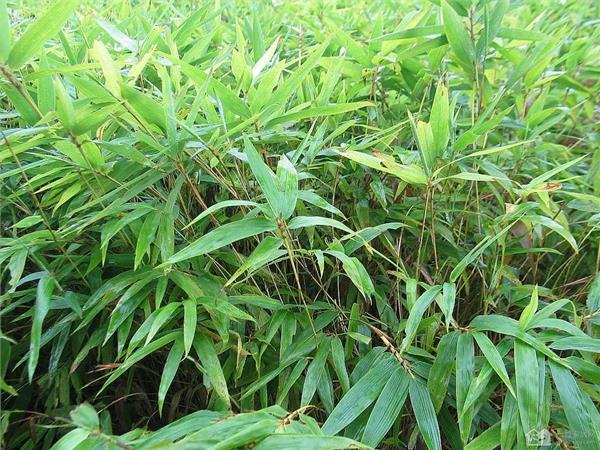
I. Morphological characteristics of moso bamboo
Culms scattered, up to 20 m tall, 16 cm or more in diameter, internodes in the middle up to 40 cm long, basal internodes shorter. Young culms densely covered with soft hairs, with white powder; old culms hairless, with a white powdery ring below the node that gradually turns black, culm rings below the branches inconspicuous, sheath rings raised, initially covered with a ring of hairs that later falls off. Shoot period from late March to April. Culm sheaths thickly leathery, brownish purple, densely covered with brown hairs and dark brown spots, the spots often distributed in patches; sheath auricles small, with hairs on the auricle margins; sheath ligule broad and short, bow-shaped, extending downward on both sides; sheath blades relatively short, long-triangular to lanceolate, green, initially erect, later recurved. Branches and leaves arranged in two rows, each small branch with 2-3 leaves, leaves relatively small, lanceolate, 4-11 cm long, 0.5-1.2 cm wide; leaf ligule raised, leaf auricles inconspicuous, with shoulder hairs that gradually fall off. Generally does not flower.
II. Detailed explanation of moso bamboo cultivation techniques
Site selection: Choose loose, moist, fertile acidic, slightly acidic or neutral sandy loam or sandy soil with a soil depth of more than 50 cm and good drainage and aeration.
Land preparation: Land preparation should be carried out in autumn and winter before afforestation, and includes three steps: clearing the forest land, reclamation and digging planting holes. For afforestation sites with a gentle slope, full cultivation is used; for sites with a steeper slope, contour strip preparation is used; and for steep slopes above 25 degrees, block preparation is used.
Afforestation: Afforestation methods include transplanting bamboo culms, transplanting rhizomes, cutting culms and transplanting clumps, planting seedlings and raising seedlings from rhizome nodes. Among these, the method of transplanting bamboo culms is the most widely used in production. For transplanting bamboo culms, good mother bamboo should first be selected. Bamboo from the forest that is 2-3 years old, with a diameter at breast height of 3-6 cm, growing vigorously, with relatively low branches, luxuriant branches and leaves, normal nodes and no pests or diseases is preferred.
Fertilization: Moso bamboo grows fast and has high yields, absorbs much soil nutrients, and soil nutrients must be supplemented through fertilization. Chemical fertilizers should be mainly nitrogen and phosphorus fertilizers, and nitrogen and phosphorus fertilizers should be applied mixed. Per mu, 10-15 kg of urea and 3-5 kg of superphosphate can be applied. If fertilizing at the felling stumps, first open the bamboo nodes inside the stump, apply 0.25-0.5 kg of urea or ammonium bicarbonate into each felling stump, then cover with soil and seal.
Watering: After sowing is finished and straw is covered, sprinkle water immediately to keep the soil moist. When the soil is short of water, sprinkle water in time to replenish soil moisture; this is an important step to ensure seed emergence.
Building a shade shed: When more than 50% of the bamboo seedlings have emerged, a shade shed should be built in time and the covering straw removed. The light transmittance of the shade shed is 40% at first, and as the number of tillering times of the bamboo seedlings increases, the light transmittance can be increased to 60%. Remove the shade shed after autumn.
Weeding: After the bamboo seedlings emerge, weeds in the seedbed should be removed in time, seeds exposed by water washing should be earthed up in time, and water should be sprinkled promptly after weeding to help the bamboo seedlings adhere closely to the soil.
Thinning: New bamboo sprouts quickly and in large numbers, but unevenly in size, so thinning should be carried out in time; when thinning, remove the small and keep the large, remove the weak and keep the strong, remove the old and keep the young, remove the dense and keep the sparse.
Pests and diseases: The main diseases include moso bamboo witches' broom, shoot blight, culm stem rot and bamboo black spot disease; the main insect pests include bamboo leaf roller, bamboo shoot noctuid, bamboo spot moth, bamboo nest mealybug and yellow-spined bamboo locust. For control methods, see Phyllostachys bambusoides. Control is mainly through spraying agents such as carbendazim.
That is all for the introduction on how to grow moso bamboo. If you have a courtyard or other suitable place at home, you can try growing this plant that is both easy to grow and very beautiful.