What Is a Cut Rose? Detailed Explanation of Propagation and Management Techniques
Cut roses are one of the four major cut flowers in the world, with more than 8,000 varieties bred around the world. Next, let us take a look at the propagation and management techniques for cut roses!
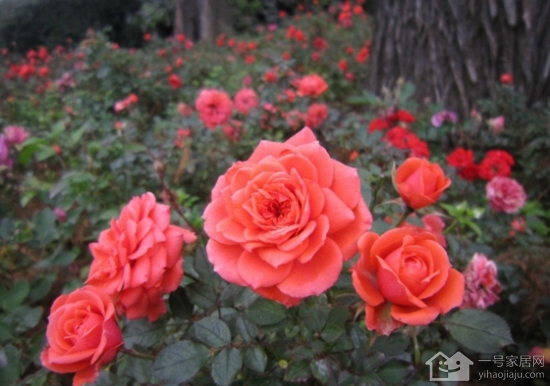
Cut roses are shrubs of the genus Rosa in the family Rosaceae. The leaves are alternate, odd-pinnately compound, with a smooth, glossy leaf surface. The flowers are solitary at the top of the stem, double, and rich in flower shape and color. They prefer a warm, humid environment with sufficient light. The optimal growth temperature is 15-25°C, and they require loose, fertile, well-drained moist soil.
They are propagated by cuttings, grafting, and tissue culture. For grafting, wild species of the genus Rosa are used as rootstock. Before cultivation, soil improvement and deep plowing should be carried out, adding peat soil, rice husk, and other materials to make the soil loose and well aerated. In addition, sesame paste residue, bone meal, barnyard manure, and other materials are added as base fertilizer. During maintenance, excess flower buds and side branches should be pruned promptly.
In greenhouse cultivation of cut roses, temperature control is very important, generally 20-28°C during the day. Therefore, in summer, attention should be paid to ventilation and shading, which both lowers the temperature and reduces light, and the plants are also less prone to disease in a well-ventilated environment.
During the growing period, keep the soil slightly moist; during the dormant period, reduce watering to once a week. To ensure the quantity and quality of flowers, topdressing should be applied promptly during the growing period, and liquid nitrogen, phosphorus, and potassium can be applied. In winter, in addition to maintaining temperature, appropriate supplemental lighting is also needed.
Temperature Management
The most suitable growth and development temperature for cut rose production is 24-26°C during the day and 14-16°C at night. In winter, when the nighttime temperature is below 8°C, many varieties grow slowly, branches become shorter, and deformed flowers increase. When the nighttime temperature remains below 5°C for a long time, most rose varieties cannot produce new branches, or the new branches produced are shorter and blind branches increase. Therefore, low temperatures in winter severely affect the branch length, sprouting, and flower bud differentiation of cut flowers, thereby affecting yield and quality. In summer, when the nighttime temperature is above 18°C and the daytime temperature is above 28°C, most rose varieties have a shortened growth period, the number of petals in cut flowers decreases, the flowers become smaller, and vase life becomes shorter, greatly affecting cut flower quality. The ideal day-night temperature difference is 10-12°C; too large a temperature difference causes black edges on the petals. In actual production in the central Yunnan region, controlling the daytime temperature inside the greenhouse at 26-28°C in summer and the nighttime temperature inside the greenhouse at 14-16°C in winter can ensure high-yield, high-quality year-round production of export cut roses.
Soil Moisture Management
Roses are crops that like water but fear waterlogging. When soil moisture is insufficient, it affects the yield and quality of cut roses; conversely, too much soil moisture causes insufficient root aeration and affects root development. Therefore, scientific water management must be carried out. Select unpolluted river water, spring water, or well water as irrigation water for cut roses, and a drip irrigation system should preferably be used. The watering time, frequency, and amount for cut roses are affected by season, weather, soil, and plant growth conditions. Producers mainly determine them based on production experience or instruments by continuously observing and testing soil moisture content, plant growth conditions, and so on. A soil tensiometer for rapid determination of soil moisture can be used as an instrument to monitor soil moisture and serve as a reference for watering.
Fertilization Management
During the vegetative growth period, the demand of cut roses for the major elements nitrogen, phosphorus, and potassium is at an N:P:K ratio of 3:1:2, and during the flowering period it is 3:1:3. Medium and trace elements can be applied regularly every month. The amount of fertilizer applied should be considered according to factors such as soil fertility, plant growth conditions, and yield; the fertilization method should be based on facility conditions. In actual production, attention should be paid to increasing the application of organic fertilizer. For soil cultivation, decomposed organic fertilizer needs to be added once a year to ensure the soil organic fertilizer needs for cut rose growth. The total annual addition is generally 8-10 tons per mu, to supplement the decomposition of organic matter and make soil organic matter reach above 5%. The best time to add it is autumn and late winter each year. When adding organic fertilizer, dig a shallow ditch 30 cm deep and 25-30 cm wide in the middle of the bed (between rows), then directly add the organic fertilizer, and finally mix it evenly with the soil.
The cultivation period for cut roses generally lasts as long as 5 to 8 years, so sufficient base fertilizer should first be applied at planting, such as decomposed livestock manure and nitrogen, phosphorus, and potassium fertilizers. After grafting or cutting, the surviving young seedlings are planted in the cultivation room at a spacing of 45 cm x 30 cm. When planting, spread the roots in all directions, bury the grafted part of the seedling 3 cm below the soil surface, and keep it about 2 cm higher than the surrounding soil layer. After planting, water thoroughly around the roots and strengthen water and fertilizer management. Young seedlings need a relatively large amount of water during the vegetative growth period, so water once every 2-3 days. Before the axillary buds sprout, water should be appropriately controlled. From axillary bud sprouting to new shoot growth, the amount of watering should be gradually increased to promote branching.
From flower bud formation to the flowering period is the peak water demand of the entire growth period, so water once a day as much as possible. In early August and from September to October, intertillage and fertilization can be carried out appropriately, applying oil residue, bone meal, chemical fertilizer, plant ash, and so on between the plants.
In the early stage of vegetative growth of young seedlings, all flower buds should be removed promptly to help cultivate flowering mother branches and allow the branches to grow robustly. Some varieties sometimes grow 2 or 3 flower buds on the branch tips. At this time, keep the central main bud and remove the secondary buds beside it, so as to avoid dispersed nutrients and affected flowering quality. Flower buds formed in the hot midsummer climate will be affected by high temperatures, develop poorly, and then bloom, with no commercial value. Therefore, at this time, remove any bud as soon as it is seen to promote branch development.
Rose pruning can be carried out twice a year, autumn pruning and winter pruning. During the autumn growing period, before the flower buds have formed, branches can be heavily pruned back to a height of 60-80 cm to renew old branches, control the flowering period, and promote branch development. After entering the dormant period and before sprouting the following year, winter pruning can be carried out to control plant height and shape the tree form.
If you want to learn more related information, you can continue to follow No. 1 Home Network.