How to grow carnations? These care methods you need to master
The carnation is a flower with extraordinary symbolic meaning. Whenever Mother's Day and Teachers' Day come around, carnations are the best bouquet to give. Next, let's take a look at what floral meanings carnations have!
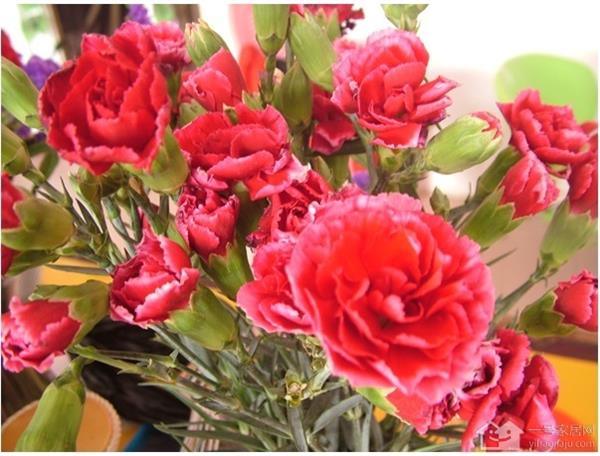
The floral meaning of the carnation mainly expresses respect and charm. The specific meaning depends on the color of the carnation flower. For example: light red represents admiration, while deep red expresses love and care; pure white entrusts good luck for the other person, and patterned carnations represent an apology when declining a courtship.
Whenever Mother's Day comes, carnations are the most suitable choice, and the meanings contained in each color are also different.
Red carnation: Red carnations are generally used to wish mothers health and longevity and to express immortal maternal love.
Yellow carnation: Yellow carnations are used as holiday gifts to express gratitude to mothers.
Pink carnation: Pink carnations are given when wishing a mother a happy birthday, wishing her eternal beauty and youth.
White carnation: In addition to expressing the meanings of the red, yellow and pink colors, white carnations also carry mourning and deep remembrance for a deceased mother.
Besides being given to mothers, carnations also have rich meanings. When visiting a patient, giving carnations wishes for a speedy recovery; when a business opens, giving carnations expresses a meaning of wealth rolling in and health and smoothness; when giving carnations to elders, it expresses respect and affection for them.
In short, the carnation is a very good plant. Its flowers are delightful to the eye, and it also carries beautiful symbolism. As a flower material with pleasing colors, it can be combined with various flowers to express different meanings. The floral language of the carnation lets us understand its value of existence. In addition, carnation flowers also have other medicinal effects and uses.
How to grow carnations
1. Soil: It requires a clayey soil with good drainage, rich humus, good fertilizer retention and slight alkalinity.
2. Watering: Carnations grow vigorously and are relatively drought-tolerant. In rainy and overly wet areas, the soil tends to become compacted, and the root system develops abnormally due to poor ventilation, so during the rainy season pay attention to loosening the soil and draining water. Apart from timely watering during the peak growing and flowering season, at ordinary times water less to keep the soil moist. The air humidity is best kept at around 75%. Spraying water appropriately before flowering to adjust humidity can prevent buds from splitting open early.
3. Fertilizing: Carnations like fertilizer. Before planting, apply a sufficient amount of baked fertilizer and bone meal. During the growing period, continue to apply liquid fertilizer, generally once every 10 days or so with rotted, diluted fertilizer water, and apply one topdressing after harvesting flowers.
4. Others: To encourage carnations to branch more and bloom more, multiple pinching is needed starting from the seedling stage: when the seedlings grow 8 to 9 pairs of leaves, carry out the first pinching, keeping 4-6 pairs of leaves; when the side branches grow more than 4 pairs of leaves, carry out the second pinching, keeping 3-4 pairs of leaves per side branch, and finally it is best for the whole plant to have 12-15 side branches. When buds form, keep only one bud at the top of each side branch, and promptly remove all small buds and side branches sprouting from leaf axils below the top. After the first flowering, promptly cut off the flower stems, keeping only two buds at the base of each branch. Through such repeated pinching, the plant shape can be made graceful, with abundant flowers and bright colors.
The legend of the carnation
Legend of the carnation one
In Greek mythology, there are many legends about the carnation. It is said that in Greece there was a young girl who made a living by weaving garlands. She was highly skilled and deeply admired by painters and poets, but because her business flourished, she attracted the jealousy of others in the same trade and was eventually murdered. To commemorate this young girl, the sun god Apollo turned her into a beautiful carnation. Therefore, in Greece, some people call the carnation the garland and the crown, praising its sacred status. In France, there is a legend that the carnation was created when the goddess Diana, fearing she would be tempted by a handsome shepherd boy, dug out his eyes and threw them to the ground, where they became carnations, so the French call the carnation Qeillet, meaning "little eye." There is also a legend that the carnation only grew from the ground when Christ was born, so it is a flower of celebration. In any case, throughout the year, whether in celebration or mourning, its lovely figure appears, and it is especially indispensable at Mother's Day.
Legend of the carnation two
The pink carnation legend says that the Virgin Mary saw Jesus suffering and shed sorrowful tears, and where her tears fell, carnations grew. Therefore, the pink carnation became a symbol of immortal maternal love. Unlike the rose, the love represented by the carnation appears relatively mild and warm, suitable for describing the love of family, so children often give carnations to their parents.
If you want to learn more related information, you can continue to follow No.1 Home Network.