A Detailed Guide to the Growth Habits of Winter Jasmine and Bonsai Planting Techniques
Winter jasmine bonsai is a highly ornamental plant that has long attracted widespread attention. So what are the methods for cultivating winter jasmine bonsai? I believe everyone is eager to know the answer to this question. Next, let us follow the editors at Fowo Fowo to take a look at what methods there are for cultivating winter jasmine bonsai, so that through learning about winter jasmine bonsai we can better integrate it into our daily lives.
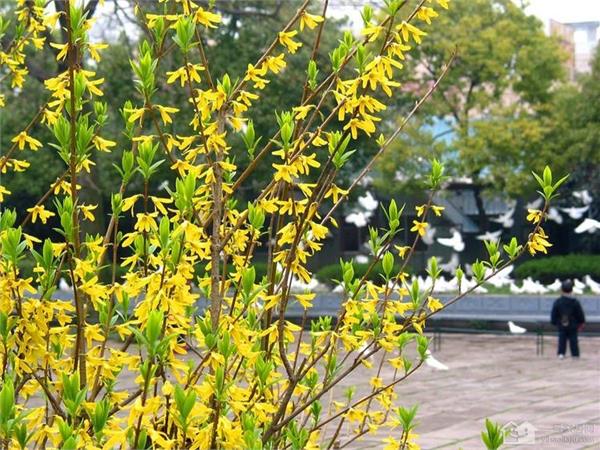
How to Grow Winter Jasmine
Soil Selection for Winter Jasmine Bonsai:
Winter jasmine loves light, tolerates drought and cold, and is not very demanding about soil, but the soil must have good drainage. The soil can be a mix of leaf mold and loam, or matured vegetable garden soil. If you want to deliberately cultivate the root system, you can add more gravel and plant ash to the pot.
Pot Selection for Winter Jasmine Bonsai:
Medium-deep purple clay ceramic pots or glazed ceramic pots are more suitable as pots for making winter jasmine bonsai. For the cascade style, a deep cylindrical pot can be used; sometimes, to highlight the beauty of the roots, a shallow pot is also used. As for the color of the pot, dark blue, light blue, jet black or purplish red are best, as only then can they set off the beauty of the winter jasmine's green leaves and yellow flowers.
Potting the Winter Jasmine:
When the winter jasmine has grown for four to five years and the main root is as thick as a thumb, it can be potted and styled. In late autumn or before Qingming, dig up the whole plant, cut off the lateral roots and fibrous roots beside the retained main root, and trim the branches and trunk according to the styling design. Bury two-thirds of the retained main root that serves as the trunk into the potting soil, and leave one-third exposed above the soil as the trunk. After potting, press the soil firm and water thoroughly, then carry out normal care.
Planting Winter Jasmine Bonsai
(1) Location. For a newly planted or newly repotted winter jasmine bonsai, first water it thoroughly, place it in a shaded spot for about 10 days, then move it to a spot with half shade and half sun; after caring for it for a week, place it in a sunny, well-ventilated and relatively humid spot for care. In winter, in the south, you only need to bury the pot containing the winter jasmine in soil in a wind-sheltered, sunny spot for it to overwinter safely; in the north, it should be moved indoors in early winter to overwinter at low temperature (around 5°C). If you want the winter jasmine to bloom early, you can move it at the appropriate time into a sunny indoor room at medium or high temperature. For example, if placed in a sunny indoor spot at around 13°C and sprayed with clear water on the branches, trunk and leaves 1~2 times a day, it will bloom in about 20 days; if placed in a sunny indoor spot at around 20°C, it will bloom in about 10 days. After blooming, keep the room temperature at around 8°C, and be careful not to let wind blow directly on it, which can extend the flowering period. After the flowers open, the higher the room temperature, the faster the flowers fade.
(2) Watering. Winter jasmine likes moisture, especially in the hot summer; besides watering once every morning, you should also water appropriately in the afternoon. To maintain the humidity of the microclimate, you should often spray water on the ground. Winter jasmine is afraid of water accumulating in the pot, so during the plum rain season, when rain continues for days, you should lay the pot on its side or move it to a place sheltered from the rain. In winter, when the temperature is low and water evaporates less, you should water less.
(3) Fertilizing. When planting winter jasmine bonsai, you should place a few pieces of animal hoof at the bottom of the pot as base fertilizer. During the growth period of winter jasmine, apply 1~2 times a month of decomposed dilute liquid fertilizer. July to August is the flower bud differentiation period of winter jasmine, so you should apply liquid fertilizer containing more phosphorus to help the formation of flower buds. If, in the early flowering stage, you apply one time of decomposed dilute organic liquid fertilizer, it can make the flower colors more brilliant and extend the flowering period.
(4) Shaping. Winter jasmine has strong sprouting ability, so during the growth period you must often pinch off the growing tips and cut off or shorten certain branches to maintain the tree shape. After the flowers fade, the branches should be cut short, generally leaving only 2~3 buds; the main branches can appropriately retain a few more buds. After new branches grow, if cared for properly, flower buds will cluster abundantly.
Growth Habits of Winter Jasmine
Winter jasmine loves light, tolerates drought and cold, and is best suited to neutral sandy loam with good drainage; it does not tolerate waterlogging. Winter jasmine bonsai can use a mix of leaf mold and loam, or matured vegetable garden soil, which is rich in nutrients and soft in texture, suitable for the growth and development of winter jasmine. If you want to specially cultivate root-viewing winter jasmine bonsai, you can add more gravel and plant ash to the pot; they will hinder the winter jasmine root system during growth, forming varied and multi-form root shapes.
If you want to learn more related information, you can continue to follow No.1 Home Network.