A Detailed Guide to the Growing Conditions and Seed Propagation Methods of French Marigold
French marigold is a plant that loves light and needs plenty of sunlight when grown. Generally, in spring and autumn, the sunlight meets the French marigold's light requirements, but note that in the hot summer you should avoid direct sunlight and provide shade at noon, though do not shade it excessively.
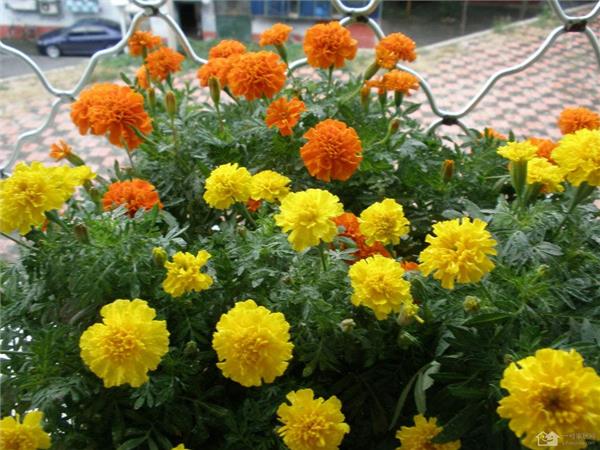
Growing Conditions of French Marigold
Temperature
Basically, French marigold can grow well between 10°C and 30°C. A few points to note: in winter the temperature should be kept above 5°C, so that frost damage is unlikely; before flowering, the temperature is best kept between 12°C and 15°C; in daily care, the temperature is best kept at 20°C or below.
Water and Fertilizer
Water and fertilizer are very important for French marigold. When watering, make sure the soil was dry beforehand, then water thoroughly, but be careful not to let it get too dry. For fertilizing, generally applying fertilizer once every 7 to 10 days is fine, but in the low-temperature winter season, fertilizing should be reduced. Generally, when planting out, apply some base fertilizer first, and if the soil fertility is insufficient, additional topdressing is needed.
Potting
Generally, when the French marigold seedlings have grown 2 to 3 leaves, they need to be potted up. When potting, you can use a flower pot with a diameter between 10 and 15 cm. After potting, basically no further repotting is needed.
Pests and Diseases
The common disease of French marigold is root rot, which can be controlled by drenching the roots with thiophanate-methyl. The main pest is the red spider mite.
Propagation
French marigold is generally propagated by sowing and cuttings. Sowing is done between November and March. Cutting propagation can be done between June and August.
Seed Propagation of French Marigold
Sowing is a common method used when propagating French marigold. When carrying out seed propagation, this is generally done during the period between November and March; in places with a relatively warm climate, sowing can be done all year round. When sowing, direct sowing in the ground can be used, or indoor sowing in pots.
Collect the French marigold seeds separately. When sowing, you can sow directly in the ground, or use relatively loose soil as a seedbed for sowing. After disinfecting the sowing medium, you can sow the seeds, cover them lightly with vermiculite or similar, and keep the germination temperature between 22°C and 24°C; generally they will germinate in one week. After sowing, after about one month of growth, they can be transplanted and potted up.
In addition, they can also self-sow. French marigold has relatively strong vitality; generally, if the seeds are not collected in time and fall to the ground, under suitable temperature and humidity conditions, they can grow on their own.
Cutting Propagation of French Marigold
Besides seed propagation, French marigold can also be propagated by cuttings.
The time for taking French marigold cuttings is mainly in summer and autumn, with June to August being best. Generally, when taking cuttings, you can remove the tender branches of the French marigold, about 10 cm in length, and insert them into a flower pot, or directly into the ground. After cutting, shade is needed; the survival rate is relatively high, and they can quickly take shape.
Generally, French marigolds cut in summer can bloom between August and December.
Precautions for Propagating French Marigold
Note that depending on the variety, the flowering time of French marigold also differs; generally, from sowing to flowering takes about 40 to 70 days. So when sowing, you can choose a suitable sowing time so that it blooms at the appropriate time.
Note that during the seedling stage, suitable temperature and humidity should be maintained to prevent pests, diseases and plant death and similar problems.
If you want to learn more related information, you can continue to follow No.1 Home Network.