Reasons for Yellowing Leaves of Anthurium and How to Grow It in Water
Some owners who grow Anthurium sometimes see the leaves of their Anthurium turn yellow at home, but they do not know what causes it, nor do they know how to deal with it. Today, the editor will tell you that actually there is no need to panic when this happens, because it is caused by insufficient light. Let us learn together how to prevent and treat it.
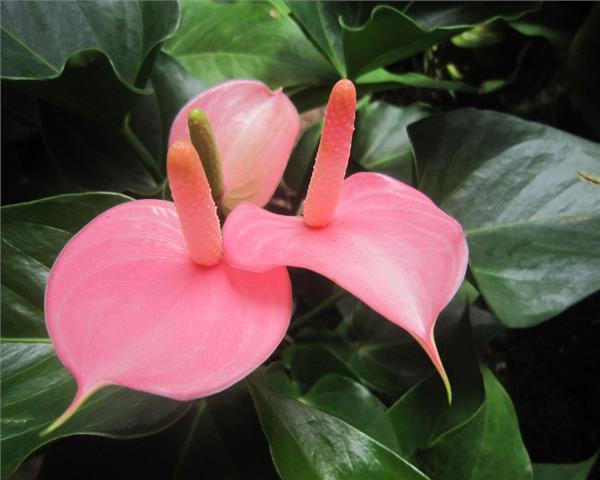
Analysis of the causes of yellowing leaves of Anthurium and how to handle them:
1. Improper lighting: If it is placed in a hidden spot for a long time, the leaves cannot carry out photosynthesis and lack nutrients, so the leaves will gradually turn yellow. If it is exposed to direct sunlight, especially in summer when the sunlight is intense, the leaves will be scorched and also become scorched and yellow.
Solution: In daily care, attention should be paid to lighting. Semi-shade or scattered light is sufficient, and in winter full sun exposure is fine.
2. Overwatering: The young leaves at the top of the Anthurium are pale yellow, the old leaves are also gradually turning yellow, and the new shoots shrink. This is caused by long periods of rain or excessive watering, which makes the soil in the pot too wet and lacking oxygen, causing the roots to rot.
Solution: Loosen the soil frequently, control watering, and avoid heavy rain spraying.
3. Long-term lack of water: The leaves at the top of the Anthurium are normal in color, while the lower leaves gradually dry, turn yellow, and fall off from the bottom upward. This is caused by the pot soil being too full or water not penetrating for a long time, which leads to aging of the lower leaves and stems.
Solution: Water appropriately and keep the soil moist.
4. Long-term lack of fertilizer: The leaves of Anthurium are thin and yellow. This is caused by the plant being too large for the pot, or by not repotting or changing the soil for a long time, as well as insufficient fertilizer.
Solution: Gradually increase water and fertilizer, and repot at the right time.
5. Too much fertilizer: The leaves of Anthurium become uneven and do not spread out, the new leaves are thick and fleshy, and the old leaves gradually turn yellow.
Solution: Water frequently, stop fertilizing temporarily, and scatter some vegetable seeds in the pot. After the seedlings sprout, pull them out to consume the excess fertilizer in the pot, so that the plant can return to normal growth.
6. Pests and diseases:
Observe carefully to see whether there are red spiders on the back of the Anthurium leaves. If there are, check whether they came with a newly bought flower or whether they appeared on the plant at home because of poor ventilation. Once the cause is identified, it is easier to pay attention! If no insects are found after observation, then it is yellowing of the leaves caused by poor ventilation. (Just pay attention to ventilation and it can improve.)
Methods and precautions for hydroponic cultivation of Anthurium
1. Dig the potted Anthurium out of the soil, cut off rotten roots, fibrous roots and old leaves, wash it clean with clean water, disinfect it in potassium permanganate solution, and then rinse the Anthurium again with clean water. If a transparent glass container is used for hydroponic Anthurium, it is best to cover the outside of the glass with a black plastic bag to prevent strong light. Cover the top with a transparent convenience bag (to keep warmth and moisture). Place it in a spot with scattered light and keep the temperature above 10 degrees.
2. During the acclimation period of hydroponic Anthurium, change the water frequently. At the beginning, change it once every 3 days for half a month, and then once a week for the next half month. Each time the water is changed, add nutrient solution once, and the nutrient solution should be specially selected for hydroponic flowers. After one month, the Anthurium will grow new roots, and the newly grown roots will be relatively adapted to the aquatic environment. The leaves will begin to sprout new buds.
3. Potting hydroponic Anthurium. If a semi-transparent pot is used for hydroponic Anthurium, it will be a bit easier. Carefully put the Anthurium roots into the hydroponic basket, and river stones or ceramsite can be placed in the basket to fix the position of the plant. Add water to half or 2/3, so that the roots not submerged in water can still breathe from the air.
4. For acclimated hydroponic Anthurium, the water can be changed according to the actual situation. When there are many impurities in the water, it should be changed. After a period of time, the hydroponic pot should also be cleaned. Nutrient solution should not be added too frequently, because it will cause eutrophication of the water, accelerate the reproduction of microorganisms in the water, and cause the oxygen content of the water to drop sharply, which is not good for plant growth.
5. If a larger pot is used for hydroponic Anthurium, small fish can also be kept in the water. The plant and the fish benefit each other and form a corresponding scene. It can be said to serve two purposes at once.
If you want to learn more related information, you can continue to follow No.1 Home Network.