A Detailed Guide to the Care Methods and Precautions for Juniper Bonsai
Juniper bonsai is considered a top-tier among bonsai. It is a very precious bonsai, with gnarled old trunks, fine dense foliage, and an elegant, antique tree form. Today, let us learn how, during the process of growing it, we can give it very good care. Owners who like plant bonsai, let us learn about it together. If you grow it in the future, it can be of help to you.
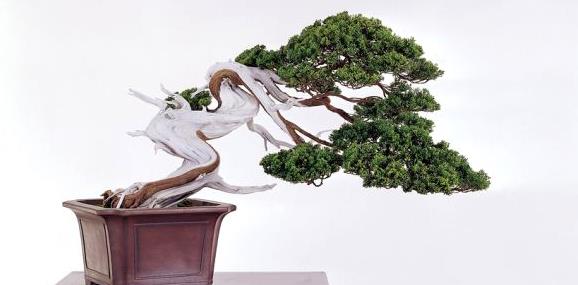
How to Care for Juniper Bonsai
Generally speaking, the main juniper species used for making bonsai include: dragon juniper, Chinese weeping cypress, Chinese arborvitae, Chinese juniper, juniper (shimpaku), and creeping juniper. Today let us talk about how to care for juniper bonsai:
Growth habits of juniper: it likes light, is slightly shade-tolerant, is highly cold-tolerant, and also tolerates poor soil; it can grow in rock crevices; it is not strict about soil, and can adapt to neutral soil and calcareous soil. But fertile, deep soil rich in humus is most suitable. For basically formed juniper bonsai, the following points should be noted in daily care:
1. Light must be sufficient, but in summer appropriate shading must be given. In spring, summer, and winter, it must be placed in a location with sufficient light so it receives full sunlight, which can prevent dead branches and leaves from appearing in the inner canopy.
But when the ambient temperature enters summer and exceeds 30°C, it should be moved to a location with 20~/ /0-30% shading, and especially avoid strong sunlight exposure around noon, so that under high temperature and strong light, water supply cannot be delivered in time, causing necrosis of the fine feeding roots on the surface of the potting soil. This in turn causes some fine branches and needles to turn yellow and die; in addition, excessive high temperature and strong light can also cause the leaf color to lose green and turn yellow, and in severe cases can even scorch the leaves.
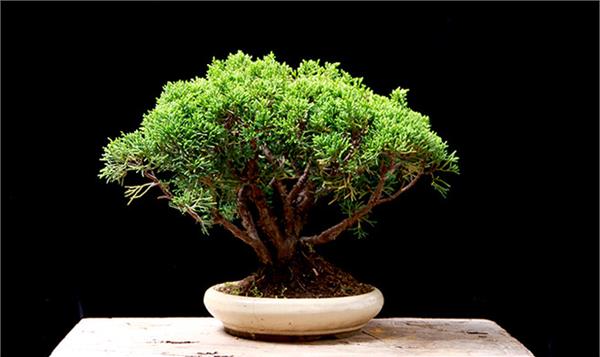
2. Keep the potting soil moist at all times. According to the principle of "dry pine, wet juniper," maintain sufficient water in the potting soil during the growing season; it should be kept in a moist state, but there must be no standing water. When the ambient temperature is as high as above 30°C, water should also be sprayed on the crown and surroundings. If the potting soil is too dry and it happens to be in a high-temperature or poorly ventilated environment, it is also very easy to cause the needles and fine branches to turn yellow and die.
3. Apply fertilizer in a timely manner. During the growing season, apply a thin, fully decomposed cake fertilizer solution once a month, and repot and change the soil once every early spring each year, so as to keep its needles dark and green.
4. Prune in a timely manner. Remove the thin, weak, and dead branches in the inner canopy, and cut back the overly vigorous branches that protrude from the crown, so as to maintain a well-ventilated and well-shaped plant form.
5. Repot regularly. Juniper is generally repotted once every 2~3 years, preferably in spring from March to April, and also in autumn. When repotting, properly prune and tidy the roots, remove 1/3~1/2 of the old soil, and replace it with fertile, loose leaf mold soil, mixed with an appropriate amount of rice husk ash (that is, carbonized "preserved-property" rice husk ash, black in color) and sandy soil.
6. Do a good job of disease and pest control. In hot, dry seasons it is prone to damage by red spiders; regularly spray with a 2000-fold dilution of 259,0 Kelthane wettable powder to kill them, so as to prevent juniper needles from losing green and turning yellow. In addition, attention should also be paid to preventing bark beetles from damaging the phloem of the trunk and branches.
If you want to learn more related information, you can continue to follow No. 1 Home Network.