How to care for a sago palm? Causes of yellowing leaves and how to treat them
The sago palm is a highly popular green plant that has long received widespread attention. So what are the methods for growing sago palms? I believe everyone is eager to know the answer to this question. By learning about sago palms, we can better apply this knowledge in daily life.
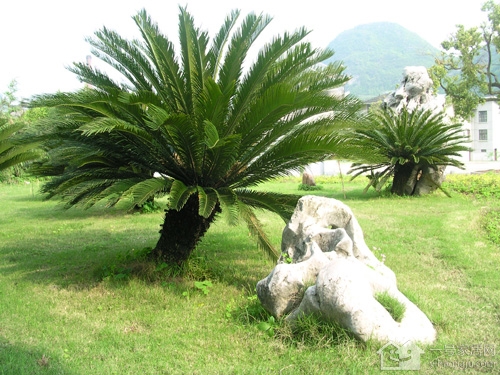
Pot-growing methods for sago palms
Sago palm pot-growing method: watering. During the spring and summer growing season, the potting soil should be kept moist, but waterlogging must be avoided. In the high heat of midsummer, spray water on the leaves frequently to keep the foliage fresh green. In winter the sago palm enters dormancy and its ability to absorb water is minimal, so the potting soil should be kept dry; if the potting soil is too wet, root rot will result.
Sago palm pot-growing method: placement environment. Sago palms are best placed in a spot with ample sunlight, warmth and humidity, and good ventilation. In winter they should be kept indoors to overwinter; south of the Yangtze River, if overwintering outdoors, the plant should be wrapped in cattail bags, straw bags or plastic bags. Alternatively, cut off all the leaves and place the plant in a sunny, wind-sheltered spot.
Sago palm pot-growing method: fertilizing. During the vigorous growing season, apply supplementary fertilizer frequently, mainly nitrogen and potassium fertilizers. Rotted cake fertilizer water is best. When fertilizing, apply light doses frequently and never too concentrated. To promote deep green, glossy leaf color, add an appropriate amount of ferrous sulfate solution to the fertilizer.
Sago palm pot-growing method: pruning. For a sago palm bonsai to look attractive, the old leaves from previous years and any withered yellow leaves should be cut off; overly dense or overly long leaves should also be trimmed as needed to keep the tree shape well proportioned.
Sago palm pot-growing method: repotting. Repot once every 2 to 3 years, preferably in spring, in March to April. When repotting, cut away dead and rotten roots, remove 1/2 to 2/3 of the old soil, and replace it with fertile, loose new growing medium so the plant grows vigorously. At the same time, make sure the bottom of the pot is raised to allow air and water to pass through.
Sago palm pot-growing method: pest and disease control. Sago palms have hard trunks and tough leaves, so pests and diseases are relatively few. The main pest is scale insects, which can be removed by washing and brushing by hand. Yellowing of the leaves sometimes occurs and can be treated by watering with a diluted 1% ferrous sulfate solution. Note that a ventilated, well-lit, clean and hygienic placement site can prevent pests and diseases.
Causes of yellowing sago palm leaves and how to treat them
1. Water-yellow: caused by watering too frequently; its characteristic is that the old leaves show no obvious change while the young leaves turn yellow; in this case, water should be withheld immediately;
2. Drought-yellow. Caused by lack of water and drought; its characteristic is that the old leaves yellow first, from the bottom upward. If the water shortage lasts a little longer, the whole plant's leaves will yellow and it may even die, so water promptly;
3. Fertilizer-yellow. Caused by fertilizing too frequently or with too high a concentration; its characteristic is that the young leaves are thick and fleshy, glossy, and uneven; reduce fertilizer, cultivate the soil, and water;
4. Starvation-yellow. Caused by insufficient fertilizer, too low a fertilizer concentration, and too long an interval between fertilizing; its characteristic is that the young leaves and tender stems yellow first. If this phenomenon is seen and fertilizer is not applied promptly, it can also cause the whole plant's leaves to yellow and even die; for flowers lacking fertilizer, never apply a large amount of concentrated fertilizer at one time, to avoid burning the roots;
5. Iron-deficiency yellow leaves. In greenhouses, woody flowering plants and others often show yellow leaves because soil fertility conditions vary greatly; the characteristic is that young leaves are clearly affected while old leaves are less so, with yellow leaf tissue and green veins, forming a typical network pattern; this can be solved by applying an aqueous ferrous sulfate solution, as follows: mix 7 parts cake fertilizer, 5 parts ferrous sulfate, and 200 parts water into a diluted solution and water the plant with it.
If you want to learn more related information, you can continue to follow No.1 Home Network.