Can Anthurium Be Kept in the Bedroom? A Detailed Guide to Growing It
Anthurium, also called flamingo flower or red spathe taro. In appearance, it looks like an open red palm, with a small golden-yellow spadix standing upright in the center, and for this reason its name in Greek means "flower with a tail." It is said that anthurium is toxic, so can it be grown in the bedroom?
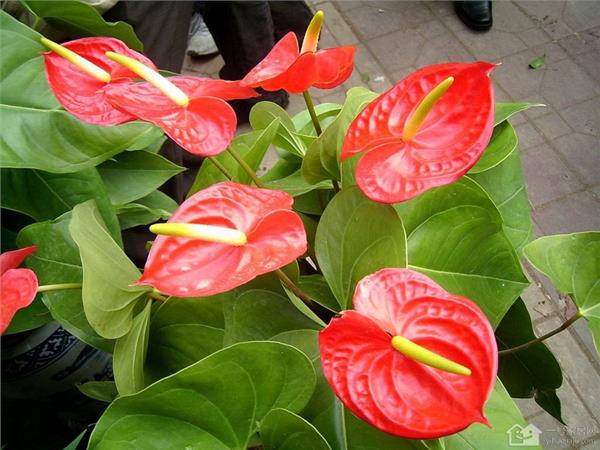
How to Grow Anthurium
I. Growth Habits
Anthurium likes high temperatures and humidity, and it cannot be placed in direct sunlight, so it is generally best kept indoors. Temperature control also needs to be precise: it can only grow well above 22°C, yet the temperature must not exceed 30°C, because at that point the leaves easily rot, which is what we call leaf rot disease. 25-28°C is its optimal growing temperature. The amount of water given should be moderate, not too much; by contrast, the air humidity should be relatively high. The soil should be loose, drain well, and be rich in humus.
II. Cultivation Methods
Try to grow it in a greenhouse; the minimum winter temperature must stay above 10°C, so friends in the north must take cold-protection measures on cold nights, otherwise it can easily die. In summer, when the temperature is too high, be sure to pay attention to air circulation to make sure the temperature comes down. You can also mist it moderately, but do not spray the flowers. Watering does not need to be too frequent either; just make sure the soil has enough moisture during its vigorous growth period. Here I will share a little trick: you can buy a spray-type watering can and make its growing environment humid, which will meet its growth needs. Of course, the step of watering still cannot be skipped. Generally speaking, summer is its vigorous growth period, so appropriately increase the amount of fertilizer, preferably once every half a month. From April to October, pay attention to topdressing, about once a week.
III. Management and Cultivation
The liquid fertilizer used for anthurium should be mixed in a nitrogen-phosphorus-potassium ratio of 3:3:7, diluted before use. It is recommended to dilute it 400-500 times during the growing period (April to October). When topdressing, it can be used one extra time, but in the proper amount. When watering, be careful never to use freshly drawn tap water directly; it must be left to stand for a while before use. Also make sure to use a spray every day to maintain humidity and avoid slow growth. When the sunlight is intense, it can be placed indoors or in the shade; on cloudy days or in winter, it can simply be placed outdoors.
IV. Care and Pest Prevention
To care well for anthurium, in addition to doing the above points, you can also take some methods to strengthen it. For example, you can wipe the leaves with diluted alcohol, which makes the leaves more glossy. The soil should remain acidic, with a pH between 4 and 5. Except in winter, water frequently to keep the soil moist. In terms of pests, the main ones to watch for are scale insects and red spider mites; just buy the corresponding liquid medicine, dilute it, and spray it on.
Is Anthurium Toxic?
The flowers of anthurium are mildly toxic, but as long as they are not eaten by mistake, there will be no problem. Remember to wash your hands each time you prune the branches and leaves. Its toxicity mainly comes from the sap, so with a little extra care there is nothing to worry about. As long as you do not come into overly close contact with it, it is generally fine.
Anthurium can be kept at home. It is mildly toxic, but remember it is best to place it outdoors! If you unfortunately eat anthurium by mistake, your mouth will feel burning and painful, then it will swell and blister, your voice will become hoarse and strained, and you will feel difficulty swallowing. Most symptoms will lessen over time and eventually disappear. If you want to relieve the pain quickly, you can choose cool liquids, painkiller pills, or foods such as licorice and flaxseed to ease it.
In summary, anthurium can be grown in the bedroom, but because anthurium is toxic, you need to be careful when growing it, otherwise it would not be worth it to accidentally get poisoned just for decorating the office!