The Origin of the Chinese Rose's Name and How to Make Chinese Roses Bloom More
Some people are not quite familiar with the blooming period of Chinese roses, so it is common to hear people ask when Chinese roses bloom. In fact, with the Chinese rose, as you can see from the name "monthly" rose, it blooms every month, which is why the name contains the word "month". However, the length of the blooming period is related to how we cultivate it. Today, let us learn about how to make Chinese roses bloom more.
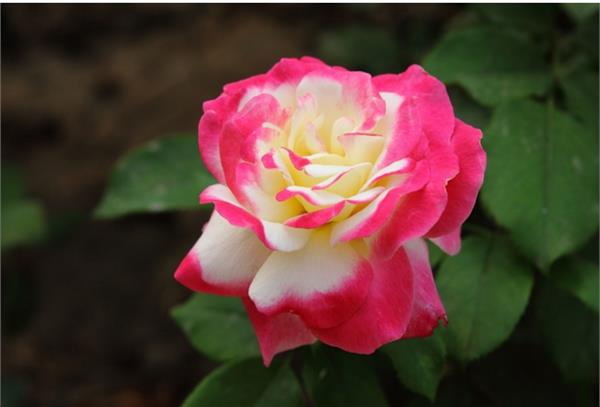
Why do we call the Chinese rose "monthly rose"? There is actually a reason for this: because the Chinese rose blooms all year round, it is called the monthly rose. Moreover, when the Chinese rose blooms, the blooming period lasts a long time, one wave after another, so the Chinese rose never stops blooming throughout the year. So as for when the Chinese rose blooms, I think everyone should understand by now.
The length of the Chinese rose's blooming period depends on the season and climate. Generally speaking, the first flush of flowers in spring lasts relatively long, and the last flush before winter begins lasts the longest. It mainly depends on temperature: the higher the temperature, the shorter the blooming period; the lower the temperature, the longer the blooming period. This is the general rule. Those with hard petals and thick petals have a longer blooming period; those with soft petals and thin petals have a shorter blooming period. To put it this way, when the season and climate are suitable, it is not unusual for a long-lasting bloom to stay open for 10 days or 8 days; when the season and climate are unsuitable, it will last at most only 1-2 days. Of course, people have subjective initiative. Even in the most unsuitable season, you can artificially add a reed curtain or shade net, or move it under the eaves or tree shade, and this can also extend the blooming period.
How to Make Chinese Roses Bloom More
1. Chinese roses have large flowers and many blooms, and need a lot of fertilizer, so they should be fertilized generously, and sufficient organic fertilizer should be applied before budding. For potted Chinese roses, the pot should be changed once in early spring. The potting soil formula is: (loam) 5 : (leaf mold) 2 : (decomposed manure) 2 : (sandy soil) 1, then add a small amount of rapeseed cake and mix it evenly. After that, apply a topdressing once every 10-15 days. For topdressing, liquid fertilizer made by composting cake fertilizer with phosphate fertilizer can be diluted with water and poured on. Especially after the peak bloom in May, fertilizer should be applied in time to promote flowering in summer and autumn.
2. During the growing season, Chinese roses should receive sufficient sunlight, preferably maintaining 8 hours of light per day. If used for indoor viewing, they should be moved in before 11 a.m. and moved out before 4 p.m., so as to receive the soft light around midday, which helps extend the blooming time.
3. Chinese roses enter a semi-dormant state above 33°C, and are most conducive to growth at an average temperature of 20-25°C. Therefore, in summer, appropriate shading and frequent water spraying should be carried out. To cool down and supplement moisture, during the growing season it is best to spray water once in the morning and once in the afternoon to create a humid environment and promote the growth of flowers and leaves.
4. After the Chinese rose blooms, it should be cut below the third compound leaf under the flower to promote strong new branches and early budding and flowering. The key points of pruning technique are: weak and short branches should be pruned first and pruned high; vigorous branches should be pruned later and pruned short, so as to promote the weak and suppress the strong, and encourage neat flowering. The pruning length of long branches should not exceed 1/2, to avoid delayed germination of axillary buds. In addition, it is not advisable to keep too many flowers per flush. For potted Chinese roses, 3-5 flowers are appropriate; for ground-planted Chinese roses, it depends on the strength of the plant. Keeping too many flowers disperses nutrients too much, making the flowers small and affecting the next flush of flowers.
If you want to learn more related information, you can continue to follow No.1 Home Network.