A Detailed Guide to the Growth Habits of Mimosa and Key Points for Its Care
How do you grow mimosa well? Mimosa makes a suitable potted flower for balconies and indoors, and many people also plant it in their yards. Once you master the methods for growing mimosa, you will discover just how charming it is. Below, let us learn about the methods for growing mimosa together!
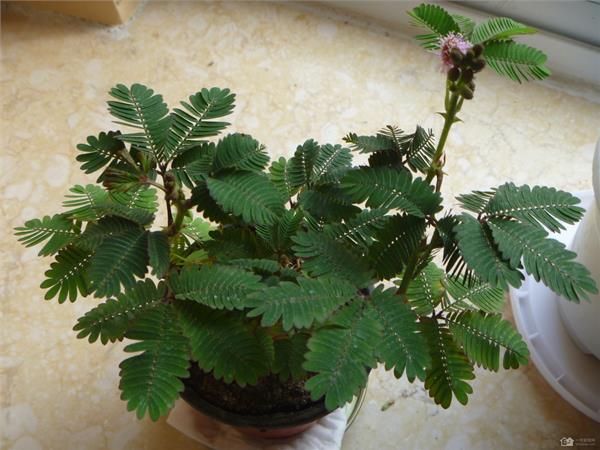
●Methods for Growing Mimosa
I. Growth Habits of Mimosa:
Mimosa is a perennial herb or subshrub in the Fabaceae family. Because its leaves react to heat and light and close immediately when touched by an external force, it is named mimosa. It is native to the tropical regions of South America, likes warmth and moisture, and is not demanding about soil. Its flowers are pink and shaped like fuzzy balls, delightful and lovely. After flowering, it produces pods, and the fruit is flat and round. The leaves are pinnately compound, alternate, and arranged in a palmate pattern. The flowers, leaves, and pods of mimosa all have good ornamental value, and it is relatively easy to keep alive, making it suitable as a potted flower for balconies and indoors; it can also be grown in yards and other places. Unlike ordinary plants, when mimosa is touched by the outside world, its petioles droop and its leaflets close. People interpret this action as "shyness," which is why it is called mimosa, the shy plant, and the bashful plant.
II. Methods for Growing Mimosa:
When you touch the leaves of mimosa, they slowly close, which is very peculiar. Its flowers are like little fuzzy pink balls, especially cute. Because of its living habits, mimosa is a small plant suitable for pot culture.
1. Watering:
Since mimosa is originally a tropical plant and very fond of moist environments, we should often keep the potting soil moist. In summer, water according to the condition of the potting soil, about once a day, and never let the soil dry out. You can also frequently spray water on the plant. In winter, reduce the amount of watering to prevent frost damage.
2. Fertilizing:
Mimosa is not demanding about soil; ordinary soil will do. However, if you want mimosa to grow better, you can choose soil that is relatively loose and fertile. You can also use a mixed soil of leaf mold and sandy soil, or use only leaf mold, and humus soil is also a good choice.
3. Sunlight:
Mimosa likes sunlight. Placing it in a spot with plenty of sunlight is very beneficial to its growth. If there is too little sunlight, it is instead unfavorable to its growth.
III. Notes on Caring for Mimosa:
1. Prevent frost damage. Mimosa is suited to growing in a warm environment, with a suitable temperature between 20-28 degrees. If the temperature is too low, it will hinder its growth. Because winter temperatures are too low, water less to avoid frost damage to the roots and stems. The time for watering is approximately when the temperature is highest during the day. If the temperature is below 10 degrees, it is best to provide some protective measures.
2. Prevent pests and diseases. Mimosa generally rarely has pests or diseases, and the most common pest is the slug. If pests are found, you can sprinkle some lime powder to deal with them.
3. When fertilizing, fertilize according to your own situation, and mimosa can be fertilized about once a month. If you think the potted mimosa grows too large to look good, you can give up fertilizing mimosa.
The methods for growing mimosa and related knowledge have been briefly introduced to you here. Growing mimosa is relatively simple, and I believe that through the above you have already gained some understanding. I hope the above content has been helpful to you!