How to Grow Asparagus Fern: Detailed Guide to Cultivation Methods and Precautions
Asparagus fern not only enhances cultural refinement, but also has a certain regulating effect on the body, and is greatly beneficial to human health. Below, let us learn about the cultivation methods of asparagus fern!
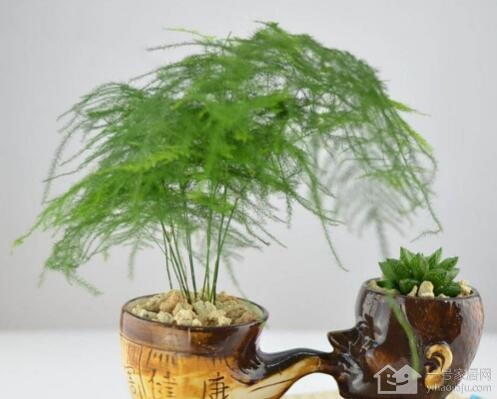
●Cultivation Methods of Asparagus Fern
1. Potting soil: The potting soil for cultivating asparagus fern should be fertile sandy loam, requiring warmth and moisture, rich in humus, and good drainage. Generally, a ratio of 4 parts garden soil, 2 parts leaf mold, 2 parts compost soil, and 1 part sand can be used, and regular soil replacement and fertilization should be done. If excessive fertilization causes "root burn," it is necessary to tip out the pot to remove the fertilizer, rinse the soil ball with clean water, and then replace with new soil for cultivation.
2. Watering: Watering is the key point in cultivating asparagus fern. Too much watering and overly wet potting soil can easily cause root rot, while too little watering can lead to withered and yellowed leaf tips. Therefore, during watering, it should be determined according to the weather, growth condition, and the dryness or wetness of the potting soil, following the principle of not watering until dry, and watering thoroughly when watering. In hot and dry weather, the leaf surface can be sprayed with water to increase humidity and lower temperature; in winter, watering should be reduced.
3. Fertilizing: Asparagus fern does not have a high demand for fertilizer, but it cannot be without it. Limited by the potting soil of container cultivation, asparagus fern must be supplemented with nutrients in a timely manner to meet its growth requirements. During fertilization of asparagus fern, it should be done frequently but in small amounts, and concentrated fertilizer must not be applied, otherwise it will cause yellowing of leaves. Generally, applying a thin liquid fertilizer of decomposed organic matter once a month is sufficient. After the plant grows and takes shape, fertilization can be appropriately controlled and reduced.
4. Light: Asparagus fern should not be exposed to the scorching sun during cultivation. In hot seasons, it should be placed in a cool and ventilated place. At the same time, asparagus fern during its flowering period is afraid of both wind and rain, so attention should be paid to good ventilation. In good weather, it can be appropriately placed outdoors to receive sunlight. In winter, the temperature for potted asparagus fern should be maintained above 5°C to avoid freezing.
5. Placement: Asparagus fern is mostly used for indoor desk decoration. Because asparagus fern is very afraid of smoke and dust, and if it encounters toxic gases, its branches and leaves are prone to yellowing, it should be placed in a clean and well-ventilated environment.
●Precautions for Growing Asparagus Fern
1. Asparagus fern likes warmth and avoids strong light
In winter, asparagus fern cultivation requires creating a growing environment above 15°C, while in summer it should be kept away from direct strong light.
2. Asparagus fern likes moisture but fears root soaking
During the growing period, asparagus fern should be watered sufficiently, and the potting soil should be kept moist frequently, but watering must not be excessive, and waterlogging must be avoided, otherwise it is prone to root rot and leaf drop, reducing its ornamental value. After autumn, watering should be reduced.
When growing asparagus fern, it is not advisable to frequently water with "waterlogged water"; instead, it is better to frequently spray water on the leaf surface. Generally, in summer, along with appropriate watering, spray water on the leaf surface 1 to 2 times a day; in winter, while keeping the soil moist, spraying water on the leaf surface once every 3 to 4 days is sufficient.
3. Asparagus fern likes fertilizer
It especially likes decomposed organic fertilizer. The scientific fertilization method is to apply thin fertilizer once a week in spring and autumn, and once every 15 to 20 days in winter.
4. Keep asparagus fern away from marble-type decorative materials when placing it
Asparagus fern has a very strong ability to absorb gaseous mercury, but while absorbing gaseous mercury, it also causes serious harm to itself. Therefore, when placing asparagus fern, it should be kept away from building decorative materials such as marble that release gaseous mercury.
5. Prune in a timely manner
Overly dense branches should be pruned in a timely manner. If too many adventitious roots emerge, they should be removed or the plant should be divided into pots in a timely manner. At the same time, attention should also be paid to tying and staking to maintain a well-spaced and orderly shape.
That concludes the introduction to knowledge such as the cultivation methods of asparagus fern. Asparagus fern is a relatively difficult plant to grow, so few families choose to plant it, and its value is also relatively high.