Growing Habits of Lotus: How to Plant Potted Lotus for Best Results
Lotus, also known as lianhua, water hibiscus and so on, belongs to the order Nymphaeales and the family Nelumbonaceae; it is a perennial aquatic herbaceous flower. Its underground stem is long and thick, with elongated nodes, which is what we commonly call the lotus root. The leaves are peltate and round, and the flowering period is from June to September. There are many varieties of lotus, divided into two major categories: ornamental and edible. Every part of the lotus is treasure; the lotus root and lotus seeds can be eaten, and the lotus seeds, rhizomes, lotus root nodes, lotus leaves, flowers and seed embryos can all be used as medicine.
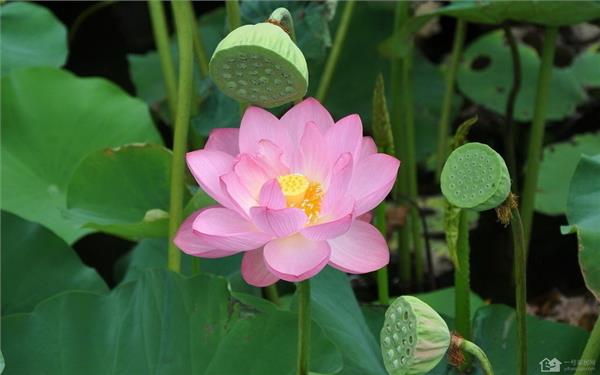
Growing habits of lotus:
The lotus is native to the tropical and temperate regions of Asia. It is an aquatic plant, fond of relatively stable, calm shallow water, lakes, marshes and ponds, which are its suitable habitats. Lotus is very sensitive to water loss. In summer, if it is not watered for just 3 hours, the lotus leaves planted in a water vat will wilt; if the water is stopped for one day, the edges of the lotus leaves will scorch and the flower buds will wither back. Lotus also very much likes light, and during its growth period it needs a full-light environment. Lotus is extremely intolerant of shade; when grown in semi-shade it will show a strong tendency to grow toward light.
How to plant potted lotus:
Lotus likes warmth and sunlight, and dislikes shade and bitter water, but likes stable still water. It dislikes dryness, dislikes deep water, and dislikes flowing water with drastic rises and falls. It is suited to soil rich in humus and somewhat clayey, and does not like loose sandy soil. It fears cold; in autumn and winter the branches and leaves wither, but the underground stem (lotus root) can overwinter under water that does not freeze. Generally it sprouts at 8-10°C, the lotus rhizome runner grows at 14°C, it flowers at high temperatures, and grows new lotus root at 25°C.
Cultivation methods for potted lotus:
1. Soil: Lotus requires fertile clay loam rich in humus. Soil that is too heavy and clayey affects the elongation of the lotus rhizome runner and the swelling of the lotus root; loose soil is prone to wind damage and hinders root development, and neither is conducive to the growth of lotus. The soil used is usually lake or pond mud, but it can also be prepared by mixing 4 parts garden soil, 3 parts loess and 3 parts sandy soil; the best soil pH is 6.5-7.5.
2. Light: Lotus likes strong light. Receiving 7-8 hours of light per day can make it produce more flower buds and bloom continuously. It should not be cultivated in shaded places, and when viewing it indoors while in flower, it cannot be kept indoors for more than a day. Household potted lotus must be placed on a balcony or in a courtyard, and at noon it should be moved to a shady place to avoid the scorching sun.
3. Temperature: Lotus has very strict temperature requirements. Generally it begins to sprout at 8-10°C, the lotus rhizome runner begins to elongate at 14°C, and 25-30°C is the most suitable temperature for the growth and development of lotus, especially in weather that alternates between rain and sunshine, which is even more favorable for the plant's growth.
4. Fertilizing: For lotus cultivated in pots and vats, apply 200-500 g of chicken manure as a base fertilizer according to the size of the pot; lotus cultivated with this fertilizer is better than that using pig manure, cow manure or human excrement and urine as base fertilizer. One full month after planting, apply once a liquid fertilizer based mainly on decomposed soybean cake water or human excrement and urine, at a concentration of 10%. After the standing leaves emerge, apply additional fertilizer 1-2 times, and during the flowering period apply superphosphate once every 7 days.
5. Water: In summer the temperature is high and lotus easily loses water, so at this time vat-planted lotus should be given water once every 1-2 days; potted lotus should be given water 1-2 times daily, and the water temperature should be roughly consistent with that inside the vat or pot, and the water quality should be kept clean; if the water is found to be turbid, it should be replaced. In late autumn and early winter, lotus enters its dormant period, so it is not necessary to add water frequently; keeping only shallow water in the vat or pot is sufficient.
6. Pests and diseases: Common lotus pests include aphids appearing on floating leaves or small standing leaves, and the cotton leafworm, which occurs from July to August. They can be controlled by spraying with a 1500-2000 times dilution of 50% dimethoate emulsifiable concentrate or a 500 times dilution of 2.5% derris extract.
In short, doing the management work well is an important part of growing lotus successfully. Whether applying water or fertilizer, always remember not to overdo it. Although lotus is an aquatic plant and must not lack water, too much will also cause it to rot and die; lotus is also a fertilizer-loving plant, but too much fertilizer will likewise be counterproductive.