How to grow geraniums and what are the benefits of geraniums
What are the effects and benefits of geraniums, and are they a matter of life and death? Let us first understand the growing methods for geraniums, as well as the points to note. After that, we will then understand the effects of geraniums step by step. Now let us learn about them together.
Growing methods for geraniums
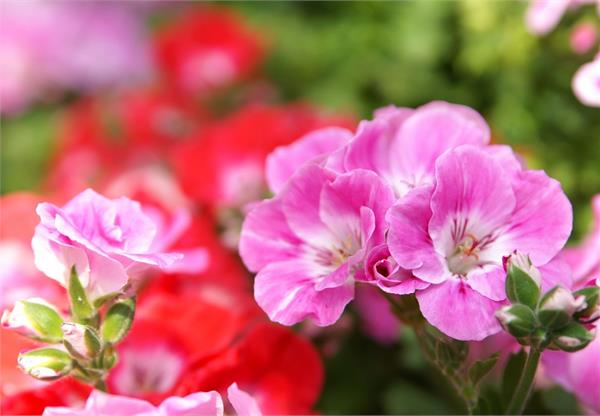
Geranium, also known by the aliases yangxiuqiu, shilameihong, rulahong, rilanghong and yangkui, belongs to the Geraniaceae family and includes about 230 species of perennial succulent, subshrub or shrub plants. Geraniums originate from southern Africa and are commonly cultivated all over the world. Young geranium plants are succulent herbs, while older plants are semi-woody; in the West they are excellent flowers for decorating windowsills, and on the European continent, such as in Germany and Austria, they are especially common.
Growing methods for geraniums: water
Geraniums originate from southern Africa and are plants that do not like too much water, so during cultivation one must never water geraniums too much. If watered too much, the roots of the geranium will rot, and if it grows in this water-heavy environment for a long time, its growth will be affected and it may die. Therefore, when growing geraniums, it is enough to water them once every two to three days, but each watering must be sufficient.
Growing methods for geraniums: temperature
Geraniums like warm, humid and sunny environments. The most suitable growing temperature is between 10 and 20 degrees, which is the temperature of spring and autumn. Therefore, protective measures must be taken for them in both winter and summer. In winter, they should be placed in an environment no lower than zero degrees to avoid frost damage, while in the hot summer they should be moved to a shady place to avoid exposure to the scorching sun.
The effects and benefits of geraniums
Ornamental value: the plant is upright, with palmate leaves, and the leaf surface has a distinctive horseshoe-shaped pattern. Multiple corollas form spherical flowers, and the flower colors vary by variety. It is an excellent plant for decorating both indoors and outdoors, and whether in a room or a flowerbed in the outer courtyard, it can bring vitality.
Medicinal value: in medicine it can improve immunity, resist pathogens, stop bleeding and relieve pain, accelerate cell metabolism and circulation, purify and repair the skin, and has a positive effect on treating skin problems such as burns and herpes. Applied to the face or used in aromatherapy, it can stimulate the lymphatic system and speed up circulation, which is beneficial for the treatment of colitis and gastritis. It can also play a certain regulating role in women's menstruation and breast development, reducing the problem of breast hyperplasia. Note that pregnant women must not use it.
In addition, the essential oil extracted from it also affects the human nervous system, can balance the mind, relieve irritable anxiety and low, depressed unhealthy moods, and ease stress. Placing it in the bedroom not only calms the mind and settles the spirit, but can also help drive away mosquitoes.
Beauty value: its essential oil is added to care products and then applied to the face, which can effectively improve the skin, control skin oiliness, unblock pores and revitalize the skin, reduce stretch marks and acne marks, and regulate hormones.
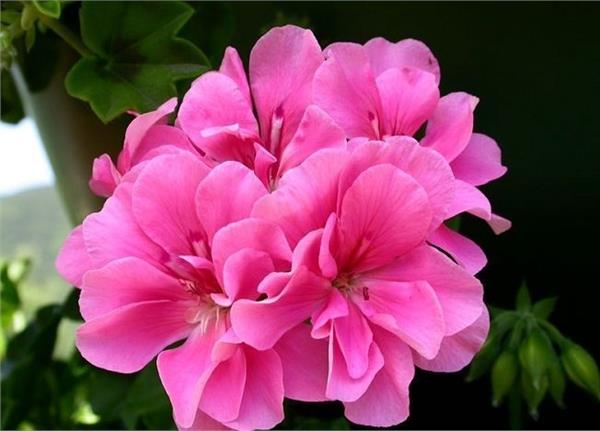
Geraniums prefer warmth in winter and coolness in summer. Indoors in winter, maintaining I0-15 degrees C every day and a nighttime temperature above 8 degrees C is enough for them to bloom normally. But the most suitable temperature is 15-20 degrees C. Geraniums like dryness and dislike dampness, so in winter they should not be watered too much; water only when the soil is dry and let it dry between waterings. If the soil is wet, the stems become soft and tender, which is unfavorable for the sprouting and opening of flower branches; long-term excessive moisture will cause the plant to grow leggy, the position where flower branches form to move upward, and the leaves to gradually yellow and fall off.
Geraniums need sufficient sunlight during their growing period, so in winter they must be placed in a sunny spot. With insufficient light, the stems and leaves grow leggy, the flower stalks become thin and soft, and the inflorescences develop poorly; flower buds under weak light often do not open smoothly and wither early. Geraniums do not like heavy fertilizer; too much fertilizer will make geraniums grow excessively vigorously, which is unfavorable for flowering.
Young geranium plants are succulent herbs, and older plants are semi-woody; in the West they are excellent flowers for decorating windowsills, and on the European continent, such as in Germany and Austria, they are especially common.
Geranium flower meaning: a chance encounter, happiness is right beside you
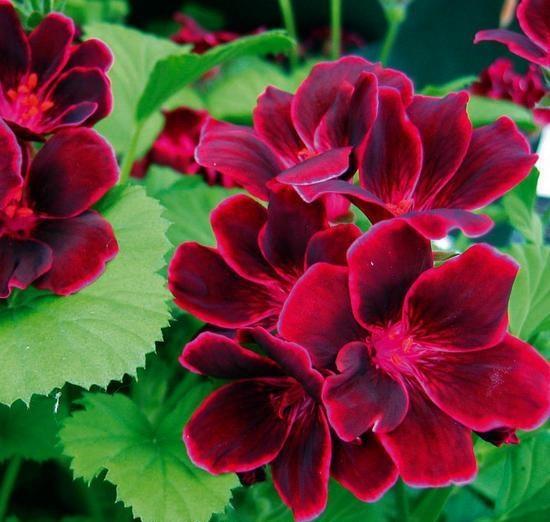
Geranium is a distinctive plant with excellent beauty benefits. It can balance skin oil and has preventive and relieving effects on many skin diseases, especially eczema, herpes, and various ringworms and chilblains. After using geraniums, people have seen good results. Usually, fresh geraniums can also be mashed and then applied directly to the face, which can produce a whitening and skin-firming effect.