What are the characteristics of the Green Giant and how is it cultivated?
The Green Giant, also known as Green Giant peace lily or large-leaf peace lily, is a perennial evergreen shade-loving herbaceous foliage plant of the genus Spathiphyllum in the Araceae family. Next, let us take a look at how to cultivate the Green Giant.
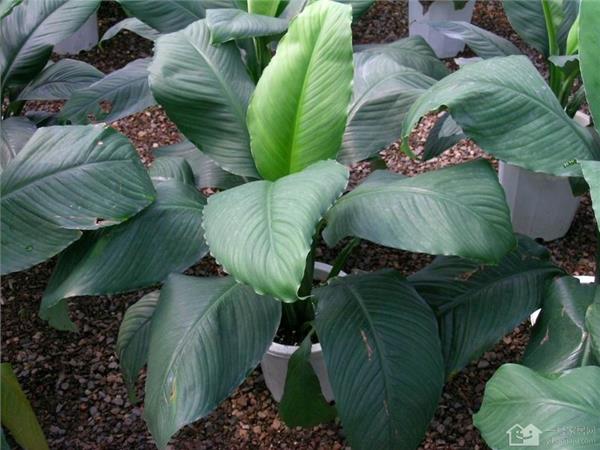
The Green Giant has a well-developed root system, and its roots are rather brittle and tender, not prone to deep penetration, with a very strong capacity for absorbing water and nutrients, and it especially favors heavy water and heavy fertilizer. Therefore, when potting, a culture soil that is loose, fertile, strong in fertilizer and water retention, and rich in organic matter should be chosen. Generally, a nutrient soil mixed from leaf mold, decomposed sawdust, river sand, perlite, etc. can be used as the substrate.
At the same time, when potting and planting, add a small amount of bone meal, dried livestock and poultry manure, and decomposed soybean cake, etc. (as base fertilizer) to promote growth. In addition, depending on the growth condition, apply liquid fertilizer or organic nitrogen fertilizer monthly or at irregular intervals, and pay attention to applying additional potassium fertilizer such as plant ash, to promote plant growth, make the leaves firm and the leaf color deeper and more vivid, prevent pests and diseases, and maintain the best ornamental state.
The Green Giant has broad leaves and a well-developed root system, with a very large demand for water, and it is sensitive to water shortage; at the slightest water shortage, the leaves wilt immediately. If the water shortage is short-term, it easily recovers after watering, but when the water shortage is severe, it can cause dehydration and scorched leaves, and is not easy to recover. Therefore, during cultivation and care, it is necessary to ensure sufficient soil moisture and maintain relatively high air humidity. In the hot and dry summer and autumn, in addition to keeping the potting soil moist, it is also necessary to increase the amount of water sprayed on the leaves, so as to wash away smoke and dust and to cool down and retain moisture.
The Green Giant is sensitive to light and avoids direct sunlight; it can grow normally under scattered light. However, long-term excessive shade will also cause poor plant growth and reduce its ornamental value. The Green Giant has a relatively strong resistance to pests and diseases and is not prone to disease, but the Green Giant in its vigorous growth period has a deep green leaf color, which easily attracts green-loving pests, such as the tobacco cutworm, which lays eggs and causes damage; when ventilation is poor, aphids and green stink bugs can occasionally be seen damaging the tender parts of the heart leaves, causing deformed leaf growth, or notches, or brown spots, affecting the ornamental value and the normal growth of the plant. In addition to manual capture and control, insecticides such as chlorfluazuron and dimethoate can be used for spraying and killing.
The Green Giant can be propagated by division and tissue culture. Before the growing point is damaged, the Green Giant will not sprout until it has grown to full maturity; after the growing point is artificially damaged, each plant can produce 3-5 tiller buds. When the new buds grow to a height of about 15-20 cm, they can be cut apart and inserted into perlite or coarse sand to let them grow roots.
When cutting, be careful to keep part of the stem, and apply charcoal ash to the wound to prevent rot. Households can use this division propagation method, but traditional division propagation simply cannot meet market demand, and now tissue culture can be successfully used to rapidly propagate its seedlings. Tissue-cultured seedlings can first be planted in plastic trays, and when they grow to 4-5 leaves they can be planted separately, then after 3-4 times of repotting and transplanting, when the seedlings are about 30 cm tall they can be planted, and then managed according to conventional cultivation.
The above is the relevant introduction in this article. I believe that after reading it you also have a simple understanding of this. If needed, you can continue to follow No. 1 Home Network to learn more information.