Ash Tree Seed Propagation Techniques and a Detailed Explanation of the Whole Process
There are many kinds of plants around us, and among them trees are a very large plant family. Everyone knows that there are many kinds of trees, and their characteristics, heights and uses differ. Ash (Fraxinus) is the general name for a group of trees in the olive family (Oleaceae), and ash can be seen in many parts of the world. Ash does not have very high requirements for its growing environment, so in many places, apart from those that grow on their own, ash is also planted. Below is an introduction to the knowledge of ash seed propagation.
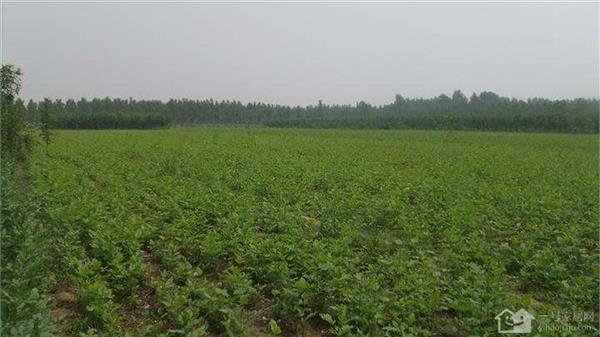
Ash seed propagation:
1. Seed collection:
Ash trees flower from April to May and the seeds mature from September to October. Select superior plants that grow vigorously and are free of pests and diseases, and pick the seeds when the samaras turn from green to yellowish-brown and the seed kernels become hard. The seeds do not fall after maturing, so the fruiting branches can be cut off, dried in the sun to remove the wings, and cleared of debris. The seeds are then put into containers and stored in a disinfected, low-temperature, dry, ventilated indoor space.
2. Seed treatment:
Ash seeds have a long dormancy period, so spring sowing must be preceded by germination promotion. The methods of germination promotion include cold stratification and rapid high-temperature germination promotion.
(1) Cold stratification for germination promotion:
Choose a spot with relatively high terrain, good drainage, and shelter from wind and shade, and dig a trench. In principle, the depth of the trench should be below the frozen soil layer and above the groundwater level. The trench is 80 cm wide, and its length depends on the quantity of seeds. The ratio of ash seeds to moist sand is 1:2 to 3. First spread a 10 cm thick layer of moist sand on the bottom of the trench, then mix the seeds and moist sand thoroughly and evenly, and place them into the trench. The thickness of the seed-sand layer is 50 to 70 cm, and 10 cm from the ground surface, add a cover of moist sand, then cover with soil so that the top is shaped like a roof ridge. Place a bundle of sorghum stalks every 0.7 to 1 m to facilitate ventilation. The treatment time is generally 60 to 80 d.
(2) Rapid high-temperature germination promotion:
For seeds that did not undergo cold stratification in winter, soak the seeds in 40°C warm water, let it cool naturally, then soak for another 2 to 3 d, changing the water once a day. Take out the seeds and mix them with 3 times their volume of moist sand, and place them on a warm kang for germination promotion. The temperature should be kept at 20 to 25°C, and they should be turned every day and kept moist. After about 20 d, when the sum of seeds with exposed radicles and cracked seed coats reaches 30% of the total number of seeds, they can be sown.
3. Raising seedlings:
(1) Sowing and raising seedlings:
Spring sowing should be early, generally from late February to early March. Sow in drills in opened furrows, using 3 to 4 kg of seed per 667 sq m, at a depth of 4 cm. The depth should be uniform, and the furrows should be opened, sown and covered with soil in sequence. The soil covering thickness is 2 to 3 cm. To make the soil and seeds closely contact, press down after covering with soil.
(2) Cutting propagation and seedling raising:
This is carried out from late March to early April in spring. Before cutting, prepare the land carefully and apply sufficient base fertilizer so that the soil is loose and has sufficient moisture. Select 1-year-old sprouting branches from vigorously growing, pest-free, healthy young mother trees. Generally, the branch thickness is more than 1 cm and the length is 15 to 20 cm, with a flat cut at the upper end and a horse-ear-shaped cut at the lower end. Insert 2 to 3 cuttings per hole, spreading the cuttings apart, with a row spacing of 40 cm and a plant spacing of 20 cm. Spring cuttings should be buried deep, firmed, and with little exposed above ground, planting 4000 plants per 667 sq m.
The above is the sharing of relevant knowledge about ash seed propagation introduced for everyone. In the text above, the knowledge of ash seed propagation has been introduced in detail for everyone, and there is also some knowledge about pests and diseases. Ash does not have high requirements for the growing environment, so it is relatively easy to plant. However, when propagating ash seeds, everyone still needs to pay attention to many details to prevent mistakes in ash seed propagation and avoid excessive losses. That concludes this introduction.