Grow these interesting plants to add spice to your new life
There are many kinds of plants, and different kinds of plants have different characteristics. So, do you know what interesting plants there are? Some friends may not be particularly familiar with this, so today we will give a brief introduction for everyone. Let's take a look together.
What interesting plants are there
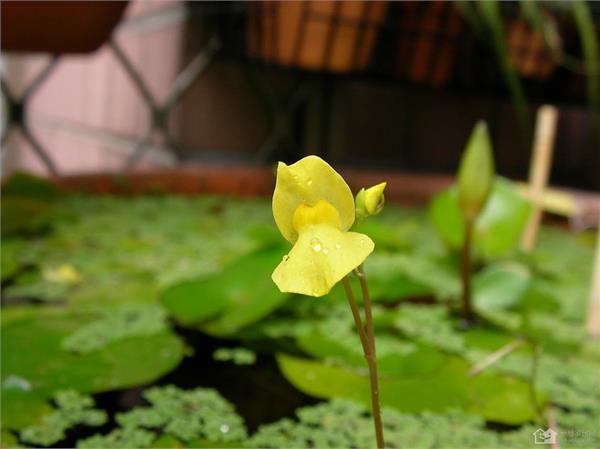
1. Yellow bladderwort
Among aquatic carnivorous plants, the Lentibulariaceae family is foremost. Except for the inflorescence, the yellow bladderwort is submerged in water. Its leaf organs bear ovoid traps that can capture tiny insects or zooplankton in the water. In summer and autumn, the inflorescence extends above the water surface and produces yellow lipped flowers.
2. Broad-bracted sundew
Plants all rely on the photosynthesis of chlorophyll to produce nutrients and survive, yet a small number of plants can prey on small insects to absorb nutrients. The sundew is just such a carnivorous plant. This plant can capture insects, then secrete liquid to digest and absorb the nutrients from the insect bodies.
3. Sunflower
The tropic movements of plants can be divided into phototropism, geotropism and thigmotropism. The sun-facing behavior of sunflower flowers is a typical phototropic movement. Look at the sunflowers in the field all facing the sun.
4. Mimosa
Plants differ from animals: they have no nervous system and no muscles, and they do not perceive external stimuli. But the mimosa is different from ordinary plants. When touched by the outside world, its leaves droop and its leaflets close. People interpret this action as "shyness," hence the name mimosa.
5. White water lily
Movement in plants is actually a common phenomenon. Understood in different senses, there are various kinds of movement, such as protoplasmic movement, turgor movement and growth movement in plants, and movements affected by external stimuli include tropic movement, nastic movement and sensitive movement. Have you ever noticed that as the sun sets, the flowers gradually close, as if the flowers also sleep at night? This is also how the water lily got its name.
The growth process of plants
The growth process of plants should first begin with seed germination. The germination of any plant seed requires water, air and a suitable temperature. However, the seeds of different plants have different requirements for these three conditions during germination. The amount of water needed by the seeds of some cultivated plants during germination is: rice 40%, wheat 45%, peas 107%, soybeans 110%.
Various cultivated plants also have different requirements for sowing temperature: for sorghum, corn, soybeans, millet and so on, sowing can be done when the soil temperature in the sowing layer is stable at 12°C. The seeds of rice, cotton and others require a higher ambient temperature during germination, and sowing can only be done when the soil temperature in the sowing layer is stable at 12-15°C. The seeds of various cultivated plants also have different requirements for air during germination. Soybeans and cotton need a large amount of oxygen during germination, so the soil should be loose when sowing. Rice seeds need less oxygen during germination and can germinate even when submerged in water.
In the growth process of plants, after germination the radicle first extends into the soil to form the main root, then the hypocotyl elongates and pushes the cotyledons and plumule out of the soil surface. The cotyledons of such seedlings are epigeal. The part of the main axis below the cotyledons of the seedling is formed by the elongation of the hypocotyl; the main axis between the cotyledons and the first true leaf is formed by the epicotyl. After the cotyledons emerge from the soil, they usually turn green and can temporarily carry out photosynthesis. Later the plumule develops to form the aboveground stem and true leaves. Once the nutrients in the cotyledons are exhausted, they wither and fall off.
The above is the relevant introduction in this article. I believe that after reading it you also have a simple understanding of this. If needed, you can continue to follow No.1 Home Network to learn more information.