A Detailed Explanation of the Morphological Characteristics and Cultivation Methods of Groundcover Roses
Groundcover roses are evergreen or semi-evergreen shrub plants. Even at very low winter temperatures, they do not shed their leaves, and their cold resistance is very strong. They are generally seen in undulating green spaces, small mounds and roof gardens, and are the best first choice for greening groundcover plants. Groundcover roses can take root as soon as they touch the ground, are very easy to propagate, and grow quickly. We can enjoy their flowers in summer and autumn, and in winter enjoy their fruit and foliage, making them a very good greening plant. Below, let us admire groundcover roses together.
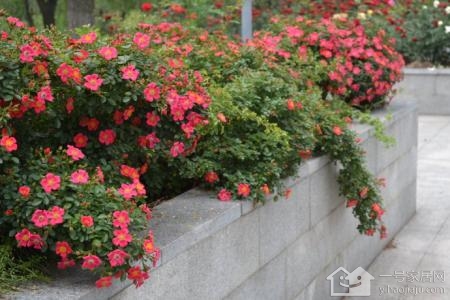
Morphological Characteristics of Groundcover Roses
The flowers of groundcover roses are generally borne in clusters of several blooms, with a faint fragrance, and are single-petaled in pink or white. The flowering period of groundcover roses is around October. The branches of groundcover roses are long and have a climbing habit, while the newly grown small leaves and new shoots are bronze-colored and glossy on the surface. The flower colors of groundcover roses include pink, pale yellow, orange-yellow or pure white, among others. The colors are rich and the fragrance fills the air. The longest trailing branches can reach about 8 m, generally climbing by attaching to other objects or creeping along the ground.
Varieties of Groundcover Roses
There are 25 varieties of groundcover roses in total, such as the white Medeland Morning Song, the deep rose-red Elbanschao and Palmengarten, and the white Medeland White Wave. The flowering period of these groundcover rose varieties is from May to October; some varieties also flower from May to November, such as the light pink Medeland Pearl, the pink Pink Sevillana and Medeland, among others. Some varieties such as coral-pink Huamikawa, rose-red Spring Breeze, and deep red Deep Red Exhibitor not only can reach a plant height of about 1.2 m, but also have a shorter flowering period, generally from May to June.
Cultivation Methods of Groundcover Roses
Groundcover roses generally prefer an environment with sufficient sunlight and good air circulation, and neutral soil that is loose, fertile and well-drained is best. When cultivating groundcover roses, one must never plant them on the back side of tall buildings or under tree shade. They generally enter the peak flowering period in early May and can continue until early July. When September arrives, a second flowering peak is welcomed. In early winter, attention should be paid to pruning groundcover roses so as to avoid frost damage, and all diseased branches and dead branches need to be cut off.
The above is the related introduction to groundcover roses as well as the varieties of groundcover roses. Because groundcover roses have a relatively long flowering period and many varieties, when combined with other green plants they create clear layers and an appealing, well-arranged effect. They can not only provide the ground with a water-storage function, but also have very good ornamental value.