How Bean Sprouts Are Grown: Teaching You How to Grow Bean Sprouts
Bean sprouts, also called bean sprouts, are grown by sprouting beans. I have tried growing bean sprouts myself before. The process is very simple, and they are more natural than the ones bought at the vegetable market, but you need to be patient. Bean sprouts have a great benefit: they can clear up acne. Eating more bean sprouts can eliminate pimples, making them a natural acne-clearing ingredient, and that is why I fell in love with eating bean sprouts. So do you know how bean sprouts are grown? It is actually very simple, requiring only four steps. Now let me teach you.
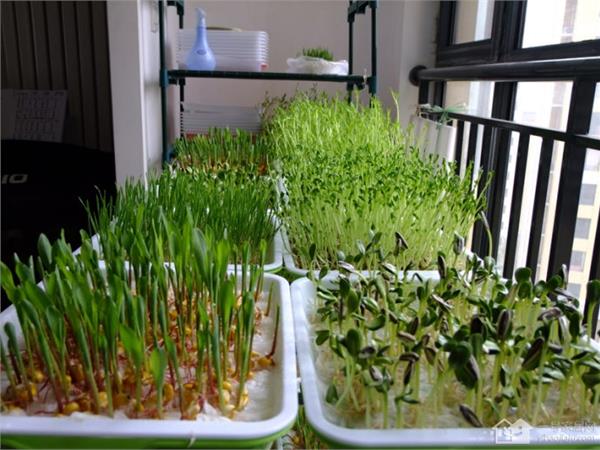
1. Rootless bean sprout technique - Selecting beans: Choose bean seeds that are mature, plump, have a high germination rate, and have strong sprouting vigor. Remove split beans, broken beans, immature beans, insect-damaged beans, and other debris. Beans that have been heated during storage and have become oily, or beans from the previous year, cannot be used for rootless bean sprout production; such beans not only have a low germination rate, they may not even sprout at all. Moreover, they will rot and become toxic during the production process.
2. Rootless bean sprout technique - Soaking beans: Pour the selected bean seeds into a vat, fill it with water (tap water, well water, etc. are all fine), stir up and down, use a wire skimmer to remove floating beans and other debris, then rinse repeatedly with water until clean. After soaking for half an hour, pour them into a container. The drainage holes of the container must be plugged with strips of cattail matting, but not too tightly or too loosely; the tightness should be such that water can flow out smoothly without letting bean seeds escape. A wooden barrel with a diameter of 64 cm and a height of 66 cm can hold 16.5 to 17.5 kg of bean seeds, generally filling it to 1/3 of the container. After the bean seeds are placed in the container, they should be sprinkled with water once more.
3. Rootless bean sprout technique - Watering: This is a key step in producing good bean sprouts. Although beans have a dormant period after maturing and being harvested, they are still respiring. This phenomenon becomes especially vigorous during germination. If the heat produced by respiration is not dissipated in time, the bean sprouts will rot and deteriorate, giving off a sour, foul odor. The frequency and amount of watering should be increased or decreased according to seasonal climate changes.
In summer, when temperatures are high, generally water once every four hours, twice each time; in spring and autumn, when the climate is mild and suitable for bean sprout growth, water once every four to five hours; in winter, when the weather is cold and bean sprouts grow slowly, the room needs to be heated. Where conditions permit, the indoor temperature should be kept at 22 to 25°C, and watering should be done once every six hours, once each time. However, use warm water and control the water temperature well. Do not let it fluctuate up and down. If the water temperature is too high, bean sprouts will grow slowly, become curved, and turn grayish in color, commonly known as "laokou," with a longer growth period.
Even more, prevent alternating hot and cold. In short, mix in hot water evenly, so that it feels mildly warm to the touch, with a temperature of 22°C being ideal. Before watering, use a thermometer to measure the water temperature; do not estimate casually. (Watering method: hold the watering bucket with one hand, fill it with water from the vat, then slowly sprinkle it onto the palm of the other hand, just like watering flowers. Move as slowly as possible, sprinkle it broadly and evenly, and do not rush or pour carelessly, to prevent knocking over or breaking the bean sprouts and affecting growth. Watering should be sufficient; while watering, let the water in the container flow out through the drainage holes, and also let the water in the container cover the bean sprouts.
4. Production process: On the first day, soak the seeds. On the morning of the second and third days, pour the bean seeds in the container back into the vat and soak them once (use warm water in winter), because the germination vigor of bean seeds differs, and the water, light, air, and heat at different positions in the container all vary, so the germination speed cannot be uniform. After several rounds of rinsing, the situation in which sprouts at the upper opening of the container are long while those around the sides and at the bottom are short can basically be corrected. Strive to make the bean seeds sprout evenly and uniformly.
Method of operation: Pour the bean seeds into the water vat, stir up and down with your hand until evenly mixed, scoop them out with a bamboo basket, and place them into the container. Except for those that have not sprouted, cover the rest well with cattail matting (use straw bags when it is cold). Regardless of seasonal changes, wash only once a day; do not wash more, otherwise it will damage the bean sprouts and affect growth. By the morning of the fourth day, there is no need to put them into the vat for rinsing; simply water them on schedule and let the bean sprouts grow in the container, commonly known as "sitting in the barrel." From seed soaking to sprouts reaching 1.8 cm in length, it takes about three and a half days in winter, and at most only three days in other seasons.
5. First medicinal solution treatment: When the sprouts reach 1.8 cm in length, use EN-109 plant growth regulator soybean sprout formula powder. According to the dosage requirements, mix each packet with 65 kg of water to prepare the medicinal solution. However, when preparing the solution, pay attention to the concentration of the NE?109 plant growth regulator for treating bean sprouts. If the concentration is too high, it will burn the bean sprouts; if too low, root tendrils will appear. The amount of water mixed per packet of powder should be no less than 65 kg and no more than 75 kg, which is more appropriate. Therefore, when preparing the solution, you must be careful and cautious. Especially for large batches, it may be necessary to weigh the water each time when mixing, but it is not necessary to prepare the solution strictly according to the dosage. Therefore, you can mark the level of the first preparation with a bamboo stick, making it easier to measure when preparing the solution later. After the medicinal solution is prepared, wait a moment until the powder is fully dissolved, then begin soaking the sprouts.
The above is the relevant introduction in this article. I believe that after reading it, you now have a simple understanding of this. If needed, you can continue to follow No.1 Home Network to learn more information.