Crabapple Tree Cultivation Methods and Common Diseases Explained in Detail
The crabapple tree likes sunlight and can also tolerate partial shade; it is cold-hardy and not strict about environmental conditions, and is suited to growing in loose, fertile, deep, well-drained sandy soil. Chaenomeles speciosa (flowering quince) has strong adaptability and relatively extensive cultivation and management. The Baling crabapple tree is robust and easy to manage, with advantages such as a well-developed root system, many fibrous roots, cold resistance, drought resistance, waterlogging resistance, saline-alkali resistance, pest and disease resistance, tolerance of poor soil, tolerance of wet conditions, a high survival rate for transplanted seedlings, rapid growth, and suitability for all kinds of soil; it has wide adaptability, and Baling crabapple trees can be planted on flat land, hillsides, hills, and sandy wasteland. Under normal management, its lifespan can reach more than 180 years.
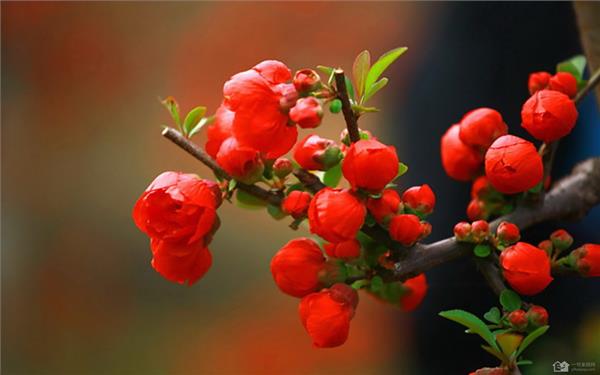
Morphological characteristics of the crabapple tree:
The crabapple fruit produced by the Baling crabapple tree is flat in shape, with about eight obvious ridges protruding around it, hence the name "Baling crabapple". The Baling crabapple tree grows quickly and has a long lifespan. Young trees bloom and bear fruit in the same year, and the yield doubles year by year. The branches of the Baling crabapple tree are slender, uniform, and soft, and the tree shape is very graceful.
Cultivation methods for crabapple trees:
Pot selection: Crabapple trees commonly use deep rectangular or oval pots, though square and round pots are also acceptable; for cascade styles, use a deep tall cylindrical pot. Pots made of purple clay pottery or glazed pottery are preferable, though other materials are also acceptable.
Soil: Crabapple tree planting is not strict about soil quality; slightly acidic soil or neutral soil are both acceptable, but loose, fertile, well-drained leaf mold or garden soil is best. When potting, place a layer of sand or vermiculite at the bottom of the pot to aid drainage.
Planting: Both spring and autumn are acceptable, with the dormant period being preferable. Before planting a crabapple tree, the thick roots and long roots must be shortened, and they must not be allowed to coil in the pot. After planting, water thoroughly, place in a shaded spot for 1-2 weeks, then move to a spot with sufficient light.
Propagation: Crabapple trees are mainly propagated by division, cuttings, and layering; sowing is also possible. Sowing can produce large numbers of uniform seedlings, but it is not easy to maintain the original variety's characteristics. Crabapple trees have strong tillering ability, so the mother plant can be dug up and divided in autumn or early spring, dividing it into 2-3 branches per plant; after planting, division can be carried out again 3 years later. Generally, after division in autumn, heel in the plants to promote wound healing, and they can be planted out in the following spring and will bloom the next year. Hardwood cuttings are taken at the same time as division; during the growing season, softwood cuttings can also be taken by inserting segments about 15 cm long into plain sand or plain soil, watering thoroughly and keeping them moist; leaves will emerge after more than a month. Cutting-grown plants can bloom in 2-3 years.
Common diseases of crabapple:
The common disease is pear-juniper rust, also called pear trellis rust. This disease infects through two hosts. The primary host is cypress-family plants, such as Sabina chinensis (Chinese juniper), Juniperus chinensis 'Kaizuca' (dragon juniper), and Juniperus chinensis 'Pfitzeriana' (Pfitzer juniper); the secondary host is Chaenomeles speciosa (flowering quince), Malus halliana (hall crabapple), and Crataegus (hawthorn), etc. Do not plant cypress-family plants and other primary hosts near crabapple trees. During the disease period, spray with 20% carboxin emulsifiable concentrate at 400 times dilution. Or use 50% thiram wettable powder at 800 times dilution, spraying once every half month. Do not spray or spray less in dry weather. When the telial horns are about to swell in mid-to-late March, use a mixture of 0.3% sodium pentachlorophenate at 1 degree, spraying 2-3 times every half month for prevention and control.
The crabapple tree is both an economic forest tree and an excellent first-choice ornamental tree for beautifying landscapes, with extremely high ornamental value. It is an excellent seedling for urban parks, road greening, garden landscaping, courtyard viewing, and villa beautification and embellishment. It is very suitable for potted planting and courtyard planting.
The above is the relevant introduction in this article. I believe that after reading it, you will also have a simple understanding of this. If needed, you can continue to follow No. 1 Home Network to learn more information.