A Detailed Guide to the Growth Habits and Cultivation Methods of Ivy
Ivy, also known as English ivy or common ivy, is a perennial evergreen climbing foliage plant of the genus Hedera in the family Araliaceae. Ivy is a typical shade-loving climbing plant, with entirely woody stems that can reach 3-5 m in length, is much branched, and bears aerial roots on the stems. The tender young shoots are covered with soft hairs and rust-colored scales; the leaves are alternate, leathery, oily green and smooth. Ivy is highly adaptable to its environment, prefers a relatively cool climate, and has strong cold tolerance; it dislikes hot, stuffy conditions. So, what are the cultivation methods for ivy?
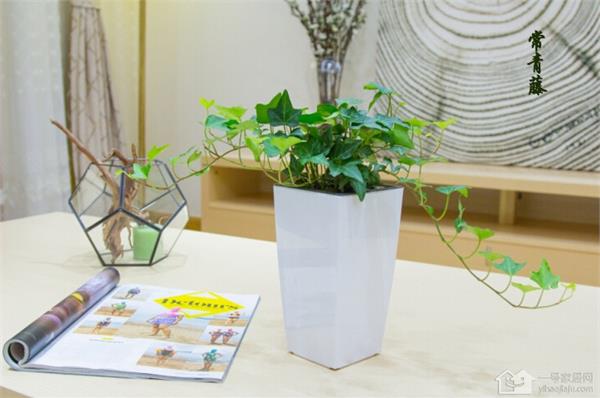
I. Growth Habits of Ivy
Ivy likes light but is also fairly shade-tolerant, and it grows well when placed under semi-light conditions. Avoid direct strong sunlight in summer, keep the soil moist, and frequently spray water on the plant. Ivy is a perennial evergreen climbing plant of the genus Hedera in the family Araliaceae, with ovate or broadly ovate leaves. Because its branches and leaves are emerald green and glossy, and because it has many variegated varieties, with slender, supple, drooping stems and tendrils, it can be grown in pots or hanging baskets, or trained upright, to decorate a room. Ivy is relatively cold-tolerant and will have no problem overwintering indoors.
Ivy is not demanding about soil and can grow in ordinary soil. For pot cultivation, however, the potting soil can be a mix of garden soil, about 1/4 plant ash, and a small amount of base fertilizer. Using plant ash both keeps the potting soil loose and airy and provides more potassium fertilizer to meet the growth needs of ivy. During the growing season, ivy can be given liquid fertilizer once every 2 weeks, or a granular chemical fertilizer once a month; for variegated varieties, the proportion of nitrogen fertilizer must not be too high, lest the variegated leaves turn green.
Ivy's leaf color and leaf shape are highly variable, and it stays green through all four seasons. It is a beautiful climbing plant that can be used for vertical greening on trellises or walls. It is also suitable for indoor pot cultivation and is an excellent indoor foliage plant, usable as a potted plant, hanging basket, totem, or shaped plant. Ivy is also a material for flower arrangements. In addition, planted together with other plants, it is a very good ground cover material. The whole plant can be used as medicine.
II. The Role of Ivy
Ivy is a fairly popular large indoor potted flowering plant, especially when placed in a relatively spacious living room, study, or sitting room, where it lends an elegant, plain style with a southern charm. It is a world-famous new-generation indoor foliage plant with a graceful, neat plant shape. It can purify indoor air and absorb harmful gases such as benzene and formaldehyde released by furniture and decoration, bringing great benefits to human health. It is native to Europe, Asia, and North Africa. It is highly adaptable to its environment. It likes a relatively cool climate and has strong cold tolerance, and it can be used as medicine.
Ivy is most often planted on outdoor walls or in courtyards, or grown indoors in hanging baskets; wherever it is, it has vigorous vitality, climbing like a gecko and spreading out like a spider web, and every year from late spring into summer we see a stretch of emerald green. Its leaves are like maple leaves, and at flowering time it opens small pale yellow-white flowers, very beautiful and fresh; it has become a popular greening and ornamental plant. Whether outdoors or indoors, it can bring a stretch of emerald green and bring hope, and indoors in particular it is a very pleasing green plant that can serve a decorative and beautifying role.
III. Cultivation Methods for Ivy
1. Temperature should be suitable. Ivy likes warmth, with an optimum growing temperature of 20°C-25°C; it fears heat and is not cold-tolerant. Therefore, when keeping it indoors, pay attention to ventilation and cooling in summer, and in winter the room temperature should preferably stay above that, and must not fall below 5°C.
2. Light should be moderate. Ivy likes light but is also fairly shade-tolerant; grown under semi-light conditions, its internodes are shorter, its leaf shape is uniform, and its leaf color is vivid, so it is best grown in a bright spot indoors. If in spring and autumn you can each choose a period to place it outdoors in a shaded spot so that it sees more sunlight in the morning and evening, it will grow vigorously with bright green leaves. But be careful to prevent direct strong light, otherwise it is prone to sunscald.
3. Water appropriately. During the growing season, water according to the principle of watering when dry and letting it dry between waterings; do not let the potting soil become excessively wet, otherwise it easily causes root rot and leaf drop. In winter, when room temperature is low, especially control watering and just keep the potting soil slightly moist. The winter climate in the north is dry, so it is best to spray-wash the plant once a week with clean water close to room temperature to maintain air humidity; the plant will then look lively, and the leaves will be tender green and glossy.
4. Fertilize reasonably. For home cultivation of ivy, the potting soil should preferably be a growing medium mixed from leaf mold or peat soil plus 1/4 river sand and a small amount of bone meal; during the growing season, apply a dilute cake fertilizer solution once every 2-3 weeks. Generally, do not fertilize in summer and winter. When fertilizing, never apply nitrogen fertilizer excessively, otherwise the patterns and patches on the leaves of variegated varieties will fade to green. The ratio of nitrogen, phosphorus, and potassium is preferably 1;1;l. In the peak growing season, you can also spray the leaves 1-2 times with a 0.2% potassium dihydrogen phosphate solution, which will make the leaf color look even more beautiful. But note that when applying liquid fertilizer, avoid staining the leaves, so as not to cause the leaves to scorch.
Finally, that is all for the knowledge about growing ivy, and I hope the above content is helpful to everyone. In addition, ivy is also often used indoors, especially as a negative ion purifier for interiors after decoration, and it is believed to have a clear effect on reducing the concentration of harmful substances such as formaldehyde and benzene.
The above is the relevant introduction in this article. I believe that after reading it you have a simple understanding of this as well. If you need more, you can continue to follow No. 1 Home Network to learn more information.