How to Grow Hornwort? A Detailed Guide to Cultivation Methods
Hornwort is a perennial herbaceous submerged aquatic plant of the genus Ceratophyllum in the family Ceratophyllaceae. It grows year after year in the still water of small lakes, can be used as feed for pigs, fish and poultry, and is found throughout the world. So how do you grow hornwort, and what are the precautions for growing it?
What Is Hornwort
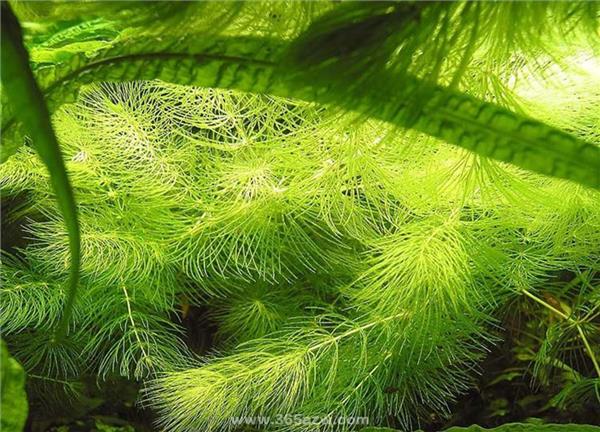
Hornwort, also called fine grass or fish grass, is a perennial herbaceous submerged aquatic plant of the genus Ceratophyllum in the family Ceratophyllaceae. This plant looks very lush and green; the whole plant is dark green, has many branches, and can flower, with a flowering period of about June to July. Hornwort's flowers are very small, look very neat and lovely, and are also unisexual flowers, meaning the flowers are monoecious or dioecious. After the flowering period, the plant enters the fruiting period, and hornwort will bear fruit during roughly August to October.
Morphological Characteristics of Hornwort
Hornwort is a perennial submerged herb; the stem is 40-150 cm long, smooth, and branched. Leaves are in whorls of 4-12, with 1-2 dichotomous divisions, the segments filamentous, or filamentous-linear, 1.5-2 cm long, 0.1-0.5 mm wide, the tip with white cartilage, and only one side of the margin with several fine teeth. Hornwort's flowers are about 2 mm in diameter; bracts 9-12, linear, 1.5-2 mm long, light green, transparent, the tip with 3 teeth and purple hairs; stamens 10-16, slightly crowded; ovary ovoid, style subulate. The nut is broadly elliptic, 4-5 mm long, about 2 mm wide, black, smooth, wingless along the margin, with 3 spines, the terminal spine (persistent style) 8-10 mm long with a hook at the tip, the two basal spines extending downward obliquely, 4-7 mm long, tapering to a spine at the tip. Hornwort's flowering period is June-July, and the fruiting period is August-October.
How to Grow Hornwort
Hornwort has no roots, and the whole plant is submerged in water, so its growth is closely related to light. When the water is too turbid and less light penetrates the water, hornwort grows poorly, but once the water is clear and sunlight penetrates, it can still resume growth. Under 2%-3% light intensity, it grows slowly. Under 5%-10% light intensity, it grows rapidly, but strong light will cause hornwort to die. Hornwort can grow normally in a weakly alkaline environment and is most suited to water with a pH of 7.6-8.8.
Hornwort likes nitrogen, and when the inorganic nitrogen content in the water is high, its growth is also better.
First, hornwort planting should be dense rather than sparse. If a grower wants to achieve high yields and the basic seedlings are insufficient, it will be hard to raise the yield. Generally speaking, when cultivating this aquatic plant, it is advisable to transplant 200 clumps per mu of water area.
Second, during cultivation the fertilizer should be rich rather than lean. If you choose those barren water surfaces that cannot be used for raising fish or shrimp to plant hornwort, these relatively poor-quality water areas should have the water moss and other weeds removed before planting, then apply 25 kg of superphosphate per mu of water surface as a base fertilizer, and apply little nitrogen fertilizer to prevent green algae from taking over the water surface. Then plant the hornwort.
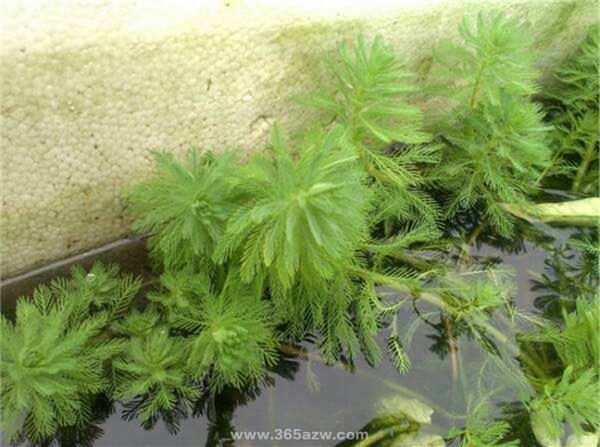
Third, the water area for planting hornwort must not be too deep; generally keeping it within a range of 1 m is most suitable. Because if the water is too deep, the stems will be coarse and the leaves few, greatly reducing the yield, and the utilization rate of the aquatic plant will also decrease, thereby lowering the commercial value of growing hornwort.
In addition, under normal circumstances, it is generally 50 days from planting hornwort to the first harvest. During harvesting, note that you should lift the stick, shake it, turn it 4-5 turns in the water, then hold the stick horizontally and lift it up with both hands. The second harvest should be 30 days later, and the third harvest only needs an interval of a few days.
Precautions for Growing Hornwort
1. Water quality requirements: Hornwort has strong adaptability and can also survive in a weakly alkaline environment, but the most suitable water quality for its growth requires a pH between 7.6 and 8.8, so the water quality for growing hornwort must meet this requirement.
2. Air requirements: Hornwort likes nitrogen very much. When the inorganic nitrogen content in the surrounding water is relatively high, the plant's growth also becomes very good, so pay attention to the air supply in the fish tank.
3. Appropriate timing: Under normal circumstances, hornwort does not grow very fast, and fish need to eat hornwort as they grow, so only when hornwort has grown to a certain extent can it be put into the fish tank for cultivation.
4. Light requirements: Plant growth cannot be separated from light, and the same is true even for aquatic plants. Hornwort is also very accustomed to it, and sufficient light is more conducive to its growth, so during cultivation it is best to place it in a place with good light.
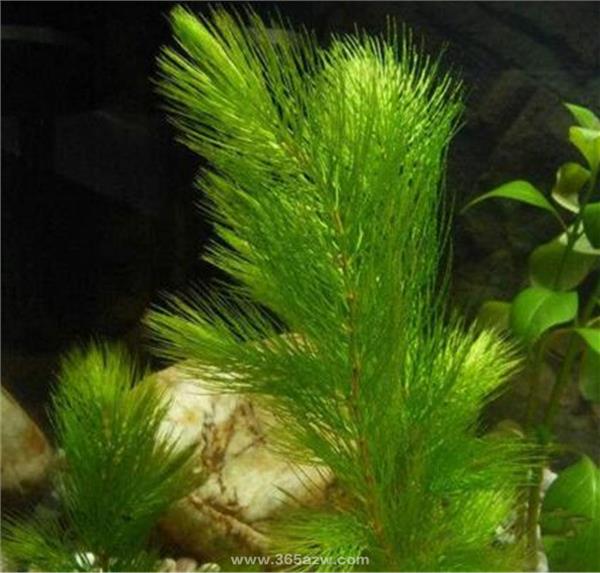
5. Sufficient fertilizer: Hornwort's growth requires a sufficient nutrient supply, so during cultivation the fertilizer should be rich rather than lean. Therefore, during cultivation it is best not to mix it with other weeds, fertilizer should be applied in a timely manner, and nitrogen fertilizer should be applied sparingly.
6. Temperature attention: Although hornwort does not have high requirements for water temperature, the plant is actually rather sensitive to ice and cold, so the water used to grow it must not be ice water, otherwise the hornwort may very likely freeze to death.