How to grow snake plants: key points for caring for snake plants
Among the precious gifts nature brings people, one that cannot be overlooked is lovely green plants. Especially in modern times, when industrial pollution is becoming more and more serious, people need greenery and need to return to nature. Growing green plants can not only purify the air, but also bring people a peaceful and serene mood. Among common household green plants, the snake plant is a very popular one, and the golden-edged snake plant in particular is favored by many people. So, how do you grow a snake plant?
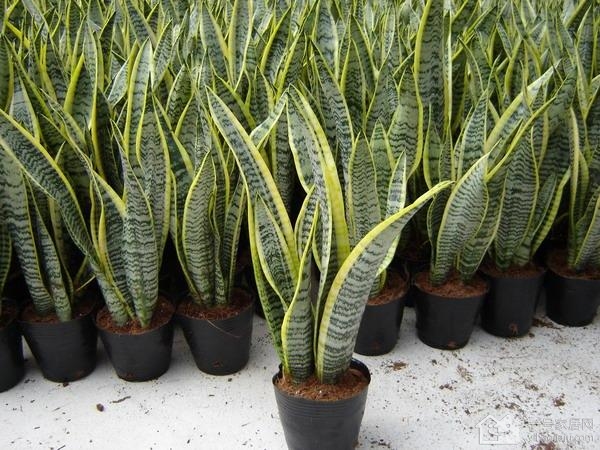
I. Introduction to the snake plant
The snake plant is mainly distributed in Africa and southern Asia. It belongs to the angiosperms, order Liliales. The snake plant is also known as mother-in-law's tongue and thousand-year plant, and is a perennial evergreen plant. The leaves of the snake plant are very upright, like little green guards, and the leaf surface usually has horizontal banded markings shaped like a tiger's tail. The golden-edged snake plant is a type of snake plant with relatively high ornamental value. Its leaves are generally composed of 3 colors, green, white, and yellow, while the leaf edges are pure yellow, which is also the origin of the name golden-edged snake plant.
Snake plants like light and warmth. The soil for growing snake plants needs to be relatively loose with good air permeability; sandy soil is best. The propagation methods of the snake plant include division and cuttings. Usually, household snake plant growing uses division, preferably in spring. The snake plant has relatively high temperature requirements; the growing environment temperature must not be lower than 10 degrees, otherwise it is very easy to cause the plant to die. When planting a snake plant, it is best to let it come into contact with sunlight often, and it can be placed in a place such as a balcony where it receives direct sunlight.
Snake plants can absorb more than 80% of indoor harmful gases, and their ability to absorb formaldehyde is especially strong, so they are also known as the "natural scavenger." At the same time, they can also absorb large amounts of radioactive nuclides such as uranium. In addition to removing formaldehyde, they also have an obvious absorption effect on harmful substances such as trichloroethylene, hydrogen sulfide, benzene, phenol, hydrogen fluoride, ether, and heavy metal particles. Their transpiration efficiency is relatively high, and they also have a certain ability to regulate indoor humidity. Therefore, in a 15-square-meter room, planting 2 to 3 pots of snake plants can keep the air fresh.
II. How to grow snake plants
1. Soil selection: Snake plants require loose soil and need air permeability, so when mixing soil for snake plants, be sure to use 2/3 leaf mold plus 1/3 garden soil. Remember that the soil must be loose and breathable, otherwise it will make it difficult for water to evaporate, causing the rhizomes to rot.
2. Sunlight requirements: Snake plants like light, so be sure to let them come into contact with sunlight often. It is best to place them in a spot where they can be directly exposed. If conditions do not allow it, then place them in a spot relatively close to sunlight. Being placed in a dark place for a long time will cause the leaves to turn yellow.
3. Temperature: Snake plants have quite high temperature requirements. Their suitable growing temperature is 20 to 30°C, and in winter it should not be lower than 10°C, so be sure to pay attention, especially in northern regions.
4. Watering: Snake plants also have quite high water requirements. Generally speaking, if the soil is relatively loose, they need to be watered twice a week, while in winter, due to climate factors, only once is enough.
5. Pruning: Compared with other household green plants, snake plants grow relatively quickly. Therefore, when the pot becomes full, manual pruning is needed, mainly by cutting off old leaves and overly dense areas, to ensure they have sunlight and growing space.
6. Repotting: Snake plants are perennial plants. Generally speaking, they need to be repotted once every two years. When repotting, be sure to add nutrients to the new soil so as to ensure their nutrient supply.
7. Planting method: Snake plants are root-propagated plants. Generally speaking, you only need to plant a few plants, and after one year you can harvest a full pot. When planting, first place part of the soil at the bottom of the pot, then start planting from one side of the pot, planting evenly inside the pot.
8. Fertilizing: Snake plants do not have high fertilizer requirements. You only need to fertilize 2 times a month during the growing season. Be careful to apply dilute fertilizer liquid so as to ensure lush growth.
9. Threats from diseases and pests: The common diseases of snake plants mainly include leaf spot disease and anthracnose. At this time, 50% carbendazim can be sprayed for treatment. A common pest is damage by weevils. At this time, 50% fenitrothion emulsifiable concentrate diluted 1000 times can be sprayed to kill them.
III. Key points for caring for snake plants
First, we need to know that the snake plant is a plant with very strong adaptability. It likes warm and humid environments, and its soil requirements are not very strict. Generally, we should place it in a shaded or semi-shaded place, but it also quite likes sunlight. Only when the sunlight is too strong will its leaf color become dull and whitish. Watering should also be moderate. We must not blindly water it constantly, nor should it be too wet, because the snake plant is a desert plant and can survive in harsh environments and under long-term drought conditions. If you water it too frequently, its leaves will turn white, and the color of the markings will also become darker.
Spring and autumn are its peak growing seasons, and we should give it sufficient water, while during the winter dormant period we should pay attention to controlling watering and keep the soil dry. Remember not to let water accumulate, so as to avoid root rot. Do not overfertilize it either. During its peak growing period, it can be fertilized 1 to 2 times a month, but the amount should be small, and from November to March of the following year, fertilization should be stopped. Although the snake plant does not have very strict soil requirements, it can grow normally even in a very small volume of soil, and it is tolerant of drought and barren conditions. It grows very robustly, and even when it fills the pot it will not inhibit its growth. Therefore, we generally repot it once every two years, preferably in spring. When repotting, it is best to use standard compost as the best choice.
Finally, the snake plant is a perennial evergreen herbaceous plant of the Liliaceae family, so it is very easy to cultivate. It is relatively drought-tolerant and has strong adaptability to the environment. It is a relatively common excellent indoor potted foliage plant, and is a very good choice for decorating a study and living room.
The above is the relevant introduction in this article. I believe that after reading it, you also have a simple understanding of this. If needed, you can continue to follow No. 1 Home Network to learn more information.