What are the living environment and cultivation methods of geraniums?
The geranium is a perennial herbaceous plant of the Geraniaceae family that lives in southern Africa, also known as the zonal geranium and fish geranium. Geraniums love sunlight and do not like places with too much water. Their flowering period is very long; apart from the cold season, they bloom for about 8 months of the year. Geraniums are drought-tolerant and afraid of waterlogging, prefer a warm climate and fertile, loose soil, and are mostly in a dormant state in summer, when they do not grow excessively. So, what cultivation methods are there for geraniums?
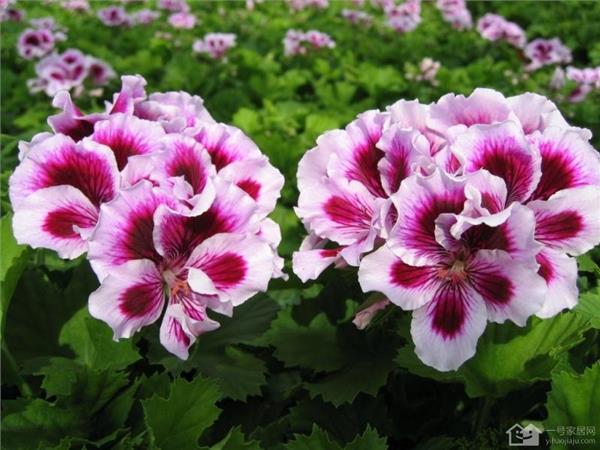
I. Introduction to geraniums
Geraniums originate from southern Africa and are widely cultivated around the world. Young plants are succulent herbs, while old plants are semi-woody; in the West they are excellent flowers for decorating windowsills, and on the European continent, such as in countries like Germany and Austria, they are especially common. The common name of the geranium is hydrangea, and there are single-flowered, semi-double, double, and tetraploid varieties. They can also be divided into upright geraniums and trailing geraniums, with thick, juicy stems. The geranium stem is upright, succulent, woody at the base, succulent in the upper part, much branched or unbranched, with obvious nodes, densely covered with short soft hairs. The leaves are alternate, the stipules broadly triangular or ovate, 8-15 mm long, covered with soft hairs and glandular hairs; the petiole is long, covered with fine soft hairs and glandular hairs; the leaf blade is round or kidney-shaped. The base is heart-shaped, 3-7 cm in diameter, with wavy shallow lobes at the margin, with round teeth, both sides covered with transparent short soft hairs, and a dark red horseshoe-shaped ring pattern inside the leaf margin on the surface.
Geraniums by nature like warm winters and cool summers. Indoors in winter, maintaining 10-15°C during the day and above 8°C at night allows them to bloom normally. But the most suitable temperature is 15-20°C. Geraniums like dryness and dislike dampness, so in winter they should not be watered too much; water only when the soil is dry. When the soil is wet, the stems become soft and tender, which is unfavorable for the sprouting and opening of flower branches; long-term excessive moisture will cause the plant to grow leggy, the position where flower branches form to move upward, and the leaves to gradually yellow and fall off.
Geraniums have pain-relieving, antibacterial effects and can enhance the cell defense function; they can promote the repair of scars and stretch marks and promote cell renewal. In addition, geraniums also help balance skin oil, prevent clogged pores, and promote blood circulation. Geranium essential oil can also calm people's anxious and depressed emotions and help relieve stress.
II. The living environment of geraniums
Geraniums are a drought-tolerant plant, and their requirement for soil is that there should not be too much water, because too much water will make geranium roots rot. Therefore, when growing geraniums, the soil should not contain too much water. Geraniums love fertile, loose soil, so when growing them we should add some sandy soil to the soil we bought to ensure the soil is loose. Potted geraniums should be repotted once a year to benefit their flowering.
Geraniums have high requirements for light and temperature. Generally, the most suitable temperature for geranium growth is between 10-20°C, which means spring and autumn are very suitable for geranium growth. Too hot in summer and too cold in winter will both cause geraniums to enter a dormant state, so be careful not to expose geraniums to the sun in summer and not to place them somewhere below 0°C in winter, otherwise it will harm them. In addition, prevent the impact of bad weather on geraniums; if heavy rain soaks them, the roots will have difficulty breathing and thus rot.
The growing environment of geraniums requires fertile soil, which also makes courtyard geraniums grow very quickly. As ornamental plants, geraniums usually need careful maintenance and pruning, generally pruning them three times a year. The first time is mainly to thin out branches, the second is to cut off faded flowers and overly dense branches, and the third is overall adjustment, that is, shaping.
III. Cultivation methods of geraniums
Cultivation methods of geraniums: water
Geraniums originate from southern Africa and are a plant that does not like too much water, so during cultivation never water geraniums too much. If watered too much, the roots of the geranium will rot, and if it grows long-term in such a water-rich environment, its growth will be affected and it will die. Therefore, when growing geraniums, it is enough to water them once every two to three days, but each watering must be sufficient in amount.
Cultivation methods of geraniums: fertilizing
Applying an appropriate amount of fertilizer is also a key point in growing geraniums. If too much fertilizer is applied, it will cause the geranium to dehydrate and affect its normal growth, but if you do not fertilize it for a long time, it will also cause a lack of nutrients. The amount of fertilizer for geraniums is directly related to its soil quality, flower size, and pot size, so when buying it is best to ask the shopkeeper to understand the required amount and frequency of fertilizing.
Cultivation methods of geraniums: temperature
Geraniums like a warm, moist environment with sufficient sunlight. The most suitable temperature for growth is between 10 and 20 degrees, which is the temperature of spring and autumn, so protective measures must be taken for them in both winter and summer. If it is winter, place it in an environment not lower than 0 degrees to avoid frostbite, while in the hot summer, move it to a shady place to avoid exposure to the scorching sun.
Cultivation methods of geraniums: pruning
If when pruning it we mistakenly pinch off its growing tips, then its leaves will remain few for a long time, which will also delay its growth period and reduce the material for flowering. In addition, when maintaining it indoors in winter and spring, long-term insufficient light can also easily cause leggy growth and failure to bloom, so in winter we must give it sufficient light.
Finally, overall geraniums are not very toxic, but the tiny particles released by geraniums can cause skin allergies and itching in people, and it is better not to use them during pregnancy.
The above is the relevant introduction in this article. I believe that after reading it you also have a simple understanding of this. If needed, you can continue to follow No. 1 Home Network to learn more information.