A Detailed Guide to the Benefits and Cultivation Methods of the Night-Blooming Cereus
The night-blooming cereus blooms only briefly, all for Weituo - there is an ancient story about the night-blooming cereus. Since ancient times, the night-blooming cereus has been endowed with an almost magical quality. A flower that blooms only at night, its blossoms are extraordinarily magnificent and dazzling, but unfortunately people can only see such beautiful flowers in that single moment. For many people, the night-blooming cereus is beautiful, as distant as an unrealistic dream. So, what are the cultivation methods for the night-blooming cereus?
I. Introduction to the Night-Blooming Cereus
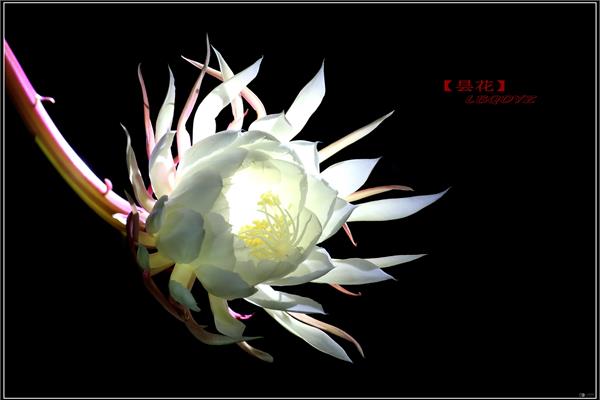
The night-blooming cereus has a shrub-like main stem that is cylindrical and woody. The branches are flat and leaf-like, mostly with 2 ridges, occasionally with 3 wings, and the edges have wavy rounded teeth. The areoles grow in the notches of the rounded teeth. Young branches have bristle-like spines, while old branches have no spines. In summer and autumn, it blooms large white flowers at night; the flowers are funnel-shaped and fragrant. It is native to Mexico. It likes a warm, humid and semi-shaded environment. It is not tolerant of frost and should avoid strong direct sunlight. It is suitable for sandy loam rich in humus. In winter, the temperature should not be lower than °C.
The night-blooming cereus has emerald green branches and leaves, quite elegant, and whenever it is late at night in summer and autumn, it displays its beautiful posture and lovely colors. At this time, a delicate fragrance fills the air, and it is dazzling to the eye. As a potted plant, it is suitable for decorating guest rooms, balconies and reception halls. In the south, it can be planted in the ground. If it spreads fully over a trellis, when it blooms, it is like a large expanse of flying snow, very spectacular. The flowering season of the night-blooming cereus is generally from June to October, and the blooming time is generally after 8 to 9 o'clock at night. The full bloom lasts only 3 to 4 hours, very brief. When the night-blooming cereus blooms, the floral tube slowly tilts upward, gradually opening its purple outer covering, and then a large snow-white flower composed of more than 20 petals opens. When open, the petals and stamens tremble, gorgeous and moving. But after only 3 to 4 hours, the corolla closes and the flower quickly withers - truly what is called "a fleeting glimpse of the night-blooming cereus"! A fleeting glimpse, yet it does not speak of her stunning beauty at that moment. The life of the night-blooming cereus is short. It has no tears, no sadness, no hesitation, only a stubborn fidelity to itself. And the price paid for this stunning beauty is to bloom and then wither.
II. The Benefits of the Night-Blooming Cereus
1. Home Decoration
The night-blooming cereus is an excellent flowering plant for coordinating and decorating the home environment. You can place the night-blooming cereus in a prominent position. Even if it does not bloom during the day, its posture still catches the eye. When it blooms at eight or nine o'clock at night, looking from inside the home toward the balcony, large and beautiful flowers tremble in the wind, gorgeous but not vulgar, and a faint delicate fragrance drifts on the breeze. That scene is precious and brief, yet it instantly gives the home a sense of elegance.
2. Improving Air Quality
The night-blooming cereus can absorb carbon dioxide and release oxygen at night. Although ordinary flowers and plants can purify the air, they only do so during the day. When night comes, they all become like the human body, absorbing oxygen and exhaling carbon dioxide. Therefore, if too many such flowers and plants are placed indoors, it will cause a phenomenon of flowers competing with people for oxygen, affecting people's health. The night-blooming cereus, however, is exactly the opposite.
III. Cultivation Methods for the Night-Blooming Cereus
1. Planting
Generally, a culture soil made by mixing garden soil and leaf mold, with a small amount of fine sand added, is the most suitable soil for the growth of the night-blooming cereus. Repot every 1 year, preferably in early spring. When repotting, remove rotten roots and remove some of the old soil, adding new nutrient soil.
2. Fertilizing
When fertilizing, generally once every ten days to half a month, use diluted fertilizer as the standard. A small amount of rice vinegar can be added to the fertilizer, which will produce even more gratifying growth. During the flowering period, fertilization should be increased, and a 0.2% solution of potassium dihydrogen phosphate can be used for mixing. After the flowers fade, fertilization should also be applied to prepare for next year's blooming.
3. Watering
"Water when dry, stop when wet" is an important principle in cultivating the night-blooming cereus. There must never be standing water in the pot. In dry and hot summer weather, clean water can be sprayed on the leaf surface. Too much standing water can cause root rot, but this method ensures no standing water while supplementing air humidity, which benefits growth and flowering the following year.
4. Temperature and Light
Because the night-blooming cereus likes a semi-shaded environment, attention should be paid to sun protection in spring and summer. Place it indoors for cultivation and pay attention to light intensity; never expose it to direct sunlight. In addition, the night-blooming cereus should be placed in a ventilated place, such as near a window. Room temperature should be maintained at around 10°C, and soil moisture should be controlled, neither too dry nor too wet.
5. Propagation
In propagation season, the night-blooming cereus is mostly propagated by seeding or cuttings. The seeding method grows more slowly and delays the flowering season, so the cutting method is mostly used for planting. The simple and easy cutting method can greatly shorten the time to flowering, but attention must be paid to selecting the cuttings. Generally, fully grown, robust stems and leaves are best; those too old or too tender are not suitable. Cut the cuttings into small segments, air-dry them in a ventilated place, and after the cut ends have dried, insert them into the soil. The soil must be kept loose and moist, and the temperature controlled at 18-25°C. After rooting, transplant them into pots for cultivation.
6. Flowering Period Regulation
Although the night-blooming cereus is beautiful, unfortunately it always blooms at night, which is why there is the saying "a fleeting glimpse of the night-blooming cereus, all for Weituo." Moreover, the night-blooming cereus only blooms after 9 o'clock at night and easily withers. So, is there any way to change this situation?
The night-blooming cereus generally blooms at night and withers not long after opening, hence the saying "a fleeting glimpse of the night-blooming cereus." If you want to see this rare spectacle of the night-blooming cereus in bloom, you really need to cultivate it well.
The above is the relevant introduction in this article. I believe that after reading it, you have also gained a simple understanding of this. If needed, you can continue to follow No.1 Home Network to learn more information.