What are the benefits of growing canna lilies? Interpreting the flower language of canna lilies
Canna lilies are perennial herbaceous plants that can grow up to 1.5 m tall. The whole plant is green and hairless, covered with a waxy white powder. They have tuberous rhizomes. The aboveground stems grow in clusters. The leaves are alternate, with sheath-like petioles, and the leaf blades are ovate-oblong. They are commonly used flowering plants in subtropical and tropical regions.
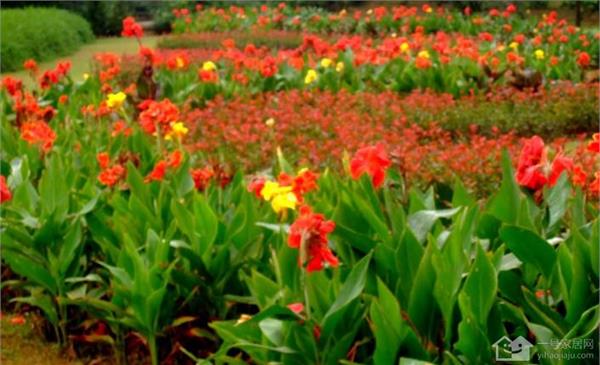
I. Introduction to Canna Lilies
Canna lilies are also known as large-flowered canna, red canna, orchid canna, tanhua, and so on. They are perennial herbs with tall plants, relatively thick rhizomes, stems and leaves covered with white powder, and broad elliptical leaves. The flower colors include creamy white, yellow, orange-red, pink, bright red, and even purple-red, among others. According to Buddhist tradition, they were transformed from blood that flowed from the toes of the Buddha.
Canna lilies belong to the genus Canna in the family Cannaceae, and are perennial upright herbs. Also known as red canna, tanhua, orchid canna, and dwarf canna. They originated in tropical America and Africa, among other places. They have thick, fleshy rhizomes, and alternate, broad leaves. The petals are sepal-like; the showy petals are actually petal-like stamens. The inflorescence is a raceme, and the petals vary by variety, including yellow, red, and spotted forms. The seeds are relatively large, dark brown, with a hard seed coat. The flowering period lasts from early summer to late autumn, blooming continuously.
Flower colors include bright red, pink, orange-red, purple-red, creamy white, purple, as well as red-and-yellow combinations and red petals with golden edges. The flowering period runs from May to July, blooming continuously. Among them, the large-flowered red canna is the most beautiful, called "red canna," hence the name canna lily. They like warmth and humidity, fear severe cold, prefer ample sunlight, and like deep soil layers and fertile soil. They can tolerate poor soil. Their root buds have strong division ability, they propagate quickly, and they have a long flowering period. They are good groundcover plants and can also be used as materials for flower beds, flower borders, and flower landscapes.
II. The Benefits of Canna Lilies
Every plant has its own reason for existing, and canna lilies are no exception. Canna lilies can help people beautify the environment and provide ornamental value. The fresh, beautiful flowers and emerald-green leaves set each other off, appearing very vibrant and full of life. Canna lilies also have the effect of purifying the environment. They can help people absorb harmful substances in the air such as sulfur dioxide, hydrogen chloride, carbon dioxide, and so on. Their leaves are relatively easily damaged, but they also grow relatively quickly. They are also called monitors by people, as they can help people detect harmful polluting gases and provide people with better-quality huajiao. Canna lilies are high-quality flowering plants for beautification, purification, and ornamentation.
III. The Flower Language of Canna Lilies
The flower language of canna lilies is a solid future. According to Buddhist tradition, canna lilies were transformed from blood that flowed from the toes of the Buddha. They are a type of large flower. Canna lilies blooming in the sunlight and scorching heat make people feel their strong will to exist.
Canna lilies have luxuriant branches and leaves, large and brilliantly colored flowers, and a long flowering period. When they bloom, it is exactly the hot season with few flowers, so they can greatly enrich the colors and seasonal changes in landscaping, making garden landscapes clear in outline, beautiful, and natural. They can not only beautify people's lives, but also absorb harmful substances such as sulfur dioxide, hydrogen chloride, and carbon dioxide. They have relatively good resistance. Although the leaves are easily damaged, after being damaged they grow new leaves again and quickly recover their growth. They are ideal flowers for greening, beautifying, and purifying the environment.
The above is the relevant introduction in this article. I believe that after reading it, you also have a simple understanding of this. If needed, you can continue to follow No. 1 Home Network to learn more information.