What to Do When Spider Plant Leaves Turn Yellow? Cause Analysis and Solutions
Many people grow all kinds of plants and flowers at home, not only for their beautiful appearance but also because they purify the air. However, not everyone is an expert grower, and it is inevitable to run into tricky problems when growing plants. When a beloved plant gets sick, we are caught off guard. Let us take a look below at what we should do when a spider plant's leaves turn yellow.
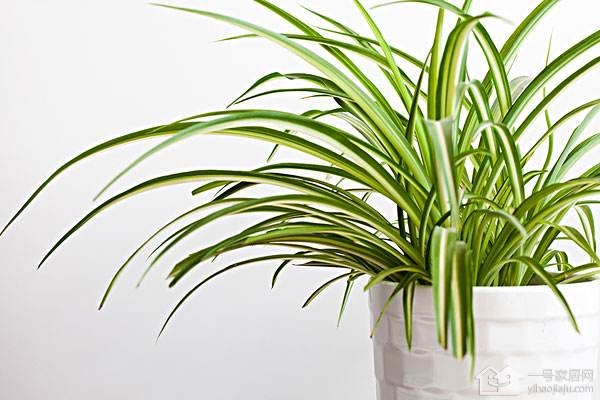
I. The Benefits of Spider Plants
Spider plants have an extremely strong ability to absorb toxic gases. Generally, if 1 to 2 pots of spider plants are grown in a room, the toxic gases in the air can be almost completely absorbed. According to scientific analysis, spider plants can absorb 95% of the carbon monoxide and 85% of the formaldehyde in the air. Therefore, the spider plant is not only an excellent hanging foliage plant for indoor spaces, but also a good indoor air-purifying flowering plant, which is why it is known as the "green purifier."
There are many varieties of spider plants. Common ones include the spider plant, purple spider plant, variegated spider plant, golden-leaf spider plant, silver-edged spider plant, and peony spider plant. Among them, the spider plant's stems and leaves are indistinguishable, the leaves droop, and the leaves are dark green. It blooms in June and July each year, with flowers in two colors, pale yellow and white. The purple spider plant, also called the colorful-leaf spider plant, has purple main veins on its leaves, and its stems are jointed, with leaves growing at each joint. Its leaves are thick and glossy, all drooping downward, and it blooms from June to October each year, with pink flowers.
II. Causes of Yellowing Spider Plant Leaves
1. Excessive fertilizing, exceeding the plant's needs. After fertilizing, the leaves will appear glossy but uneven, and later, after part of the root system rots, the leaves turn yellow due to malnutrition. So at this point, you should stop fertilizing and water more, or wash the root system once by turning the pot, and replacing the soil with new soil is also a very good solution. It can be seen that the concentration of the soil solution in the space is very important.
2. The soil has not been turned for a long time, and the soil has become compacted, after all the nutrient elements in the pot have been exhausted. The most important three elements, nitrogen, phosphorus, and potassium, are deficient, causing the leaves to gradually turn yellow. At this point, you should replace the soil or promptly switch to fertile loam and water with alum fertilizer water.
3. Spider plants are semi-shade flowering plants, but they still need light, so you should ensure at least 4 to 5 hours of light each day. Otherwise, chlorophyll decreases and the leaves will also turn yellow. The best solution is to place it under an indoor incandescent lamp or keep it on a balcony.
4. The pot soil's air permeability and water permeability are poor, causing the pot soil to retain water for a long time without drying, making root respiration difficult, so the leaves naturally turn yellow. At this point, you should loosen the soil promptly and control the moisture. Fifth, watering with only a little water for a long time without soaking through. The spider plant's roots lose water, and the lower old leaves turn yellow. You should water thoroughly and keep the pot soil warm and moist.
III. Solutions for Yellowing Spider Plant Leaves
1. Yellowing spider plant leaves may be caused by too much fertilizing, exceeding the plant's needs. At first the leaves are glossy but uneven, then the root system rots and the leaves turn yellow. You should stop fertilizing, water more with clear water, or turn the pot to clean the roots and replace the soil with new soil.
2. Yellowing spider plant leaves may also be caused by not turning the pot and changing the soil for a long time. The various nutrient elements contained in the pot soil have been exhausted, and the three key elements, nitrogen, phosphorus, and potassium, have not been supplemented in time. The plant lacks nutrients, and the leaves become yellow and thin. You should promptly switch to fertile loam and water with alum fertilizer water.
3. Yellowing spider plant leaves may also be caused by insufficient light. Although spider plants are semi-shade flowering plants, they still need at least four hours of diffused light each day. Otherwise, chlorophyll decreases and the leaves turn yellow.
4. The pot soil's air permeability and water permeability are poor, causing the pot soil to retain water for a long time without drying, making root respiration difficult, so the leaves naturally turn yellow. At this point, you should loosen the soil promptly and control the moisture. Fifth, watering with only a little water for a long time without soaking through. The spider plant's roots lose water, and the lower old leaves turn yellow. You should water thoroughly and keep the pot soil warm and moist.
In short, when growing spider plants, we should grasp the four key care points: spider plants like cool shade, need frequent misting, frequent fertilizing, and frequent repotting. I believe growing beautiful spider plants will be no problem. This way, you can avoid yellowing spider plant leaves as much as possible.
The above is the relevant introduction in this article. I believe that after reading it, you also have a simple understanding of this. If needed, you can continue to follow No. 1 Home Network to learn more information.