What Flower Is Glasswort? A Detailed Guide to Glasswort Cultivation Methods
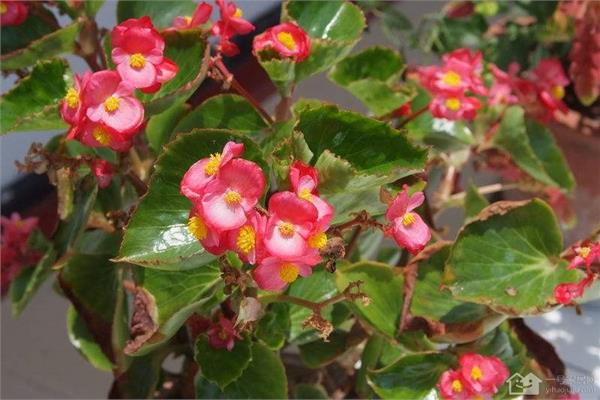
Glasswort is also called glass begonia; its stems and leaves are fleshy and crystal-clear, and the flower lives up to its name. It is often used for household pot cultivation, made into a small potted plant placed on a desk, and is very elegant. How to grow glasswort is often a common question among many flower lovers, so below I will share the cultivation methods of glasswort with everyone.
Cultivation Methods of Glasswort
1. Growing environment: Glasswort is mostly used for foliage viewing and likes a moist growing environment. If the air is too dry, the leaves will lose their luster, become shriveled, and their ornamental value will be affected. During glasswort cultivation, care should be taken to avoid direct strong light. You can often spray water on the leaves to increase their brightness, and you can also spray with some diluted foliar fertilizer.
2. Planting: For the growing medium, you can use leaf mold, garden soil, and coarse sand mixed at a ratio of 1:1:1, and apply a small amount of bean cake as a base fertilizer.
3. Watering: Glasswort likes moisture and fears dry weather. During the growing period, in addition to proper watering, it is necessary to maintain relatively high air humidity. For this reason, you can often spray the leaf surfaces with clean water. Especially in summer, you should spray and wash the branches and leaves with water every morning and evening, and at the same time sprinkle water around the flowerpot to increase air humidity and lower the temperature. Throughout the entire growth process, once the air is too dry, the leaves immediately lose their luster and do not spread out; in severe cases, the leaf stalks also curl.
4. Humidity: Glasswort likes moist air, and the most suitable relative air humidity is 40-60%. If the air is dry, the leaves will lose their emerald-green luster, and may even fail to spread out, shrink and curl, with dry and withered edges. Therefore, in summer, in addition to proper shading to avoid direct strong light, spraying water on the leaves several times a day and sprinkling water on the ground around the potted flowers can increase air humidity, lower the temperature, and keep the leaves emerald green.
5. Light: In summer, proper shading is needed to avoid direct strong sunlight. In winter, move it indoors and place it in a sunny spot on a windowsill for care. Throughout the entire growth and development process, it is best to turn the flowerpot once about every 7 days so that all parts of the plant receive light evenly and the plant shape is attractive.
6. Fertilizing: For fertilizing glasswort, it is best to use fully decomposed cake fertilizer water at a concentration of 0.2%. After flowering, the fertilizer demand is high, so sufficient fertilizer can be applied in advance. Adequate nutrition can make glasswort flowers more brilliantly colored and prolong the flowering time. Note that too much fertilizer should not be applied. Excessive fertilizing will cause the plant to grow leggy and then lodge. At this time, stop fertilizing promptly and pinch off the growing tips.
7. Pruning: After 2-3 pinching treatments, glasswort seedlings are encouraged to branch, making the plant shape fuller and more graceful.
8. Propagation: Glasswort cuttings are extremely simple to propagate and can be done throughout the year. When taking cuttings, cut 8-10 cm long tender top branches, insert them into a bottle with water, and place them in sunlight. At about 20°C, they will take root in about 20 days, and then they can be potted.
The above is the relevant introduction in this article. I believe that after reading it, you also have a simple understanding of this. If needed, you can continue to follow No. 1 Home Network to learn more information.