How to grow Impatiens? The planting method of the natural nail-dyeing flower
Speaking of henna, I believe that beauty-loving girls all dyed their nails with its petals when they were young. Impatiens can not only serve as an ornamental potted plant to add to the beauty of a room, but can also provide the most natural nail-dyeing method for beauty-loving ladies.
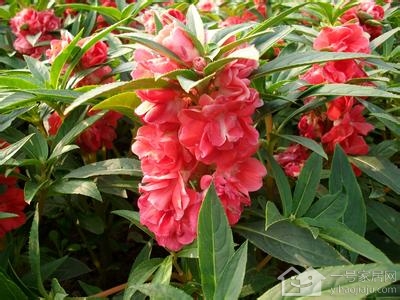
1. Soil: Impatiens prefers a sunny site and loose, fertile soil, and can also grow in relatively poor soil. When it grows from the initial 8 cm to 20-30 cm, pinch off the growing tips; after planting out, top the main stem of the plant to enhance its branching ability and make the plant shape full.
2. Sowing: Because Impatiens seeds are relatively small and its lifespan is relatively long, it can be direct-sown. In the south, direct sowing is suitable in March; in the north, direct sowing can be done in April. Scatter the seeds evenly into the furrows, cover them with soil in good time, and then water promptly, which benefits the growth of Impatiens seeds. After sowing, the soil should be kept moist. At a growing temperature of generally 25°C, seedlings begin to emerge in about 5 days. Impatiens generally uses 500 grams of seed per 667 sq m. Reasonable thinning of Impatiens can make Impatiens high-quality and high-yielding.
3. Light and temperature. Impatiens likes light and is also tolerant of shade, and needs at least 4 hours of diffused sunlight each day. In summer, shade it to prevent excessively high temperatures and scorching sun exposure. The suitable growing temperature is 16-26°C, and during the flowering period the environmental temperature should be kept above 10°C. In winter, it should be moved into a greenhouse to prevent freezing.
4. Fertilizing: Impatiens likes fertilizer. For the first three weeks after cultivation, apply 50 to 100 ppm nitrogen fertilizer, then for the next three weeks apply 100 ppm nitrogen fertilizer, and fertilize according to soil analysis. After fertilizing, water once every two weeks to avoid salt damage. If the plant shows curled, dark green leaves, this indicates a signal of excessively high salt levels.
5. Watering: After planting out, water promptly. During the growing period, pay attention to watering and often keep the potting soil moist. Especially in summer, water more, but waterlogging and long-term excessive soil moisture must be avoided.
6. Flowering period: It is understood that if you want to delay the flowering period of Impatiens, you can sow in early July; you can also use the method of pinching off the growing tips, and at the same time promptly remove early-opening flowers and flower buds, so that the plant continues to expand. Generally, topdressing is done once every 15-20 days. Impatiens generally forms more flower buds at the end of September.
7. Management. After Impatiens emerges, to prevent weeds from taking away water, loosen the soil and weed in good time, and water promptly during drought. When Impatiens seedlings are 30-40 cm tall, the old leaves on the lower part of the stem should be removed in good time, and the growing tips should be removed, which can make it branch more. Apply 40 kg of cake fertilizer per mu to Impatiens, scatter the fertilizer into the furrows, and water promptly, which benefits Impatiens flowering.
8. Pest and disease control: The main diseases and pests harming Impatiens are gray mold, pythium rot, powdery mildew, and Rhizoctonia. Low salt and appropriate watering can avoid pythium rot. During the flowering period, pay attention to the control of fungus gnats; 35 ounces/100GAL of pesticide can be used for control.
The above is the relevant introduction in this article. I believe that after reading it you also have a simple understanding of this. If needed, you can continue to follow No.1 Home Network to learn more information.