When is the gardenia blooming season? Analysis of the reasons for delayed blooming
In daily life, gardenias can be seen everywhere, and whenever they bloom, you can smell that lingering fragrance. In many parks and communities, gardenias are very important ornamental courtyard plants. Gardenias are also very easy to grow and have tenacious vitality. So, when is the gardenia blooming season?
I. Introduction to gardenias
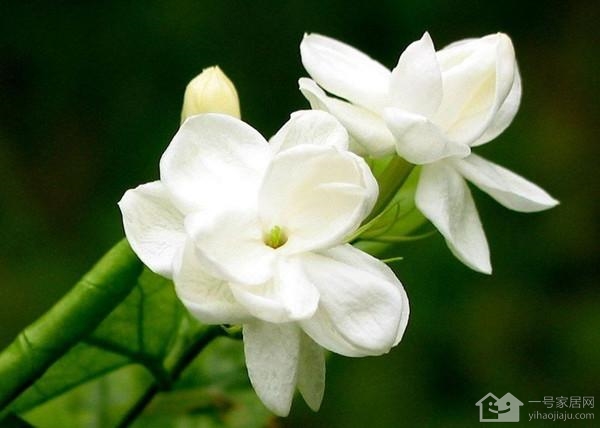
Gardenia, of the family Rubiaceae, is an evergreen shrub with emerald-green leaves that are leathery and glossy, remaining green all year round. In summer it produces pure white, fragrant flowers; after they fade, the flowers turn yellowish-brown but still give off lingering fragrance. The blooming season is April and May. The gardenia is a courtyard and potted ornamental flower deeply loved by people. It adapts strongly to its environment and grows whether the soil is fertile or poor, dry or wet. But to make it grow luxuriantly, whether planted in the ground or in pots, you must do a good job of choosing the soil, shading it in summer, fertilizing reasonably, and pruning appropriately.
Gardenias like light but also tolerate shade; in shady spots the leaves are glossy green, but flowering is somewhat poorer. In summer, strong direct sunlight is not suitable, otherwise the leaves turn yellow. They can be planted in parks, around courtyards, and below south-facing windows of office buildings and residences; growth is even better when shaded by the branches and leaves of tall trees above. Potted gardenias spending the summer cannot be placed on balconies or drying racks in the blazing sun, otherwise the branches and leaves will scorch yellow and may even wither and die. The potted plant can be moved indoors, placed on a desk, tea table or in a corridor, which both decorates the indoor environment and avoids exposure to the sun. In spring and autumn the light is not intense, so it can be placed outdoors to receive full sunlight.
II. The blooming season of gardenias
Gardenias like a warm, humid, semi-shaded environment, tolerate shade somewhat, and fear intense sunlight and blazing exposure. The blooming season is fairly long, flowering continuously from May to June until August, with the fruit ripening in October. But a single flower only lasts 4 to 5 days. With sufficient fertilizer, there are more flower buds and the blooming season is a bit longer. Gardenias are pruned once each in May and July every year, cutting off only the tips to encourage branching into a beautiful, complete crown. After the flowers fade, the spent flowers should be removed promptly, which helps the blooming season be more luxuriant.
Gardenias bloom from May to August. One flower blooms for about a week, and one tree blooms for about a month. For potted gardenias, flower buds and leaf buds both form in April, flower buds appear from late May to early June, and flowers open in late June. The blooming season of the dwarf gardenia can extend to July-August; one flower blooms for about 8 to 5 days, and one plant's blooming season is about 1 month.
III. Reasons for delayed blooming of gardenias
Once water and fertilizer are excessive, the plant will grow leggy; reproductive growth without enough nutrients will affect flower bud formation, leading to no flowering or very little flowering, and some that do bloom may even drop immediately. During the flower bud differentiation stage of the gardenia's blooming season, special attention must be paid to the balance of phosphorus and potassium fertilizers, such as a 0.2% potassium dihydrogen phosphate solution, which helps flower bud formation and budding; applying fertilizer too concentrated during the budding stage, or watering now too much and now too little, can also cause flowers and seedlings to drop.
Unsuitable light: gardenias like shade, so special attention must be paid to light that is too strong in summer and too weak in winter; light that is too strong or too weak will both affect the gardenia's blooming season. Not pruning and shaping: gardenia branches become tangled, and a large number of stray branches consume a great deal of nutrients, while branches that are too dense affect photosynthesis; these are all important reasons for failure to bloom.
The above is the relevant introduction in this article. I believe that after reading it you have a simple understanding of this. If needed, you can continue to follow No.1 Home Network to learn more information.