How to grow a Sageretia bonsai? Master these 7 care tips
Sageretia thea (Chinese sweet plum) can be used in gardens as a hedge or vertical greening material, and is also suitable for planting among rocks. This plant is extremely adaptable and not fussy about soil; it can adapt to acidic, neutral and calcareous soils, and is drought-tolerant, waterlogging-tolerant and barren-tolerant. These characteristics make it one of the most popular bonsai plants. Next, let's learn about Sageretia bonsai care knowledge.
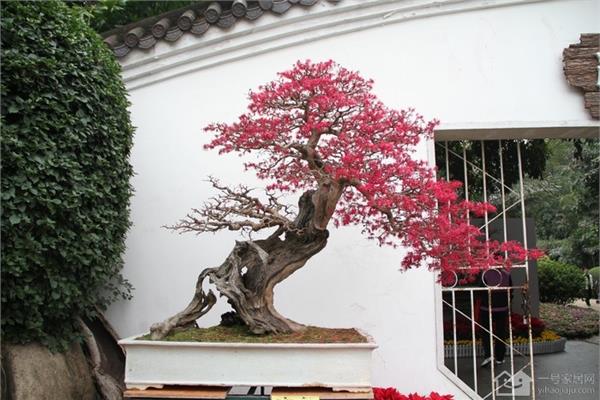
Sageretia bonsai care knowledge
1. Good potting soil: Sageretia stumps originally grew in the wild, with well-developed root systems and tolerance to both drought and waterlogging. Once collected and planted in a shallow pot only a foot or so across, their growing conditions are restricted, and they can easily die if not properly cared for, so they need especially careful attention. Choose a well-draining potting medium, and during the care period it is best to keep a thicker layer of soil in the pot. Change the soil every two years and apply some base fertilizer to keep the soil fertile, so that the stump specimen can grow normally.
2. Temperature: Sageretia bonsai has poor cold resistance and is prone to freezing damage, drying out, or even death. Therefore, in winter it should be placed indoors with attention to ventilation, and the room temperature kept above 5°C; when the room temperature exceeds 25°C, windows can be opened to avoid leggy growth caused by high temperatures; when the room temperature is below 5°C, a plastic cover can be used for insulation (remove the plastic bag once the temperature is above 5°C); when the room temperature is below 0°C, warming methods such as heating water should be used to ensure the Sageretia bonsai survives the winter safely.
3. Fertilizing: For Sageretia bonsai, cake fertilizer and kitchen waste can be sealed and fermented in a jar, then the upper liquid fertilizer can be diluted with water 4-5 times and watered on. Sageretia is an acid-loving plant, so 1% ferrous sulfate should be added to the fermented liquid fertilizer before use; when Sageretia sprouts, spray 1-2 times with 0.1% urea; before and after flowering, spray once with 0.1%-0.2% potassium dihydrogen phosphate, etc.
4. Watering: Be careful not to let the potting soil become too wet or too dry. During the dog days, water once in the morning and once in the evening. To shorten the branches and leaves and make the shape more attractive, water can be appropriately controlled during the spring and summer growing seasons.
5. Repotting: Repot Sageretia bonsai once every 3-4 years, preferably before spring budding. When repotting, appropriately prune away some old roots, dead roots, and overly long or dense roots, replace 1/2 of the old soil, and fill in with fertile, loose cultivating soil to promote the growth and development of new roots.
6. Pruning: Sageretia is very tolerant of pruning. After autumn each year, a shaping prune can be carried out, removing some overly dense branches and leaves, and cutting off all kinds of messy branches or leggy shoots, to maintain a certain shape and posture and encourage lush branches and leaves. Sageretia has extremely strong sprouting ability, so pinching should be done in time to make the axillary buds sprout side branches; the more times you pinch, the denser the branches and leaves.
7. Pest and disease control: Common pests and diseases of Sageretia stumps include the longhorn beetle, commonly known as the "heart-boring worm." The female longhorn beetle bites through the bark and lays eggs on the branches and trunk; the newly hatched larvae feed under the bark, and when grown they bore into the trunk and roots. Affected plants are often hollowed out and die. For control, you can judge the location of the pest from the excrement, insert a suitable wire into the bore hole to stab the larvae to death, or soak a cotton ball in 200-times diluted dichlorvos and plug the bore hole to poison the larvae, then seal it with wet mud. The red spider mite, also called the fire spider, is also a common pest of Sageretia stump specimens. It is less than 1 mm in size and orange-red or reddish-brown and oval. Red spider mites spin webs on the plant's leaves and pierce the branches and leaves with their mouthparts to suck sap. The chlorophyll of the damaged leaves is destroyed, the color turns yellow and pale, and fine grayish-yellow spots appear on the leaf surface; the leaves gradually wither and fall, and in some cases all the leaves on the whole plant drop off and it dies. You can spray 1000-times to 1500-times diluted dichlorvos or dimethoate to eliminate them.
With attention to care in winter, Sageretia bonsai can keep its leaves from falling and remain evergreen all year round; its roots and stems coil and knot, its branches and tendrils spread at angles, and its leaves are small and emerald green, giving it a very antique and elegant appearance. From this it can be seen that it is not without reason that this plant can become one of people's favorite bonsai plants.
The above is the related introduction in this article. I believe that after reading it you also have a simple understanding of this. If needed, you can continue to follow No.1 Home Network to learn more information.