Introduction to Alpinia zerumbet 'Variegata' and How to Grow It
Alpinia zerumbet 'Variegata' has fairly high ornamental value; its dark green leaves bear irregular golden stripes, and under sunlight they look as if the leaf surface has been plated with a layer of gold, making it very eye-catching.
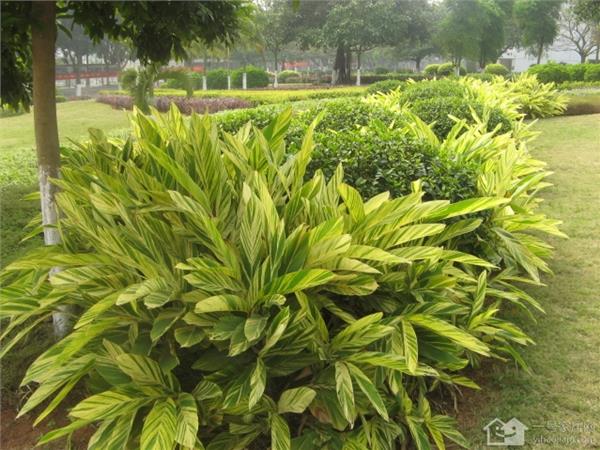
Introduction to Alpinia zerumbet 'Variegata'
Morphology: The Latin name of Alpinia zerumbet 'Variegata' is Alpinia zerumbet, with aliases including variegated galangal, variegated shell ginger, rainbow ginger, and striped shell ginger. The plant grows about 1 m tall. The dark green, leathery leaves are long elliptic-lanceolate, 50-60 cm long and 10-15 cm wide, with irregular golden-yellow longitudinal stripes on the surface and vivid coloring. With proper care, the golden-yellow stripes join into large patches, making it even more brilliant. It blooms in June-July, with elegant flowers and an alluring fragrance; the panicle is raceme-like and drooping.
Uses: Potted Alpinia zerumbet 'Variegata' is suitable for display in halls, while outdoor cultivation can accent courtyards, poolside areas, or wall corners with a distinctive style. Beside landscape rocks, at the edges of green spaces, and in courtyards, Alpinia zerumbet 'Variegata' has an excellent ornamental effect.
How to Grow Alpinia zerumbet 'Variegata'
Habits: It likes high temperatures and humid environments, is not cold-tolerant, and fears frost and snow. It likes sunlight but is also slightly shade-tolerant. It grows well in fertile loam.
Soil: When growing Alpinia zerumbet 'Variegata', choose loose soil with good drainage.
Propagation: Division and sowing are commonly used. For division propagation, in spring and summer dig up plants with underground rhizomes and cut off the aboveground stems and leaves. Keep one third of the stem length, cut the rhizomes into 4-5 cm sections, each with 2-3 stems, and plant them directly in pots or in open ground. After division, place them temporarily in a semi-shaded spot for care, and return to normal management once new shoots sprout. The temperature for sowing propagation is 25-30°C, and germination occurs 15-20 days after sowing.
Temperature: The optimum growing temperature for Alpinia zerumbet 'Variegata' is 18°C-30°C, and it dislikes cold and frost. The overwintering temperature must be kept above 10°C. When the winter temperature drops below 4°C, it enters dormancy, and if the ambient temperature approaches 0°C, it will die from frost damage.
Light: Alpinia zerumbet 'Variegata' fears direct strong light and needs to be kept in a semi-shaded spot for care, or given 70% shade. If it is too shady, the leaves will not be bright enough. When grown indoors, keep it in as bright a place as possible, and every one or two months move it outdoors to a semi-shaded spot or a shaded spot for a month of care, so it can accumulate nutrients and recover its vigor. In midsummer, placing Alpinia zerumbet 'Variegata' in a semi-shaded spot makes the leaf markings more pronounced.
Water: Alpinia zerumbet 'Variegata' likes a humid climate and requires the relative air humidity of the growing environment to be 60-75%. When growing it, take care to keep the soil moist and avoid excessive dryness. In summer and autumn, frequently spray water on the leaves of Alpinia zerumbet 'Variegata' to increase air humidity; in winter, when Alpinia zerumbet 'Variegata' is dormant, water less as appropriate, following the principle of preferring dry over wet.
Fertilizing: Alpinia zerumbet 'Variegata' has high fertilizer and water requirements, but it most fears haphazard fertilizing, concentrated fertilizer, and one-sided application of nitrogen, phosphorus, or potassium fertilizer. Follow the fertilizing principle of "light fertilizer applied frequently, small amounts and many times, complete nutrition." During the growing season, fertilize once a month, mainly with phosphorus and potassium fertilizer.
Pruning: For open-ground cultivation, regularly thin out overly dense stems and leaves and cut off broken stems and leaves to keep the plant shape attractive. After 3-4 years of cultivation, dig up the underground rhizomes again, remove the old rhizomes, and replant for renewal.
Repotting: Because Alpinia zerumbet 'Variegata' has strong tillering ability and grows rapidly, repot potted plants every 1-2 years, cut off dull-colored and overly tall stems and leaves, and replant.
Pests and diseases: The main diseases are leaf blight and brown spot, which should be treated promptly. In the early stage of leaf spot disease, spray Bordeaux mixture 2-3 times every 7-10 days. If brown spot occurs, spray a 1000-fold solution of 70% thiophanate-methyl wettable powder for control.
The above is the relevant introduction in this article. I believe that after reading it, you also have a simple understanding of it. If needed, you can continue to follow No. 1 Home Network to learn more information.