How to Grow Schefflera arboricola (Dwarf Umbrella Tree)? A Detailed Guide to Cultivation Methods and Precautions
Schefflera arboricola, also known as the umbrella tree or octopus tree, tolerates low-light conditions and prefers partial shade, making it very suitable as an indoor plant and one of the most popular indoor cultivated plants in the world. Next, let us take a look at how to grow Schefflera arboricola.
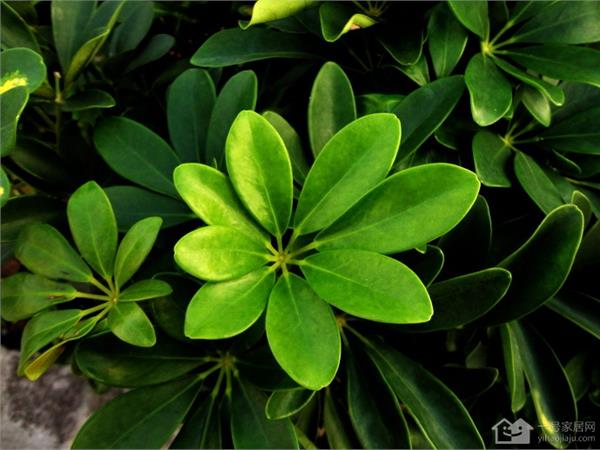
Schefflera arboricola
Schefflera arboricola can be grown for a long time in a bright, well-ventilated home for everyday ornamental display. Its growth temperature is 15-25°C, and in winter it should not go below 5°C, so the plant can continue to grow.
Schefflera arboricola has strong adaptability: it can grow not only in conditions of high air humidity with plenty of soil and water, but also in dry environments. When growing older plants indoors, you can prune the bulky parts appropriately, or cut away part of the root system and replant.
How to Grow Schefflera arboricola
Schefflera arboricola can be grown in a mix of peat soil and leaf mold, with 1/3 perlite and base fertilizer added. About 4 hours of direct sunlight per day speeds up its growth, and it is a plant that can be enjoyed for a long time.
Schefflera arboricola
In spring, summer and autumn, water once every 3-4 days; do not water too much, otherwise the roots will become waterlogged and rot. During the summer growing season, fertilize appropriately once a week, using a mixed fertilizer of nitrogen, phosphorus, potassium and others. Every spring, before the new buds of Schefflera arboricola sprout, repot it, remove the old soil and replace it with fresh soil.
If the plant is a plant that is many years old, it needs timely pruning or repotting during cultivation. Normally, because Schefflera arboricola grows slowly, it also needs regular shaping and pruning.
Precautions for Growing Schefflera arboricola
Schefflera arboricola is quite robust by nature and relatively easy to cultivate. For larger plants, before moving them outdoors in spring, the pot should be turned out and refreshed, and appropriate shaping and pruning should be done; for plants that are too tall and bare at the base, renewal pruning can be done to encourage new shoots to sprout. After being moved outdoors, it should be placed in partial shade, and in summer shade it in time so that harsh sunlight does not shine directly on it. Keep the soil moist and water in time before it dries out completely; when the weather is dry, also spray the plant to increase humidity; during the plum rain period, prevent water from accumulating in the pot. From May to September, apply 20% cake fertilizer water twice a month. For variegated varieties, if there is too much nitrogen fertilizer and the light is weak, the patches on the leaves will become less distinct. In addition, if Schefflera arboricola (octopus tree) is kept indoors for ornamental display for a long time, poor ventilation or overly dim light will cause the leaves to drop, which growers should note.
Schefflera arboricola
After bringing it indoors in early January, it should be placed in a cool room, and the temperature should not be lower than 5°C, otherwise it will shed its leaves. The soil should be slightly moist, and the environment should not be too dry either. If octopus tree needs to be propagated in large quantities, the sowing method can be used; for small quantities, division or cutting can be used. Cuttings are best taken from May to July: cut green branches with 2-3 nodes and insert them into vermiculite, place them in a shady, moist spot, and they will root in about 30 days.
The Effect of Schefflera arboricola on the Home Environment
Schefflera arboricola, also known as octopus tree, has a graceful plant shape and strong adaptability. It is an excellent potted plant and can be placed on the balcony for viewing all year round, but it should not be placed in a spot with harsh sunlight. It can also be placed in the living room, study, or even the bedroom.
Schefflera arboricola
Schefflera arboricola has the effect of absorbing nicotine and other harmful substances. It is especially suitable for households with smokers. It can bring fresh air to a smoking household: the leaves can absorb the nicotine and other harmful substances released when cigarettes burn, and through photosynthesis convert them into substances the plant itself needs. In addition, Schefflera arboricola can reduce formaldehyde concentration by 9 mg per hour, so after home renovation, placing Schefflera arboricola is more suitable than anything.
The above is the related introduction in this article. I believe that after reading it, you have a simple understanding of it. If needed, you can continue to follow No.1 Home Network to learn more information.