Herbaceous Plants: Definition, Classification and Characteristics Explained in Detail
Herbaceous plants are one kind among the many types of plants, and I believe many of you may not know much about them. Let's take a look together! See the characteristics of herbaceous plants.
What Are Herbaceous Plants
The stems and branches of herbaceous plants mostly die after the growing season, but the roots in the underground part can grow again in the second year. The roots of perennial herbaceous plants are generally rather thick and sturdy, and some also grow organs such as tuberous roots, tubers, corms and bulbs. In winter, the above-ground part still sleeps quietly, and when the climate warms up the following year, they sprout and grow again. Growing year after year in this way, the underground roots or stems may gradually become thicker and larger, and may also branch.
Classification of Herbaceous Plants
Annual herbs refer to herbaceous plants whose lifespan is only 1 year, from seed germination, growth and fruiting to withering and death, that is, they can complete their life cycle within one growing season. Biennial herbs are plants that in the first growing season grow only vegetative organs, and in the second growing season bloom and fruit before dying, such as winter wheat, sugar beet and broad bean. Perennial herbaceous plants have a relatively long lifespan, generally two years or more, such as chrysanthemum, water lily and clivia.
The plant body of herbaceous plants has xylem that is relatively undeveloped to undeveloped, and the stems are juicy and rather soft. According to the length of their life cycle, herbaceous plants can be divided into generally annual, biennial or perennial. Most herbaceous plants die entirely at the end of the growing season, including annual and biennial herbaceous plants, such as rice and radish.
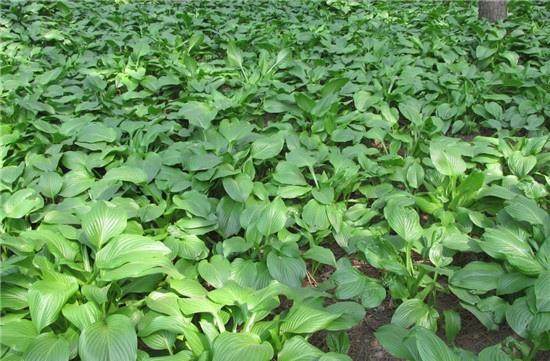
The above-ground parts of perennial herbaceous plants die every year, while the underground roots, rhizomes and bulbs can live for many years, such as geranium. Among herbaceous plants, the annual, biennial and perennial habits sometimes vary with changes in geographic latitude and cultivation practices. For example, wheat and barley are biennial herbs when sown in autumn, but become annual herbs when sown in spring; likewise, cotton and castor are annual herbs in the Jiangsu-Zhejiang region, but can grow into perennial herbs in the lower-latitude south.
They have a relatively long lifespan, generally two years or more, such as chrysanthemum, orchid, lotus, water lily and clivia. The roots of perennial herbaceous plants are generally rather thick and sturdy, and some also grow organs such as tuberous roots, tubers, corms and bulbs. In winter, the above-ground part still sleeps quietly, and when the climate warms up the following year, they sprout and grow again. Growing year after year in this way, the underground roots or stems may gradually become thicker and larger, and may also branch.
This provides us with a basis for identifying their age; from the number of branches on the underground part, and the size, length and thickness of the stems or roots, we can estimate their age. Perennial herbs can live for more than two years.
The underground parts of some plants are perennial, such as metamorphosed organs like perennial roots, rhizomes, bulbs and tuberous roots, while the above-ground parts die every year, and in the following spring new shoots grow again from the underground parts, bloom and set fruit, such as lotus root, onion, taro, sweet potato and dahlia; in addition, the above-ground and underground parts of some other plants are both perennial, and after flowering and fruiting the above-ground parts still do not wither, and can fruit many times, such as Chinese evergreen and dwarf lilyturf.
Characteristics of Herbaceous Plants
1. Annual flowers: herbaceous plants generally sown in spring and flowering in summer and autumn. The seeds mature after autumn, and the plants wither and die when winter comes. They complete one life cycle within 1 year. Such as scarlet sage, cockscomb, zinnia and garden balsam.
2. Biennial flowers: herbaceous plants generally sown in autumn and flowering in the spring and summer of the following year. After the seeds mature in summer, they wither and die. They grow across the calendar year, but for less than two years. Such as pot marigold, cineraria, pansy and snapdragon.
3. Perennial root flowers: individuals live for more than two years, and they are perennial herbaceous flowers. They are highly cold-resistant, can overwinter in the open field in winter, can bloom and fruit many times, and the form of the underground part is normal, such as chrysanthemum and African daisy.
4. Bulbous flowers: individuals live for more than two years, and they are perennial herbaceous flowers. Their underground parts have swollen, deformed stems or roots, and there are five types. (1) Bulb type: having many fleshy scales. Such as narcissus and lily. (2) Corm type: shaped like a ball, solid inside. Such as gladiolus. (3) Tuber type: the underground stem becomes lump-shaped, such as calla lily. (4) Rhizome type: the underground stem becomes fleshy and forms a thick, long rhizome, with obvious nodes and internodes on it. Such as canna. (5) Tuberous root type: formed by swollen roots, such as dahlia.
5. Aquatic flowers: this category belongs to perennial perennial-root herbaceous plants. The underground parts are mostly fleshy and rhizome-shaped, growing in shallow water or marshy areas. Such as lotus and water lily.
6. Ferns: this category belongs to perennial herbaceous plants, mostly evergreen, do not bloom and do not produce seeds. Such as sword fern and staghorn fern.
The above is the relevant introduction in this article. I believe that after reading it, you also have a simple understanding of this. If needed, you can continue to follow Yihao Home Network to learn more information.